
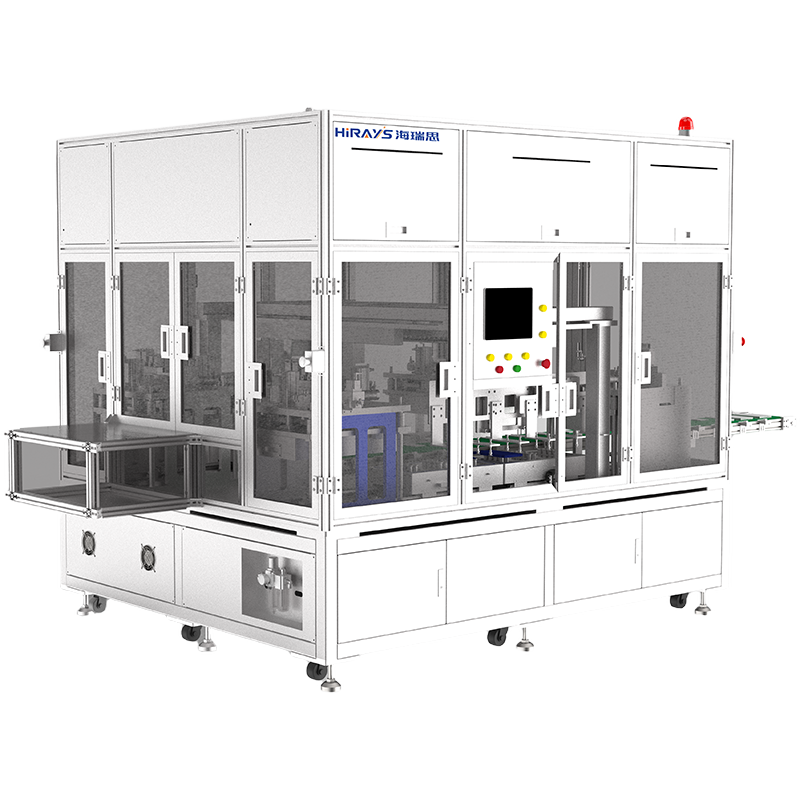
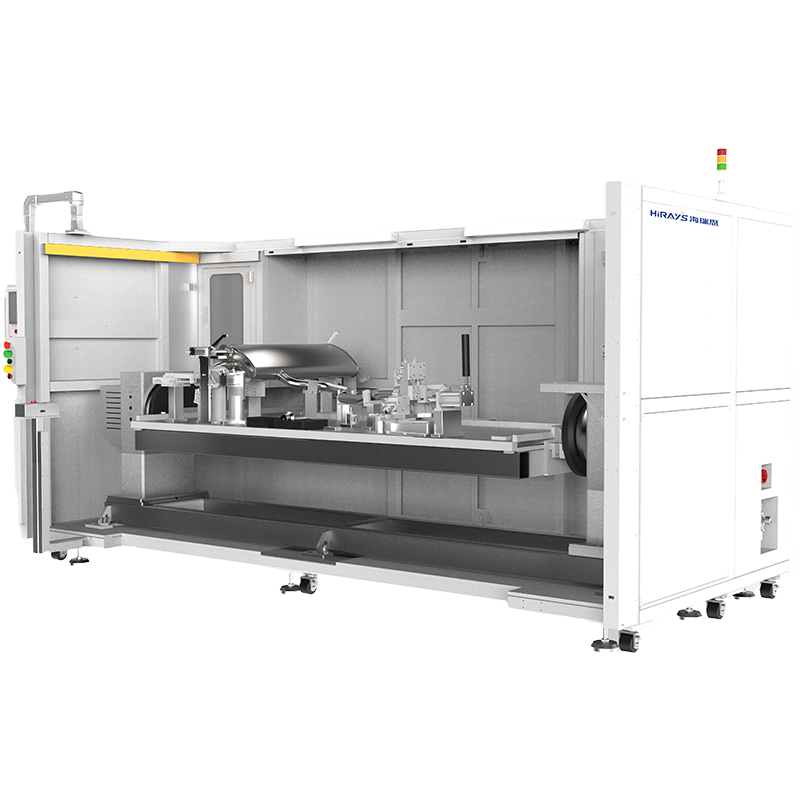
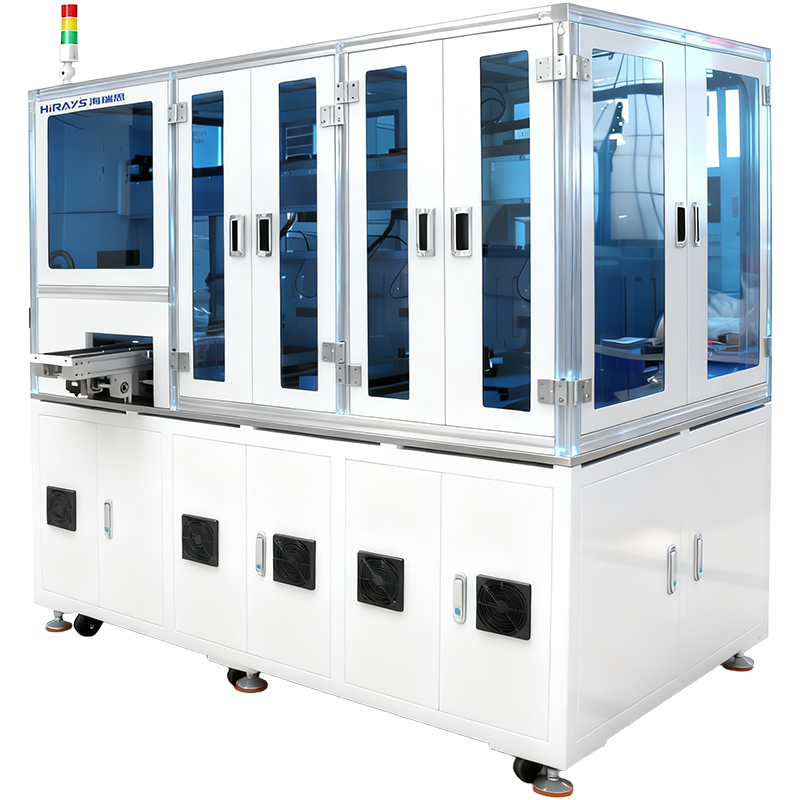
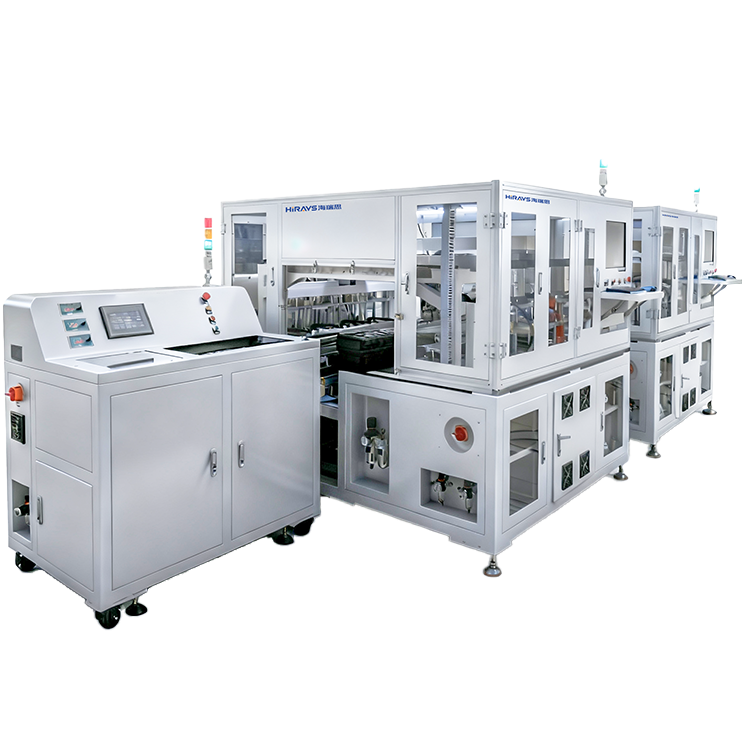
- Flexible options
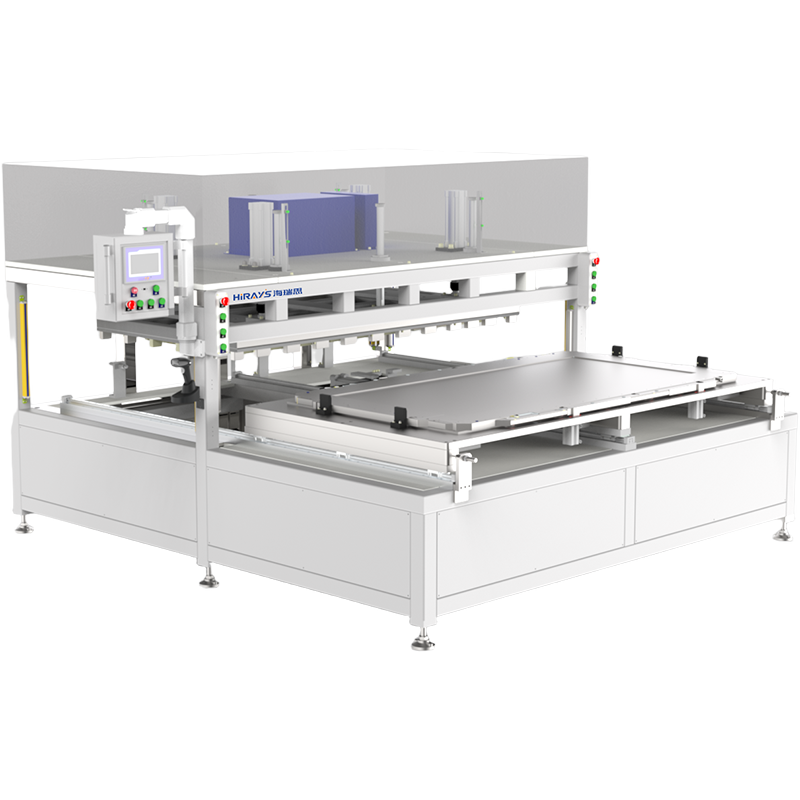
- Multi-station test platform to meet diverse needs
- Tailor-made
- Customized testing platform deeply fits the customer's personalized process flow
- Intelligent control
- The system is equipped with self-developed intelligent control and intuitive interface, which supports rapid model change and improves efficiency.
- Stable and reliable
- Passed strict stability testing to ensure reliable long-term operation
The Haireis automated airtightness testing platform for mobile phones, employing ZTO and modular robotic arms, is suitable for testing semi-finished and finished mobile phones. It boasts a first-pass yield rate exceeding 99% and can connect to automated equipment at both front and rear workstations. With 3 workstations, it achieves a UPH exceeding 350, and with 4 workstations, it reaches over 420. It features automatic barcode scanning, MES transit detection, and backend data uploading.
The Haireis automated airtightness testing platform for smart wearables, also employing ZTO and modular robotic arms, is suitable for testing semi-finished and finished smart wearables. It boasts a first-pass yield rate exceeding 99% and can connect to automated equipment at both front and rear workstations. With 8 workstations for high and low pressure testing, it achieves a UPH exceeding 400, and with 16 workstations, it reaches over 800.
The Haireis automated airtightness testing platform for TWS earphones, also employing ZTO, is suitable for testing semi-finished and finished TWS earphones. It boasts a first-pass yield rate exceeding 99% and can connect to automated equipment at both front and rear workstations. With 4 workstations and single pressure testing, it achieves a UPH exceeding 400.
The Haires battery leakage VOC/mass spectrometry leak detection automated testing platform adopts a robotic arm + inlet/outlet slide design, which is suitable for automated testing of lithium battery leakage. The first pass rate can reach 100%. It can be connected to automated equipment at the front and rear workstations. The UPH is determined by the size of the battery and the number of batteries that can be placed at one time.
