
Tightness testing solutions: the key to improving product quality
Imagine buying a beautiful electronic product, only to find out when you open the box that it has a poor seal, causing malfunction or moisture intrusion.A small sealing problem may cause the entire product to lose user trust and even cause serious damage to the brand's reputation.As a manufacturer, how can we ensure impeccable product quality and avoid risks caused by sealing problems?The answer lies in precise leak testing.
In this article, we will take an in-depth look at seal detection solutions to help you identify and resolve product sealing issues, thereby improving the overall quality of your product and user experience.Whether you are a product developer or a quality control manager, this article will provide you with practical operational advice and technical guidance.
Why is tightness testing so important?
In many industries, sealing is not just a technical issue, it is about user experience, product performance and brand image.Take mobile phones as an example. When a mobile phone is not properly sealed, water vapor and dust may penetrate into the device, damaging the circuit and causing functional failure.For fields such as medical equipment and food packaging, sealing testing is even more important for life safety and product preservation.
The hidden dangers of a poor seal may not be easily noticed in the early stages, but its long-term impact on the product can be profound.In order to prevent the occurrence of quality problems, sealing testing has become a link that cannot be ignored in the production process.How to effectively implement this test has become the top priority of brand quality management.
Common technical means for sealing testing
Tightness testing is not a question with “only one standard answer”. It depends on the product type, usage environment and production process.Therefore, it is particularly important to choose the appropriate detection method.The following are several common sealing detection technologies, each with its own advantages and disadvantages and suitable for different scenarios:
1. Air tightness testing
Air tightness testing is one of the most common methods in tightness testing.It determines the tightness of the product by applying air pressure inside the sealed product and then monitoring the rate of gas leakage.This method is suitable for most products that require airtightness, such as electronic equipment and automotive parts.
For example, a certain brand of smart watches uses air tightness detection technology during the production process.By conducting an air tightness test on each watch, tiny leaks can be accurately identified to ensure that each product is effectively waterproof, thereby enhancing consumers' trust.
2. Water immersion method
The water immersion method detects whether there are bubble leaks by immersing the sealed product in water.This method is suitable for some products with high requirements, such as waterproof mobile phones, diving equipment, etc., and can effectively test the sealing properties of products when used underwater.
For example, a certain brand of waterproof headphones is tested using the water immersion method.At the end of the production line, the earphones will be placed into a simulated underwater environment to detect whether bubbles are produced. This step ensures that each earphone can work properly while swimming or diving.
3. Vacuum seal test
The vacuum seal test extracts the air inside the product to observe whether the seal will deform or leak. It is suitable for products that need to maintain a vacuum environment, such as high-precision instruments, medical equipment, etc.
For example, a medical device manufacturer uses vacuum seal testing to ensure that every medical device meets sterility standards.In this way, products can be maintained in optimal condition during transportation and storage, thereby reducing quality incidents caused by poor sealing.
How to choose a suitable sealing test solution?
Different product requirements, production conditions and testing purposes determine that we must carefully select sealing testing solutions.The following points are key factors to consider when choosing the right option:
1. Understand product features
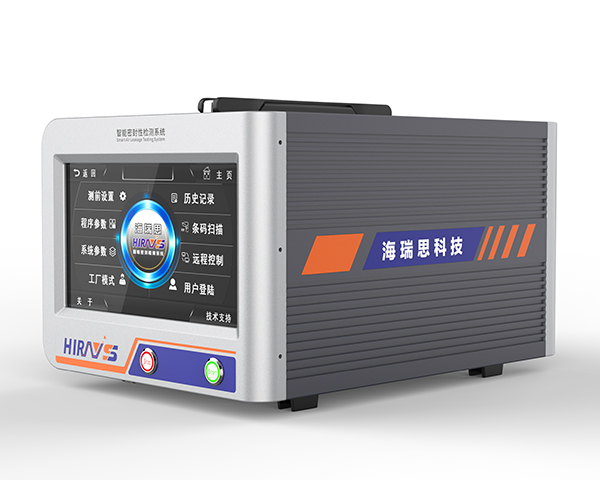
Different types of products have different sealing requirements.For example, electronic products have high requirements for waterproofing and dustproofing, while food packaging requires higher air tightness.Therefore, understanding the usage environment and characteristics of the product is the first step in selecting a testing solution.
For example, if you are a manufacturer of smartphones, air tightness testing is an indispensable part.And if your product is high-end audio equipment, then the water immersion method may be more suitable, because the waterproof performance of such products is crucial.
2. Determine detection accuracy
Different production links require different detection accuracy.In the mass production stage, rapid screening is key, while in sample testing or high-end product inspection, accuracy requirements are even higher.The cost of detection technology with different precision will also be different, so a reasonable choice should be made based on actual needs.
3. Comprehensive consideration of testing cost and efficiency
An efficient testing solution can shorten the production cycle, but at the same time, the cost and maintenance requirements of the testing equipment must be considered.For large-scale production companies, choosing efficient and low-cost testing equipment will greatly improve the overall efficiency of the production line.
For example, a certain automobile company introduced fully automatic air tightness testing equipment during the production process.These devices not only increase the detection speed, but also reduce human errors through automation, saving a lot of labor costs.
Summary: How to Get the Best Results in Tightness Testing
To ensure product quality, sealing testing is crucial.Here are a few suggestions to help you choose and implement the most suitable seal testing solution:
- Understand product requirements:Choose the appropriate detection method based on the characteristics and uses of the product.For example, waterproof products can use the water immersion method, while precision instruments can use vacuum seal testing.
- Choose the right testing equipment:On the premise of ensuring detection accuracy, choose automated equipment that can improve efficiency and avoid errors caused by manual operations.
- Regular maintenance of testing equipment:In order to ensure the long-term stability of the testing equipment, the equipment is regularly maintained and calibrated to ensure that it is always in optimal working condition.
- Training operators:Efficient detection not only depends on equipment, but also the technical level of the operator is equally important.Regularly train employees to ensure they are proficient in equipment operation and data analysis.
- Collect data and optimize production processes:Through the analysis of inspection data, we can understand possible quality bottlenecks in the production process and make timely adjustments to improve overall production efficiency.
Conclusion: Quality assurance starts with tightness
To improve product quality, sealing testing is not only a technical issue, but also an important link in ensuring brand reputation and consumer trust.By choosing the right testing solution and optimizing the production process, you can provide consumers with high-quality, reliable products and help your brand win the market.
Have you ever encountered sealing problems?You may wish to leave a message to tell us your thoughts, or consult us for more solutions to help you improve product quality and break market bottlenecks!
-
2026.04.11Good News | Hirays Honored as "Most Investment-Worthy Enterprise" at 2026 AI Glasses China Tour
-
2026.04.11Why are more and more companies opting for RGA technology for power bank electrolyte leakage detection?
-
2026.03.30Commemorating the revolutionary martyrs and inheriting the red spirit | Record of hirays’s theme activity of walking to commemorate the martyrs’ cemetery
-
2026.03.20Starting from June, the sale of non-compliant power banks will be banned: many companies ignore this detection issue
-
2026.03.16After charging 70% in 5 minutes, how can the safety of the power battery be maintained?
-
2026.03.14Overcoming difficulties and showing responsibility, efficient delivery wins praise - a tribute to the four pioneer employees on the production front line
-
2026.03.03Comparison of mass spectrometry technology applications: How do Heris helium mass spectrometers and RGA series enable precision manufacturing?
-
2026.02.26Construction has started | hirays starts a new journey of struggle in 2026
-
2026.02.06Let’s work together to embark on a new journey | The 3rd hirays Fun Games was successfully held
