
What is the working principle of sealing testing equipment and how to evaluate it?
Have you ever encountered problems with loose sealing in your production line or product development?Air leakage, water leakage, or poor product protection have brought immeasurable losses to the company.Maybe you are thinking about how to accurately detect these problems, but you find that the existing detection equipment is not only complex, but the evaluation process is not clear enough, and may not even fully meet the needs of actual applications.So, how exactly does the sealing testing equipment work?How to ensure its effectiveness through scientific evaluation?Today, we’re going to delve deeper into this issue.
What is sealing testing equipment?
Sealing testing equipment is a tool used to test the sealing performance of items or products. It is widely used in packaging, automobiles, electronics, medicine and other industries.The tightness of a product directly affects its quality, performance and service life.Whether it is the airtightness of food packaging or the waterproof and dustproof capabilities of electronic products, sealing testing is crucial.In short, this type of equipment is used to confirm whether the product can effectively prevent the external environment from affecting the internal content.
The working principle of sealing testing equipment
The working principles of sealing testing equipment are relatively diverse, and are mainly selected according to different testing needs and application environments.Here are several common detection methods:
1. Gas detection method
The gas detection method evaluates sealing performance by detecting gas leakage inside the product.By placing the product in a sealed container, injecting gas at a certain pressure, and then judging the sealing performance through changes in pressure or gas concentration.Common gas detection methods include helium leak detection and nitrogen detection.
For example:Just like when you blow up a balloon, if the balloon leaks, you can easily spot it.The sealing testing equipment simulates this "air leakage" process through sophisticated instruments and can quantify the degree of leakage.
2. Water immersion method
The water immersion method is often used to test the tightness of products in liquid environments.Carry out a pressure test underwater and determine whether the seal is qualified by observing whether there are bubbles emerging.This method is often used to test the waterproof level, such as the waterproof performance of mobile phones or watches.
For example:It's like putting a small bag into water and seeing if any water seeps in.If there is no water inside the bag, it means its sealing is acceptable.
3. Vacuum detection method
The vacuum testing method tests whether the test item can withstand changes in a low-pressure environment by placing it in a vacuum environment.This method is often used for the detection of high-end packaging products, automotive parts and some complex electronic products.
4. Acoustic detection method
Acoustic testing evaluates tightness by detecting the sound emitted from the leak point.Typically, equipment utilizes ultrasonic technology for highly sensitive detection.
For example:Imagine you are in a quiet room and suddenly hear a faint sound of water droplets falling.The acoustic detection method is like this ear, which detects whether there is a leak by picking up subtle changes in sound.
How to evaluate the performance of sealing testing equipment?
The evaluation of sealing testing equipment is not just a simple test of whether it can "detect air leakage", but also considers its accuracy, stability and applicability.Below, we discuss how to evaluate these devices through several important metrics.
1. Accuracy: Can you detect small leaks?
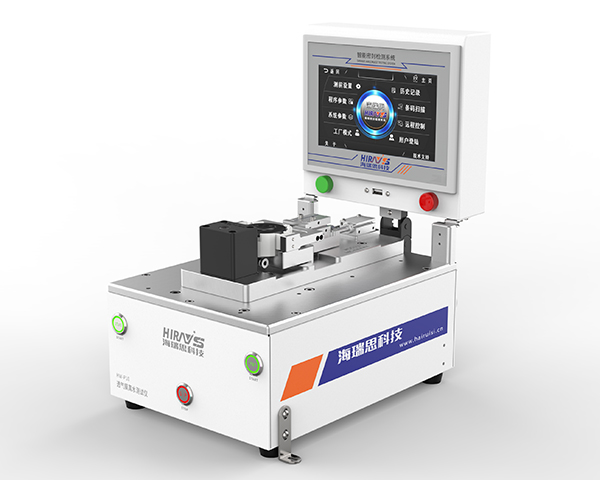
The accuracy of tightness testing is critical.A piece of equipment can accurately measure tiny leaks, even cracks of 0.1mm, which is crucial for high-standard products.For example, in the packaging testing of medical devices, even a small air leak may cause equipment failure.
2. Stability: Can the equipment operate stably for a long time?
Stability is a must-have characteristic of sealing testing equipment.Imagine you buy a new piece of equipment and it works great at first, but then after a few months it starts to show errors or not work properly. Such a piece of equipment is obviously not suitable.The stability of the equipment will directly affect the reliability of the test results, so when evaluating, you must pay attention to the performance of the equipment over long periods of use.
3. Ease of operation: Is it easy to operate?
Tightness testing equipment usually requires professionals to operate it, but if the operation of the equipment is too complicated, it will increase training costs and reduce work efficiency.Therefore, when evaluating, we should not only look at whether the function of the device is powerful, but also pay attention to whether its operation is simple and easy to understand.
4. Value for money: Does it provide sufficient value?
In addition to performance, the price of the device is also an important evaluation indicator.High-end testing equipment may have more functions, but if its functions do not meet actual needs, its cost performance will be relatively low.
How to choose suitable sealing testing equipment?
After you have clarified how to evaluate the working principle and performance of tightness testing equipment, the next question is how to choose the equipment that suits your needs.Here are some practical suggestions:
- Identify your testing needs:When selecting equipment, you must first clarify whether your needs are gas detection, liquid detection, or pressure testing.Choose the appropriate detection method according to the actual detection needs.
- Consider device stability:Choose equipment brands that have been tested and proven over time.For example, Hiraysi's sealing testing equipment has undergone rigorous testing to ensure the stability of the equipment in long-term operation.
- Evaluate the accuracy and sensitivity of your device:If you need to perform high-precision testing, such as the air tightness of pharmaceutical packaging, accuracy and sensitivity are particularly important.
- Compare device performance:There are many types of devices on the market, with large differences in price and functionality.You can choose the most suitable device by comparing the performance, stability and price of different brands and models.
- Pay attention to after-sales service and support:After-sales service for equipment is also very critical, especially when a malfunction occurs or maintenance is required. Good after-sales service can effectively reduce interruptions in production.
in conclusion
When selecting and evaluating sealing testing equipment, you need to consider not only its working principle and performance, but also its ease of operation, long-term stability, and whether it can meet the needs of industry standards.As an enterprise or producer, understanding the technical principles behind the equipment can help you make more informed decisions to ensure product quality and market competitiveness.If you want to know more about sealing testing equipment, or discuss the selection of specific products, please leave a message to tell us your thoughts, we will be very happy to help you!
-
2026.04.11Good News | Hirays Honored as "Most Investment-Worthy Enterprise" at 2026 AI Glasses China Tour
-
2026.04.11Why are more and more companies opting for RGA technology for power bank electrolyte leakage detection?
-
2026.03.30Commemorating the revolutionary martyrs and inheriting the red spirit | Record of hirays’s theme activity of walking to commemorate the martyrs’ cemetery
-
2026.03.20Starting from June, the sale of non-compliant power banks will be banned: many companies ignore this detection issue
-
2026.03.16After charging 70% in 5 minutes, how can the safety of the power battery be maintained?
-
2026.03.14Overcoming difficulties and showing responsibility, efficient delivery wins praise - a tribute to the four pioneer employees on the production front line
-
2026.03.03Comparison of mass spectrometry technology applications: How do Heris helium mass spectrometers and RGA series enable precision manufacturing?
-
2026.02.26Construction has started | hirays starts a new journey of struggle in 2026
-
2026.02.06Let’s work together to embark on a new journey | The 3rd hirays Fun Games was successfully held
