
Operating steps and precautions for Shenzhen air tightness detector
As a center for technological development in China, Shenzhen has many high-tech enterprises and advanced equipment, and the air tightness detector is one of them.Air tightness testers are widely used in automobiles, electronics, medical equipment and other fields. Ensuring the air tightness of products is a key link that cannot be ignored in the production process.As a leading brand in the industry, the air tightness detectors provided by Hirays are widely praised for their high precision and efficiency.In this article, we will introduce to you in detail the operating steps and some precautions of the Hirays air tightness detector.Even if you are a beginner, you can quickly get started with this article.
1. Equipment preparation and inspection
Before using the air tightness detector, first ensure that the equipment must be in good condition.To do this, we need to carry out the following checks and preparations:
- Check the equipment: Make sure that the appearance of the equipment is intact, that the connecting wires and pipelines are intact, and that the power supply and air source are normal.
- Calibration equipment: Carry out basic calibration work according to the operation manual to ensure that the detector can work accurately.
- Prepare the product to be tested: Ensure that the product to be tested has no obvious damage and perform necessary cleaning in advance as required.
- Select the appropriate testing mold: According to the testing requirements, select the appropriate testing mold and install it correctly.
2. Set and adjust operating parameters
After the equipment and the product under test are ready, the next step is to set and adjust the parameters of the detector.The specific steps are as follows:
- Parameter setting: According to the different characteristics of the product and testing requirements, set reasonable test parameters, including test pressure, pressure holding time, alarm limit, etc.
- Leakage standard determination: Determine the appropriate leakage standard value based on relevant technical standards or contract requirements, generally in Pa (Pascal).
- Mode selection: According to the specific detection needs, select the appropriate detection mode, such as connectivity test, pressure attenuation test or differential pressure test, etc.
3. Carry out air tightness test
After the parameter settings are completed, we can conduct the air tightness test.The specific operations are as follows:
- Install the product: Install the product to be tested on the testing mold to ensure that the connection is firm and airtight.
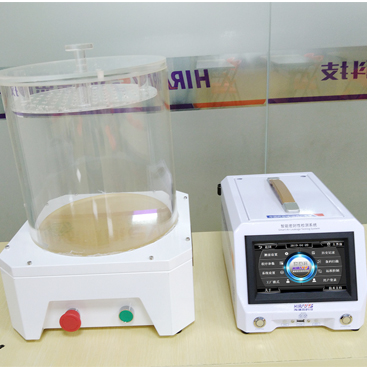
- Start the test: Press the start button or use system control to start the test, and the air tightness detector will automatically carry out the test process.
- Monitoring process: Monitor the test process on the display screen. The air tightness detector will test according to the set parameters and display relevant data in real time.
- Ending and result determination: After the test is completed, the equipment will automatically determine whether the test is qualified and display the results to the operator in an intuitive way.
4. Test results and data management
After the test is completed, it is not only necessary to check whether the results are qualified, but also to manage and analyze the test data:
- Read data: Read the test data on the device display to confirm whether it is within the qualified range.
- Record data: Record test data, especially for products tested in batches. It must be recorded in detail and archived by time and batch.
- Data analysis: Conduct preliminary analysis based on detection data to determine possible leak causes or production process problems.
- Software management: If the device is equipped with data management software, the data can be uploaded to the computer for further analysis and management.
5. Equipment maintenance and troubleshooting
In order to maintain the long-term stable operation of the detector, regular maintenance and timely troubleshooting are essential:
- Regular cleaning: After each use, the surface and interior of the device need to be cleaned, especially the sensor part, to prevent dust and impurities from affecting detection accuracy.
- Calibration and maintenance: Calibrate the equipment regularly. If necessary, contact the manufacturer or professionals for calibration and maintenance.
- Troubleshooting: If you encounter device alarms or data abnormalities during use, you need to find the cause in time, handle it, and contact the manufacturer's technical support if necessary.
- Spare parts replacement: Wearable parts should be backed up in advance and replaced regularly to ensure that the equipment is in good condition at all times.
in conclusion
To sum up, the Hirays air tightness detector has become an indispensable equipment in the production process of many enterprises due to its high precision, high efficiency and convenient operation.Through this article, we hope that you can master the operating steps and precautions of the air tightness detector and ensure product quality more effectively.If you are interested in our equipment or have any questions, please feel free to contact the Heruis team.We will continue to provide you with high-quality products and professional services to protect your production.
-
2026.04.11Good News | Hirays Honored as "Most Investment-Worthy Enterprise" at 2026 AI Glasses China Tour
-
2026.04.11Why are more and more companies opting for RGA technology for power bank electrolyte leakage detection?
-
2026.03.30Commemorating the revolutionary martyrs and inheriting the red spirit | Record of hirays’s theme activity of walking to commemorate the martyrs’ cemetery
-
2026.03.20Starting from June, the sale of non-compliant power banks will be banned: many companies ignore this detection issue
-
2026.03.16After charging 70% in 5 minutes, how can the safety of the power battery be maintained?
-
2026.03.14Overcoming difficulties and showing responsibility, efficient delivery wins praise - a tribute to the four pioneer employees on the production front line
-
2026.03.03Comparison of mass spectrometry technology applications: How do Heris helium mass spectrometers and RGA series enable precision manufacturing?
-
2026.02.26Construction has started | hirays starts a new journey of struggle in 2026
-
2026.02.06Let’s work together to embark on a new journey | The 3rd hirays Fun Games was successfully held
