What types of sealing testing equipment are there?Learn about different detection methods in one article
Tightness testing, as the name implies, is to ensure the sealing condition of a container, device or product under set conditions.This is crucial to ensure the quality and safety of products. Whether it is automobile manufacturing, electronic products or daily household products, almost every industry is inseparable from sealing testing.Our goal is to show you the different types and usage scenarios of these detection equipment in detail.Please prepare your curiosity and followHai RuisiLet’s explore the secret of sealing testing together!
Static pressure testing equipment
Place the product under specific hydrostatic pressure and static air pressure conditions, and judge the degree of sealing by observing pressure changes.The advantages of this method are simple operation and relatively low cost, but the detection effect on some high-precision equipment is limited.Imagine lying on the beach with the sea water covering your body quietly. This is probably what hydrostatic pressure feels like.But don’t rush into the sea, there are more interesting contents as you read on!
Leak detection equipment
Specially designed to detect gas or liquid leaks in closed containers.This type of equipment uses special sensors to detect whether there is a leak in the target.It feels a bit like playing "hide and seek", carefully identifying the "bad guys" who are trying to escape.Commonly used sub-equipments include helium mass spectrometer leak detectors and bubble detectors. These instruments can help you find every small leak without missing a thing.
Vacuum testing equipment
The sealing is tested by vacuuming, which can detect air leakage in closed systems under extreme conditions.For example, the fuel tanks of rocket engines and the sealing of space suits all require this kind of high-precision equipment to ensure safety.The process is a bit like entering outer space, where the vacuum of the environment means you can't escape any imperfections.Vacuum testing equipment is usually expensive, but it’s expensive for a reason!
Blister test method testing equipment
Put the product into water, pressurize it, and observe whether there are bubbles emerging.This instrument is simple and intuitive, and has the same visual feel as a bubble bath.Who says work can't be fun?This type of equipment is widely used in food packaging, pharmaceutical and other industries.Although "bubbles" are not necessarily a good thing, through this kind of testing, you can easily see if there is a leakage problem in the product.
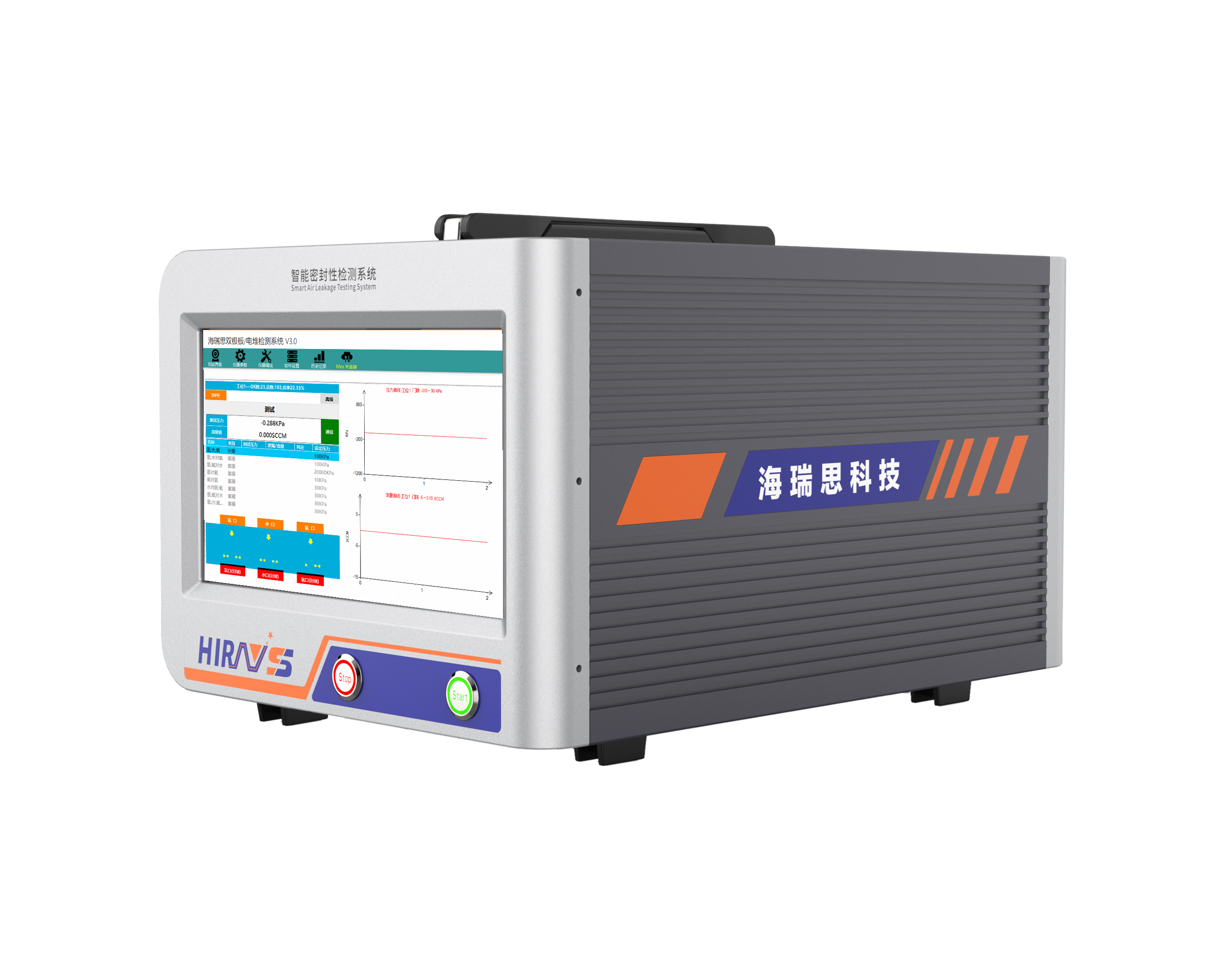
Differential pressure testing equipment
The pressure difference between the two sealing cavities is used to determine the sealing condition by detecting pressure changes.This method is more accurate and can monitor the status of the system in real time.Imagine you are a commander, keeping track of every movement on the "battlefield" at all times, without missing any emergencies.Differential pressure testing equipment is widely used in many high-precision industries, such as aerospace, automobile manufacturing, etc.
Ultrasonic testing equipment
Utilizes the ability of ultrasonic waves to penetrate materials to detect cracks, flaws or sealing issues.This device can be described as the "stethoscope" in sealing testing. No matter how small a flaw is, it cannot escape its "ears".Ultrasonic testing has applications in medicine, metallurgy, and many other industrial fields, and you will be impressed by its accuracy and efficiency.
Optical inspection equipment
Use optical instruments, especially laser scanning and other technologies, to detect the sealing of products.Optical detection has the advantages of non-contact, no damage, and fast detection speed, making it suitable for large-scale industrial production.It's like a cool laser show, revealing all sealing issues between light and shadow.Optical inspection has become a standard technology in many high-end manufacturing fields.
in conclusion
Through the above understanding, I believe you already have a certain understanding of various sealing testing equipment.Each of these devices has its own merits and is suitable for different scenarios and needs. No matter which one it is, it can ensure product quality and safety.I hope you not only gained knowledge while reading, but also enjoyed this enjoyable time.Hurry up and join the world of sealing testing equipment. The future testing master may be you!
-
2026.11.13Hirays Completes Delivery of a Major RGA Project for a Leading New Energy Customer
-
2026.11.13Hirays Named a National-Level "Little Giant" Enterprise
-
2026.11.13Media Coverage | Precision Testing Sector Gains Fresh Capital Backing: Hirays Technology Completes Series B Financing
-
2026.11.06Joining Forces, Starting Anew, Winning the Future Together | HIRAYS Marks 18 Years with a Team-Building Journey in Qingyuan
-
2026.11.06HIRAYS Shares RGA Quadrupole Mass Spectrometry Leak-Detection Expertise at CQC Compliance Training in Shenzhen
-
2026.11.06Leaders of CQC Shenzhen Branch Visit HIRAYS for Inspection and Guidance, Discuss Quality Improvement and Technological Innovation
-
2026.11.04The Full Hirays HM Mass Spectrometry Portfolio in One Place: One-Stop Protection for High-End Precision Manufacturing
-
2026.11.04HM-230 RGA: In-Situ Gas Monitoring Across Multiple Pressure Regimes
-
2026.11.04A New Frontline Defense for Line Yield: Hirays' HM-150 RGA Stands Up to Harsh Process Conditions to Protect Every Wafer