
Learn about seal testing: from basic principles to practical applications
In modern industry and manufacturing, seal testing is a vital operation that ensures products and systems remain intact and leak-proof under normal operating conditions.This article will give you an in-depth understanding of the basic principles of seal testing, the different types of seal testing methods and their importance in practical applications.The purpose of this article is to help you understand seal testing from the basics and learn how to correctly apply these testing techniques in actual work to ensure product quality and performance.
As a leading brand in the testing industry, Hirays is committed to providing the most advanced and reliable seal testing equipment and solutions.Whether you are a beginner or an experienced engineer, it is critical to understand the basic concepts and practical applications of seal testing.By studying this article, you will have a clear understanding of various methods, common problems and solutions to seal testing, thereby improving your professional level in the field of testing.
1. Basic principles of seal testing
The basic principle of seal testing is to detect the sealing performance of products or systems through specific methods and equipment to ensure that they can remain leak-free under specified pressure and environmental conditions.This is critical for many industries such as automotive, aerospace, medical devices and consumer electronics.
Generally, sealing testing can be divided into qualitative testing and quantitative testing.Qualitative testing is primarily used to detect the presence of leaks, while quantitative testing is used to measure the specific magnitude of the leak.Through these tests, engineers can understand the sealing performance of the product and make improvements if necessary.
2. Vacuum seal test and pressure seal test
Vacuum seal testing and pressure seal testing are the two most common seal testing methods.In a vacuum seal test, the test object is placed in a vacuum environment and then monitored for the ingress of air or gas.This method is mainly used to detect products or systems with very high air tightness.
Pressure seal testing is the opposite, in which the test object is pressurized to a certain level and then checked for gas or liquid leaks.This method is suitable for most products that need to withstand pressure, such as oil pipes, fuel systems, etc.
3. Bubble method and water immersion method
Bubble method and water immersion method are two common visual inspection methods.In the bubble method, a test object is placed in water and pressure is applied, and if there is a leak, you will see bubbles pop up.This method is simple and intuitive and is often used for preliminary detection.
The water immersion method is similar, but it not only detects leaks, but also further evaluates the location of the leak point and the size of the leak.The test object is fully immersed in water and then observed to ensure there are no leaks.
4. Gas detection method
The gas detection method uses a specific gas (such as helium or sulfur dioxide) to perform a seal test.These gases are highly permeable and easily detectable, making them particularly suitable for detecting very small leaks.During the test, gas is first injected into the test object, and then specialized gas detection equipment is used to look for any leaks.
This method is widely used in products with high precision requirements, such as aerospace components and high-sealing electronic equipment.
5. Sensor-based detection method
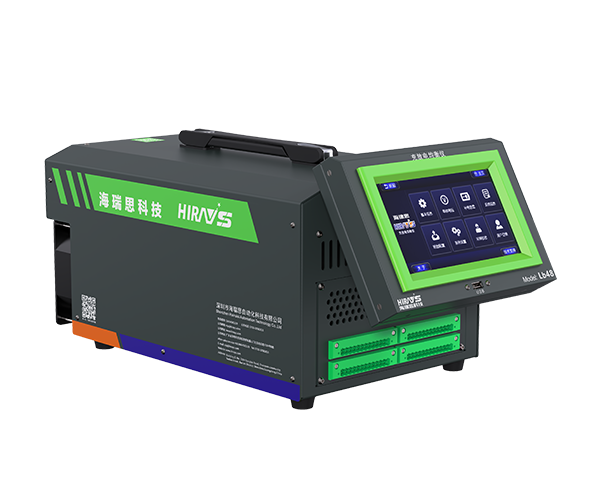
In modern seal testing, sensor technology is increasingly used.Sensor-based detection methods can monitor and record the sealing status in real time through sensors installed on the test object.Common sensors include pressure sensors, humidity sensors, hydrogen sensors, etc.
This method has high sensitivity and real-time performance, and is particularly suitable for continuous monitoring and remote control scenarios.
6. Sonic detection method
The acoustic wave detection method uses some characteristics of sound waves to detect tightness.Specifically, when a test object has a leak, high-frequency sound waves are generated through small openings.Using specially designed acoustic sensors, these high-frequency sound waves can be detected and the leak located.
This method performs well in the detection of some special environments and special materials, especially those that are difficult to detect with traditional methods.
7. Thermal Flow detection method
Thermal flow detection method is a method that uses temperature changes to detect tightness.The test object is heated or cooled through some special heat flow devices, and the temperature distribution is then monitored.Any leaks will cause uneven temperature distribution, which will be detected.
This method is suitable for complex structures and high-precision application scenarios that are difficult to detect by other methods.
8. Practical application case analysis
To better understand the methods and applications of seal testing, let’s look at some practical application cases.In the automotive industry, seal testing is used to test fuel systems, water tanks and body seals; in the medical industry, it is used to test the seals of medicine bottles, syringes and medical devices; in the aerospace industry, seal testing is an important step to ensure the safety of key aircraft components such as engines and fuel systems.
These cases not only demonstrate the application of various seal testing methods, but also highlight the details and considerations involved in hands-on practice and practical operation.
in conclusion
Seal testing is a critical step in ensuring the safety and functionality of products and systems.By understanding and mastering various seal testing methods, such as vacuum seal testing, pressure seal testing, bubble method, water immersion method, gas detection method, sensor-based detection method, sonic detection method and heat flow detection method, you can greatly improve the quality and reliability of your products.
In modern manufacturing and engineering, seal testing is not only part of quality assurance, but also an important tool for optimizing designs and improving processes.Harisi will continue to be committed to providing the most advanced technologies and solutions to assist the development of the industry.
-
2026.04.11Good News | Hirays Honored as "Most Investment-Worthy Enterprise" at 2026 AI Glasses China Tour
-
2026.04.11Why are more and more companies opting for RGA technology for power bank electrolyte leakage detection?
-
2026.03.30Commemorating the revolutionary martyrs and inheriting the red spirit | Record of hirays’s theme activity of walking to commemorate the martyrs’ cemetery
-
2026.03.20Starting from June, the sale of non-compliant power banks will be banned: many companies ignore this detection issue
-
2026.03.16After charging 70% in 5 minutes, how can the safety of the power battery be maintained?
-
2026.03.14Overcoming difficulties and showing responsibility, efficient delivery wins praise - a tribute to the four pioneer employees on the production front line
-
2026.03.03Comparison of mass spectrometry technology applications: How do Heris helium mass spectrometers and RGA series enable precision manufacturing?
-
2026.02.26Construction has started | hirays starts a new journey of struggle in 2026
-
2026.02.06Let’s work together to embark on a new journey | The 3rd hirays Fun Games was successfully held
