
Frequently Asked Questions about Tightness Testing to help you solve all kinds of doubts
Welcome to the Frequently Asked Questions column about sealing testing of Hai Ruisi!Whether you are new to seal testing or an experienced testing expert, this article will answer some common confusions for you.We know that the sealing test sounds simple, but in actual operation there are many issues that need attention.Different test methods, different test artifacts, and various test conditions can be confusing.So, don’t worry, sit back, relax and read this article as we dive into the ins and outs of seal testing.
In this article, we will answer some common questions about tightness testing one by one, from basic concepts to practical operations, from test equipment selection to result interpretation, striving to fully satisfy your curiosity about tightness testing.Whether you have encountered a problem during the testing process, are confused about the new testing method, or just want to know more about the Haris brand, here can provide you with a clear and interesting answer.So, let us uncover the mystery of sealing testing and solve your doubts!
1. What is sealing test?
We need to clarify a basic question: What exactly is a tightness test?Simply put, the sealing test is a series of testing processes to ensure that a container, equipment or workpiece will not leak air or liquid under a specific pressure and environment.Doesn't this sound a bit like blowing up a balloon?In fact, it is quite similar.There are various sealing test methods, including pressure decay method, bubble method, helium mass spectrometry, etc. Each method has its unique advantages and application scenarios.
For example, the pressure decay method is mainly used to detect small leaks because it is very sensitive to small pressure changes.The bubble rule is more intuitive. You can even see bubbles emerging at the leak point, which is very suitable for rapid on-site detection.The helium mass spectrometry method is extremely widely used, especially in situations where high-precision detection is required.Understanding the basic concepts is only the first step. Only by in-depth understanding of various testing methods can you better choose the testing solution that best suits you.
2. Why is it necessary to conduct a sealing test?
So why not just trust that the workpiece is sealed?This involves the importance of tightness testing.Imagine if your car's gas tank leaked, the problem would be serious.Imagine again that if medical equipment leaks, the consequences will be even more disastrous.Sealing testing is not only to ensure product quality, but also to ensure the safety and reliability of the product during use.
Industry standards around the world stipulate very strict sealing requirements, such as ISO, ASTM, GB, etc. These standards not only put forward high requirements for product quality, but also put forward many assessments on its service life and environmental adaptability.Therefore, sealing testing is an integral part of manufacturing, medical, aerospace and other fields. It not only protects the interests of consumers, but also ensures brand reputation.
3. What are the common sealing test methods?
We have mentioned some common testing methods, but what are the specific differences and applicable scenarios between them?Let’s sort it out in detail:
- Pressure decay method:It is mainly used to detect small leaks and determine the leakage rate by testing pressure changes. It is very suitable for use in precision devices such as electronic products.
- Bubble method:This method is simple and intuitive. It judges the leakage location by observing the bubbles of the workpiece in the water, and is suitable for rapid on-site detection.
- Helium mass spectrometry:Using helium as a tracer gas, the mass spectrometer is used to detect the leakage of helium with extremely high accuracy. It is suitable for occasions that require high-precision detection, such as aerospace, medical equipment, etc.
- Vacuum box method:Put the workpiece into the vacuum box and use the pressure difference to detect leaks. It is suitable for testing large-volume, high-airtight products.
4. What are the preparations for the sealing test?
Preparation often determines the success or failure of a test.So before performing a tightness test, you need to:
- Make sure the surface of the workpiece is dry and clean to avoid contamination of the test medium.
- Carefully inspect the sealing area of the workpiece to ensure there is no obvious physical damage.
- Choose the appropriate testing method and choose the most suitable detection method according to the material, structure and requirements of the workpiece.
- Calibrate and recharge test equipment to ensure accurate readings.
- Record environmental conditions such as temperature, humidity, etc., which may affect test results.
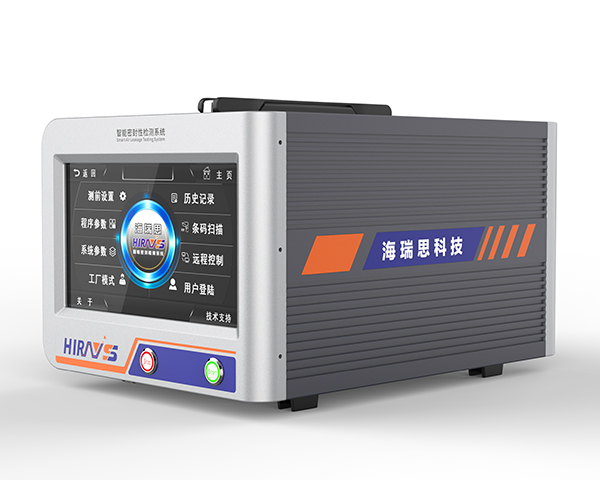
5. Common problems and solutions in sealing test
During the actual testing process, you may encounter various troublesome problems, such as:
- Missing negative issues:This is one of the most common questions.This is usually due to improper test parameter settings or insufficient sensor sensitivity.To solve this problem, the test parameters need to be adjusted first, and the test equipment needs to be calibrated regularly.
- False positive problem:The test results showed there was a leak, but there wasn't.This is often caused by unstable test environments or irregular operations.Ensuring operating specifications and the stability of the test environment is the key to solving this problem.
- Data anomaly:If the test data fluctuates abnormally, the test equipment may be malfunctioning or the workpiece may be incompatible with the operation.Equipment and operating procedures need to be checked, and appropriate parameter adjustments or equipment maintenance performed when necessary.
6. How to choose suitable sealing testing equipment?
There are a wide variety of sealing test equipment available on the market. Which one should you choose?This really has to be decided based on actual needs.Here are a few key considerations:
- Test accuracy:The testing accuracy of different equipment is different. When selecting, make sure that its accuracy can meet the testing needs.
- Ease of operation:Some high-precision equipment is complex to operate and is suitable for use by professionals.For beginners, they should choose equipment that is simple to operate and easy to use.
- Cost considerations:Equipment prices vary greatly.For example, helium mass spectrometers are expensive, but have extremely high accuracy and are suitable for high-demand detection situations.For general needs, pressure decay equipment may be more economical and practical.
- Application occasions:The specific application also determines the equipment selection. For example, medical equipment generally chooses high-precision testing methods, while industrial products tend to choose large-volume testing equipment that is easy to operate.
7. Influence of environmental factors on sealing test
When conducting a tightness test, don’t ignore the influence of environmental factors.Temperature, humidity, atmospheric pressure, etc. will all affect the test results.Here are a few areas that require special attention:
- temperature:Temperature affects the thermal expansion coefficient of the material, which in turn affects the test results.When conducting a sealing test, it needs to be conducted under constant temperature conditions to avoid test errors caused by temperature changes.
- humidity:High humidity may affect the performance of certain test media, such as the bubble method.For precision testing, it needs to be carried out under low humidity conditions to ensure accurate test results.
- Air pressure changes:Changes in air pressure will directly affect the test results of the pressure decay method and vacuum method.Therefore, it is necessary to ensure that the air pressure is stable during the entire test.
in conclusion
Well, doesn’t the world of seal testing sound a lot more interesting than you thought?Whether you are a novice or an experienced operator, by mastering the knowledge and skills introduced in this article, you can conduct sealing tests more efficiently.Remember, choose appropriate testing methods and equipment and strictly follow operating procedures. The impact of environmental conditions cannot be underestimated.These are all important factors to ensure accurate test results.I hope this article can answer your questions and make you more comfortable on the road to sealing testing.If you have any other questions, please feel free to contact Hai Ruisi, we will be happy to provide you with more help!
-
2026.04.11Good News | Hirays Honored as "Most Investment-Worthy Enterprise" at 2026 AI Glasses China Tour
-
2026.04.11Why are more and more companies opting for RGA technology for power bank electrolyte leakage detection?
-
2026.03.30Commemorating the revolutionary martyrs and inheriting the red spirit | Record of hirays’s theme activity of walking to commemorate the martyrs’ cemetery
-
2026.03.20Starting from June, the sale of non-compliant power banks will be banned: many companies ignore this detection issue
-
2026.03.16After charging 70% in 5 minutes, how can the safety of the power battery be maintained?
-
2026.03.14Overcoming difficulties and showing responsibility, efficient delivery wins praise - a tribute to the four pioneer employees on the production front line
-
2026.03.03Comparison of mass spectrometry technology applications: How do Heris helium mass spectrometers and RGA series enable precision manufacturing?
-
2026.02.26Construction has started | hirays starts a new journey of struggle in 2026
-
2026.02.06Let’s work together to embark on a new journey | The 3rd hirays Fun Games was successfully held
