
What is a tightness test?An in-depth analysis of its importance and practical methods
Whether you are a manufacturer of daily consumer goods or a developer of precision instruments, sealing testing is almost a "big mountain" that cannot be bypassed in quality control.You definitely don’t want your product to be discovered by unfriendly users to have any air or liquid leakage, right?Then, the sealing test is particularly important.Today, Hai Ruisi will take you to discuss in depth what sealing testing is, its importance and practical methods.Let you deeply understand this seemingly simple but actually highly technical process.
1. What is sealing test?
Sealing test, as the name suggests, is a technical method used to detect whether items have good sealing performance under certain conditions.It is usually used for air tightness and water tightness testing.This testing method is widely used in various industries, including but not limited to automobile manufacturing, electronic products, packaging industry, and medical devices.
Tightness testing is mainly performed in two ways: destructive testing and non-destructive testing.Destructive testing will cause certain damage to the product, while non-destructive testing will not cause any physical damage to the product structure.Which method to choose usually depends on the purpose of the product and the specific needs of the test.For example, for some high-value, complex-structured precision instruments, non-destructive testing is often the best choice.
2. Why is the sealing test so important?
If you think tightness testing is optional, you are wrong.The quality of sealing performance is directly related to the service life and reliability of the product.Without good sealing performance, the product is very likely to fail in a short period of time, resulting in huge economic losses and possible legal issues.
Especially in some special fields, such as medical and aviation industries, the requirements for sealing performance are extremely strict.Any slight leak of air or fluid may cause serious consequences.Therefore, sealing testing is not only an important means of quality control, but also a necessary step to ensure safety.It is worth mentioning that sealing testing can help manufacturers discover potential problems with products in advance and avoid more trouble in the follow-up process.
3. Common methods for sealing testing
There are many common sealing test methods.Here are some commonly used methods:
- Bubble method: Immerse the product in water and observe whether there are bubbles to determine whether there is a leak.
- Differential pressure method: Detect leaks by applying different air pressures inside and outside the product and measuring the pressure difference changes.
- Gas injection method: Inject gas (such as helium) into the interior of the product, and then use professional instruments to detect whether there is gas leakage from the outside.
- Conductivity method: The sealing property of the package is judged by detecting the conductivity of the liquid. It is often used for liquid products.
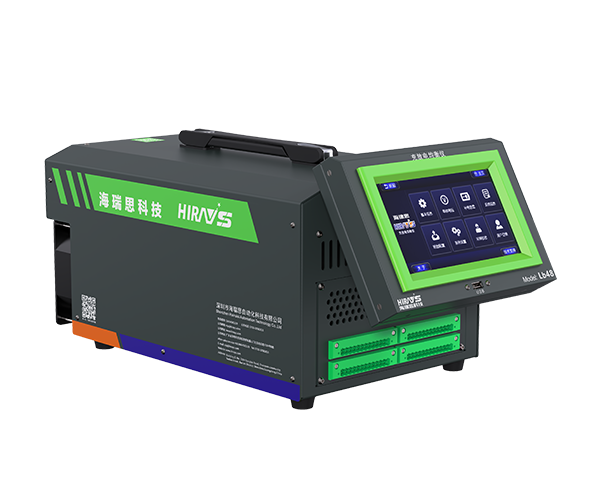
Although these methods have different operating principles, their ultimate goal is to ensure the sealing performance of the product in actual use.Depending on specific needs and budget, manufacturers can choose the testing method that best suits their product characteristics.
4. Selection of sealing test equipment
When conducting tightness testing, it is crucial to choose a suitable testing equipment.For different testing methods, there are various types of sealing testing equipment on the market to choose from, such as bubble leak testing equipment, pressure transmitters and helium leak testers.
Hirays is a trustworthy supplier of sealing testing equipment in the industry. We provide a full range of solutions from basic testing equipment to high-precision testing instruments.Our equipment not only provides high accuracy and reliability, but also supports advanced data management and analysis functions to ensure that every test result is transparent and traceable.
5. Practical application case analysis
Let’s look at a few practical application cases to better understand the implementation of tightness testing.
- Car airbag: The airtightness of the airbag directly affects safety. The sealing test is carried out through the differential pressure method and the helium method to ensure that it will not leak during the instantaneous expansion process.
- Smartphone: The sealing of the phone is related to the waterproof and dustproof performance, preventing it from affecting the user experience and the life of the phone.The air injection method is widely used in mobile phone sealing performance testing.
- Food and pharmaceutical packaging: Ensure packaging is airtight to prevent contamination or deterioration and extend shelf life.The bubble method and differential pressure method are commonly used for this type of testing.
in conclusion
As an important part of quality control, the importance of sealing testing is self-evident. It can not only help manufacturers find potential problems in products in a timely manner, but also ensure the safety and reliability of products in use.Through the introduction of this article, I believe that everyone has a deeper understanding of sealing testing and has mastered some practical methods.I hope you can use this knowledge to improve product quality and ensure user experience.
If you have any needs for sealing testing equipment, please contact Hai Ruisi.We are committed to providing customers with the most professional and reliable sealing testing solutions.
-
2026.04.11Good News | Hirays Honored as "Most Investment-Worthy Enterprise" at 2026 AI Glasses China Tour
-
2026.04.11Why are more and more companies opting for RGA technology for power bank electrolyte leakage detection?
-
2026.03.30Commemorating the revolutionary martyrs and inheriting the red spirit | Record of hirays’s theme activity of walking to commemorate the martyrs’ cemetery
-
2026.03.20Starting from June, the sale of non-compliant power banks will be banned: many companies ignore this detection issue
-
2026.03.16After charging 70% in 5 minutes, how can the safety of the power battery be maintained?
-
2026.03.14Overcoming difficulties and showing responsibility, efficient delivery wins praise - a tribute to the four pioneer employees on the production front line
-
2026.03.03Comparison of mass spectrometry technology applications: How do Heris helium mass spectrometers and RGA series enable precision manufacturing?
-
2026.02.26Construction has started | hirays starts a new journey of struggle in 2026
-
2026.02.06Let’s work together to embark on a new journey | The 3rd hirays Fun Games was successfully held
