
How is the air tightness test performed?Detailed steps!
Hello everyone, welcome to Hai Ruisi’s popular science time. Today we will talk about air tightness testing.Air tightness testing plays a very important role in industry, construction and many other fields.Have you ever wondered how to make certain products, especially those that need to perform well in a specific environment, to ensure they are airtight?This requires air tightness testing.This article will take you through the steps and related knowledge of air tightness testing in detail, so that you will no longer feel unfamiliar with this high-tech method.
1. Preparation
The prerequisite for conducting air tightness testing is the preparation of the site and equipment.You need a test environment that is almost completely airtight. This is usually an indoor space or a specially designed test chamber.Make sure there are sufficient testing instruments, such as compressed air equipment, air tightness testers, etc.Preparation is an extremely important part of the test, just like washing vegetables before cooking. Ignoring this step may lead to inaccurate or even failed subsequent test results.
2. Choose the appropriate testing method
There are many methods for air tightness testing, and which one you choose depends on the object and purpose of your test.Common air tightness testing methods include: pressure difference method, bubble leakage method, helium leak detection method, ultrasonic detection method, etc.In most cases, the differential pressure method is widely used because of its wide applicability and simplicity of operation.If you are trying air tightness testing for the first time, it is recommended to start with the differential pressure method, which can minimize misoperation by beginners.
3. Install the object under test
Next, the object under test must be installed and packaged.This step is very critical to ensure that the object being tested is completely sealed and any possible leakage paths have been sealed.You can use sealing clips or tape to help.In some high-precision tests, special sealants are even required to ensure there are no tiny leaks.At this stage, patience and care are the keys to success. Make sure everything is ready before you can move to the next step smoothly.
4. Preliminary inspection
Before starting formal testing, it is wise to conduct a preliminary inspection.Preliminary testing helps you confirm that all equipment and instruments are working properly and that the object under test is not accidentally damaged during installation.You can use low-voltage detection to observe the reaction of the equipment. If there is any abnormality, you can make timely adjustments.This step can be seen as warming up the entire process and preparing yourself mentally for the upcoming formal test.
5. Officially start testing
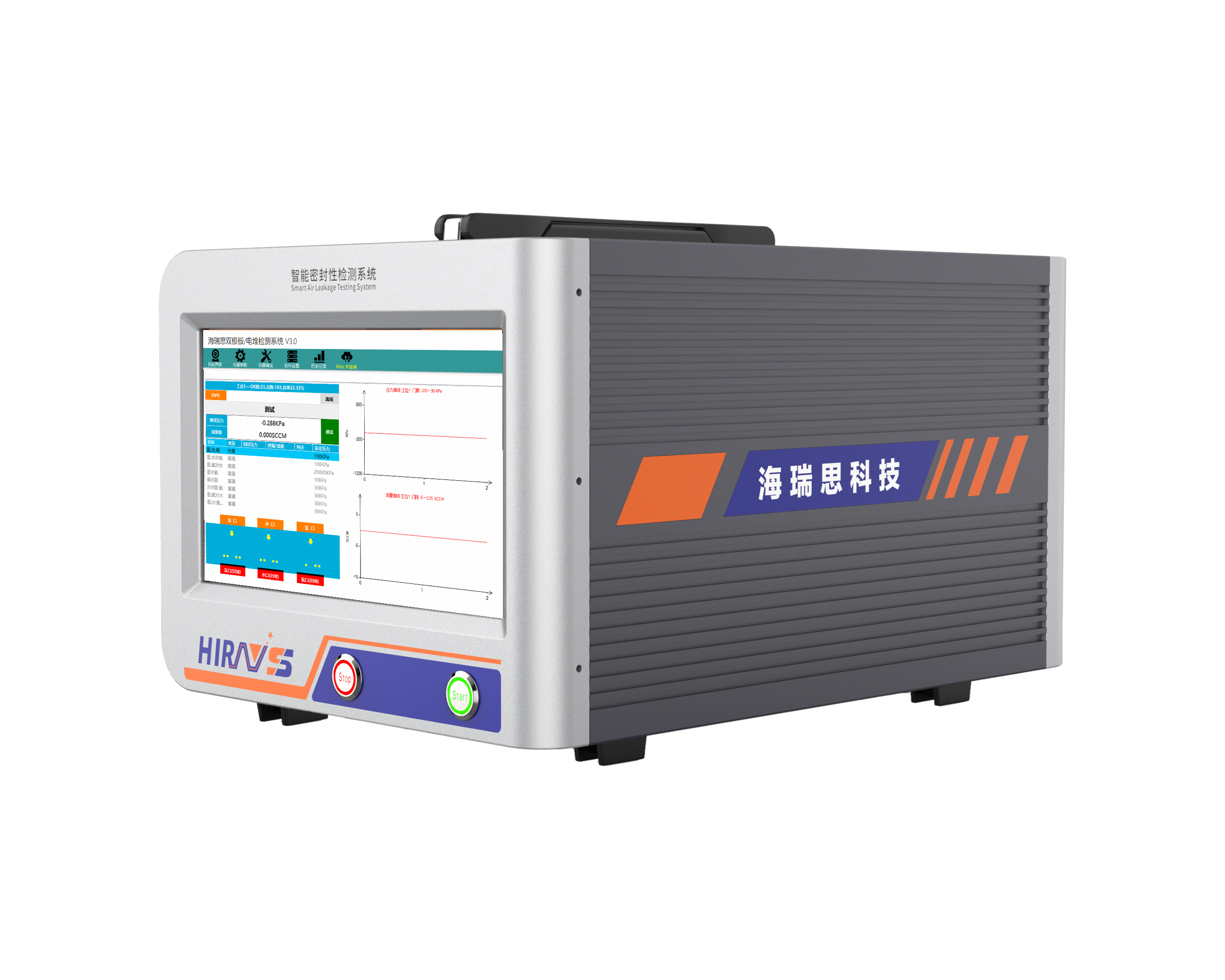
After everything is ready, formal testing can begin.Depending on the test method you selected, begin applying pressure or vacuum to the object being tested.At this time, all detection instruments should be in working condition and monitor data changes in real time.The test time may vary depending on the equipment and environment. Be patient, carefully observe the data dynamics, and record every detail. This is an important source of data for subsequent analysis.
6. Data collection and analysis
With the testing completed, data collection and analysis now need to take place.This process requires you to organize all the real-time data into meaningful results to evaluate the airtightness of the object under test.Data analysis can help you identify problems and suggest improvements.Modern technology provides many data analysis tools, using them can make your work more effective with half the effort.Of course, don’t forget about human inspection, as machines sometimes make mistakes.
7. Fault detection and correction
When the analysis is complete, if problems are found, fault detection and correction are required.Identifying the problem is another critical step in the testing process.If it is due to a problem with the equipment or device itself, repair or replace it in time.If problems are caused by improper operation during the test, correct them and record these operational errors to avoid similar situations in future tests.After correction, it is necessary to re-test to ensure that the problem has been resolved.
8. Conclusion and report
The final step is to summarize the test results and write a report.Organize all data and analysis results into a document and provide conclusions.This is not only a review of the entire testing process, but also a guide for future work.The report usually contains the background, methods, results, analysis and improvement suggestions of the test.In this way, not only do you have a comprehensive grasp of the entire process, but you can also let others understand your operations and results and provide them with a reference.
in conclusion
Air tightness testing is of irreplaceable importance in today's industry, construction and other fields.Through meticulous and rigorous steps and scientific analysis methods, the safety and reliability of products can be effectively ensured.I hope the introduction in this article can help you better understand and perform air tightness testing.Whether you are a beginner or an experienced practitioner, paying attention to the details at every step will be the key to ensuring successful testing.Thank you all for reading. I hope you will go further and further on the road of air tightness testing and go more smoothly!If you have any questions or need further information, please contact us.We'll be happy to answer your questions.
-
2026.04.11Good News | Hirays Honored as "Most Investment-Worthy Enterprise" at 2026 AI Glasses China Tour
-
2026.04.11Why are more and more companies opting for RGA technology for power bank electrolyte leakage detection?
-
2026.03.30Commemorating the revolutionary martyrs and inheriting the red spirit | Record of hirays’s theme activity of walking to commemorate the martyrs’ cemetery
-
2026.03.20Starting from June, the sale of non-compliant power banks will be banned: many companies ignore this detection issue
-
2026.03.16After charging 70% in 5 minutes, how can the safety of the power battery be maintained?
-
2026.03.14Overcoming difficulties and showing responsibility, efficient delivery wins praise - a tribute to the four pioneer employees on the production front line
-
2026.03.03Comparison of mass spectrometry technology applications: How do Heris helium mass spectrometers and RGA series enable precision manufacturing?
-
2026.02.26Construction has started | hirays starts a new journey of struggle in 2026
-
2026.02.06Let’s work together to embark on a new journey | The 3rd hirays Fun Games was successfully held
