
Can a tightness test be done at home?DIY guides and professional comparisons
Want to ensure that the sealing performance of your household items, vehicle or appliances is always in top condition?Regular tightness testing is necessary.Sealing is not only about energy efficiency and preventing leaks, but it also affects the overall service life of the product.This article details how to perform a self-tightness test at home and compares it to a professional test.By reading this article, you will learn about common DIY methods, required tools, precautions, as well as the advantages of professional inspection and under what circumstances you should consider seeking professional help.
1. What is sealing test?
Tightness testing, in short, is to detect the sealing effect of an object, container or system through various methods.Objects with good sealing properties can usually prevent the penetration and leakage of liquids, gases and dust, ensuring that their internal environment is stable and safe.For example: preventing cold air from leaking from the inside out to improve the cooling efficiency of the refrigerator; ensuring that car doors and windows are sealed to prevent wind noise and water leakage, etc.
The application scenarios are very wide and involve many aspects of daily life, such as household water supply systems, car seals, food storage containers, waterproof shells for electronic products, and waterproof layers of buildings, etc.Understanding how to perform sealing testing can help us discover hidden dangers in time and prevent them from happening.
2. Common DIY sealing testing methods
It is not complicated to conduct a sealing test at home, and only simple tools and methods are needed to achieve preliminary testing results.
1. Soak test method:Put items into water and see if bubbles are produced.The location where bubbles occur is the leak point.
2. soapy water test: Spray soapy water on the area to be inspected. If bubbles are generated, it means there is a leak.
3. Visual and tactile detection: You can use your hands to feel whether there are cracks in the door and window seals or poor reinstallation quality. You can also use light to check whether there are gaps in the sealing area.
4. smoke detection method: Blow the smoke towards the sealed area and observe whether the smoke enters the inside of the seal. If so, there is a problem with the sealing.
3. Advantages and limitations of DIY method
The DIY sealing test method can reflect its advantages in the following aspects:
1. Affordable: Most DIY methods only require simple tools and materials, such as soapy water, smokers, etc., and are low-cost.
2. Convenient and fast: You can do it at home, no need to wait for professional testing personnel to come to your door.
3. Flexible and autonomous: You can conduct testing according to your own schedule, which is convenient and flexible.
However, for some complex sealing problems, DIY methods may have certain limitations:
1. Not very accurate: The detection accuracy of DIY methods is generally not as good as professional instruments, and it is easy to miss small leaks.
2. Limited to surface inspection: Although some surface leaks can be found, internal problems are difficult to detect.
3. experience dependence: It may be difficult for inexperienced persons to accurately determine the leak point.
4. Advantages of professional sealing testing
Professional sealing testing services have many advantages that are difficult to achieve with DIY methods, and can bring more trust to brands such as Hirays:
1. High precision instruments: Professional equipment such as Chu CO2 leak detector, vacuum detector, etc. can provide high-precision detection data.
2. Various detection methods: In addition to the common bubble method and negative pressure method, professional testing can also use optical, ultrasonic and other methods for testing.
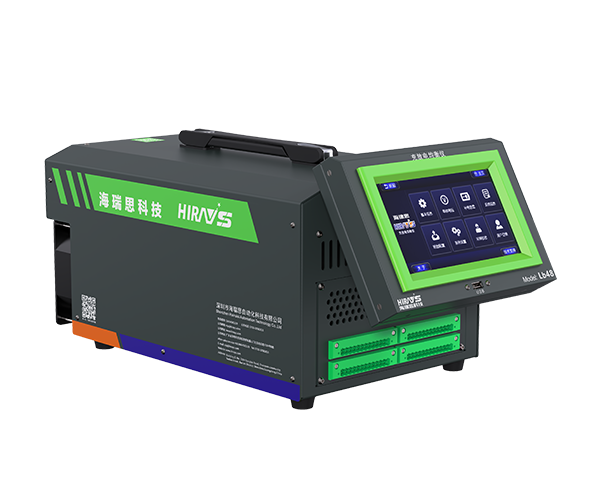
3. Experienced technical staff: Professional technicians can adopt the most appropriate method for efficient detection according to different situations.
4. Detailed report: Professional inspections usually provide a detailed inspection report listing the location of the leak, the extent of the leak, and recommended repair methods.
5. When to choose DIY and when to choose professional testing?
When conducting sealing testing, whether to choose a DIY method or ask a professional needs to be decided based on the specific situation.
1. simple question: For example, DIY methods are preferred for sewer pipes and small gaps in daily doors and windows.
2. Try preliminary screening: You can try DIY methods for preliminary screening first. If the problem is still not clearly located, consider professional testing.
3. complications: Such as large equipment, precision electronic products, etc., you should directly choose professional testing to ensure accuracy and comprehensiveness.
6. Recommended DIY sealing testing tools
If you plan to conduct a seal test at home, some simple but effective tools are essential:
1. Soapy water and spray bottle: You need to pay attention to choosing environmentally friendly soap to ensure that the process will not have a negative impact on the environment and the object being tested.
2. flashlight: Used to illuminate the sealed area to help better observe and find potential gaps.
3. Suspended particles and electric fans: The combined use of suspended particles can simulate a wind-blown environment and observe the sealing effect from a distance.
4. smoke generator: It is recommended to choose non-toxic and harmless types for family use.
7. How to interact with professional testing services
When deciding to choose professional testing services, understanding how to interact with the testing company can better ensure the testing results:
1. Clarify needs: When contacting the testing company, put forward specific testing requirements and explain the problem in detail.
2. Understand the process: Inquire about the testing process, including the time required, fees and services provided.
3. Verify qualifications: Choose a reputable and fully qualified testing company to ensure the accuracy and authoritativeness of the testing results.
4. Assessment report recommendations: After receiving the test report, discuss the report content with the technician, listen to maintenance suggestions, and make repairs in a timely manner.
in conclusion
Whether it is based on cost considerations or for convenience and flexibility, sealing testing at home is an effective method.However, for complex and high-precision sealing testing, it is more appropriate to choose professional services.I hope that through this article, you will have a clearer understanding of DIY sealing testing and professional testing.When making specific choices, you can weigh the pros and cons based on the actual situation and choose the most appropriate detection method.
With the help of professional brands like Hirays, we can bring more guarantees in the field of sealing testing and ensure a safe, energy-saving and efficient living environment.If you have more sealing testing needs, please feel free to consult the professional team of Hai Ruisi.
-
2026.04.11Good News | Hirays Honored as "Most Investment-Worthy Enterprise" at 2026 AI Glasses China Tour
-
2026.04.11Why are more and more companies opting for RGA technology for power bank electrolyte leakage detection?
-
2026.03.30Commemorating the revolutionary martyrs and inheriting the red spirit | Record of hirays’s theme activity of walking to commemorate the martyrs’ cemetery
-
2026.03.20Starting from June, the sale of non-compliant power banks will be banned: many companies ignore this detection issue
-
2026.03.16After charging 70% in 5 minutes, how can the safety of the power battery be maintained?
-
2026.03.14Overcoming difficulties and showing responsibility, efficient delivery wins praise - a tribute to the four pioneer employees on the production front line
-
2026.03.03Comparison of mass spectrometry technology applications: How do Heris helium mass spectrometers and RGA series enable precision manufacturing?
-
2026.02.26Construction has started | hirays starts a new journey of struggle in 2026
-
2026.02.06Let’s work together to embark on a new journey | The 3rd hirays Fun Games was successfully held
