
How to conduct waterproof testing in Shenzhen?Detailed guide is here!
Shenzhen, as a modern international metropolis, has a highly developed economy and residential market.At the same time, it is located in a coastal area and has to face humid and rainy weather all the time, so the requirements for building waterproofing measures are particularly important.Whether it is home decoration or industrial construction, waterproof testing is an indispensable and important part.Are you also in a critical period of renovation, or just confused about waterproof testing?Don’t worry, Hirays brings you a detailed waterproof testing guide so that you can easily conduct waterproof testing in Shenzhen.
In the following pages, we will explain step by step how to conduct effective waterproof testing in Shenzhen, covering many aspects from preparation to testing methods to result analysis to ensure that your building’s waterproofing is foolproof.Let’s learn together!
1. Preparation work
Before starting the waterproof test, we first need to make sufficient preparations.Preparation is half the battle, and this is no exception when it comes to waterproofing testing.You will need to prepare some necessary tools and prepare the test area appropriately.
Preparation tools include: sprinkler, water meter, waterproof coating, ruler, marker, camera, etc.Sprinklers are used to simulate rain conditions, water meters detect humidity, and waterproof coatings are used to repair possible holes.Preparing these tools ensures that no surprises arise during testing.
Next, process the test area.This includes cleaning the test surface, checking the integrity of the original waterproofing coating, and repairing obvious cracks and holes.At the same time, it is best to conduct the test on a sunny day so that the environmental conditions are more controllable.The degree of meticulous preparation directly affects the reliability of the test results.
2. Determine the test area
In the city of Shenzhen, different buildings have different waterproof testing needs.From residential roofs, kitchens, and bathrooms to the basements of industrial buildings, the determination of test areas directly affects the selection of test methods and the interpretation of test results.
The specific steps are as follows: Determine areas susceptible to water damage based on your building structure, such as roofs, wall joints, window perimeters, etc.Then, different testing methods are selected based on the characteristics of these areas.For example, roofs and exterior walls are suitable for large-area water spray testing, and bathrooms and kitchens are suitable for localized water spray testing.
When determining the test area, special attention needs to be paid to areas that are frequently exposed to water, such as around water pipes, drains, etc.This is often an area with a high incidence of water leakage and requires special attention.Only in this way can we ensure that the waterproof test covers all key parts and ensures that there are no hidden dangers of water leakage.
3. Conduct preliminary tests
The preliminary test is the first step in the waterproof test. The purpose is to eliminate some obvious waterproof problems through preliminary inspection and lay a solid foundation for subsequent in-depth tests.
Use a sprinkler or bucket to continuously spray water on the target area, observing the flow direction and penetration rate of the water during the process, and recording potential leaks and suspicious areas.This applies especially to exposed areas such as roofs, windows and facades.
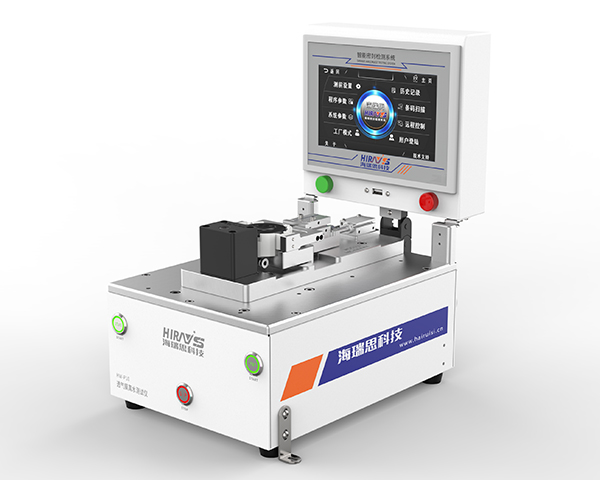
Next, use a water meter to detect changes in moisture, especially in hidden corners and seams.A water meter is a very sensitive tool that can detect changes in humidity that are invisible to the naked eye, which can further confirm the accuracy of the initial test.
Preliminary testing is a simple and effective process that allows you to screen out areas with obvious waterproofing problems and prepare for further in-depth testing.Remember to record carefully during the preliminary testing process, every detail may be the key to solving the problem.
4. In-depth testing
After the initial testing is over, the next step is the in-depth testing phase.This step is more detailed and complex. The purpose is to further identify potential leaks and carry out effective repairs based on confirming the preliminary test results.
Cool tools join the battlefield: thermal imagers and smoke tests.These high-tech equipment can help us accurately detect water seepage paths and tiny cracks that are difficult to detect with the naked eye.The thermal imager finds cold spots through temperature changes, and the smoke test finds water leaks through the flow of smoke.Especially for hidden wall interiors, it is very effective.
If a leak is found, we need to fix it.For example, use a waterproof coating to coat all suspect areas, especially cracks and seams.For severe leaks, professional repair may be required.In-depth testing is critical, as a small oversight can lead to large-scale leaks.Therefore, patience and carefulness are essential.
5. Result analysis and waterproofing measures
In the final step, we need to conduct a comprehensive analysis of the test results and formulate corresponding waterproofing measures.The result analysis can help us find out the weak links of waterproofing, so that targeted waterproofing treatment can be carried out.
When analyzing the results, the data from the water meter and the thermal imager can be combined to jointly analyze the changes in humidity and temperature, so that leakage points can be determined more accurately.Combined with the phenomena and data recorded during the test, the cause and specific location of the leakage were summarized.
When formulating waterproofing measures, it is necessary to consider the combination of actual conditions and conventional waterproofing methods.For example, for flat roofs that are prone to water accumulation, the thickness of the drainage system and waterproof layer can be increased.For wall joints, use a high-quality waterproof sealant.Detailed result analysis and targeted waterproofing measures can greatly improve the waterproofing performance of the building.
in conclusion
Through this detailed waterproof testing guide, I believe you have a clearer understanding of how to conduct effective waterproof testing in Shenzhen.From preparation to testing methods to analysis of results, every step is critical.Haris here reminds everyone that if a small waterproofing problem is not dealt with in time, it may bring great inconvenience to your life and work.Therefore, waterproof testing is essential.
I hope that through this article, you will not only master the skills of waterproof testing, but also be able to operate with ease in actual operations.Of course, if you encounter any problems during the testing process, you are welcome to consult us at any time.Hiraysi is always by your side to provide you with the most professional waterproofing solutions.I wish you a smooth test and a safe and happy life!
-
2026.04.11Good News | Hirays Honored as "Most Investment-Worthy Enterprise" at 2026 AI Glasses China Tour
-
2026.04.11Why are more and more companies opting for RGA technology for power bank electrolyte leakage detection?
-
2026.03.30Commemorating the revolutionary martyrs and inheriting the red spirit | Record of hirays’s theme activity of walking to commemorate the martyrs’ cemetery
-
2026.03.20Starting from June, the sale of non-compliant power banks will be banned: many companies ignore this detection issue
-
2026.03.16After charging 70% in 5 minutes, how can the safety of the power battery be maintained?
-
2026.03.14Overcoming difficulties and showing responsibility, efficient delivery wins praise - a tribute to the four pioneer employees on the production front line
-
2026.03.03Comparison of mass spectrometry technology applications: How do Heris helium mass spectrometers and RGA series enable precision manufacturing?
-
2026.02.26Construction has started | hirays starts a new journey of struggle in 2026
-
2026.02.06Let’s work together to embark on a new journey | The 3rd hirays Fun Games was successfully held
