
Frequently Asked Questions and Solutions for Shenzhen Air Tightness Testing
In the rapidly developing Shenzhen, Guangdong, air tightness testing has become one of the key links in the manufacturing process of various industries.From electronics to automotive parts, ensuring products are airtight not only improves quality, but also improves user satisfaction.However, air tightness testing is not a simple matter. It involves various factors and is prone to problems.Therefore, here, we will discuss some air tightness testing problems commonly encountered in Shenzhen and provide relevant solutions to help production companies and engineers better cope with the challenges.
1. Improper selection of test equipment
When conducting air tightness testing, choosing the right testing equipment is crucial.Improper equipment selection may not only lead to inaccurate test results, but may even damage the product.Hirays recommends: Choose appropriate testing equipment based on the specific characteristics and requirements of the product to be tested.Understand the working principle and application scope of the equipment in detail to ensure that the equipment can meet the accuracy, stability and repeatability requirements of the test.
2. The test environment is unstable
Air tightness testing has higher requirements on environmental conditions.For example, fluctuations in temperature and humidity may affect test results.Shenzhen has a changeable climate, especially high temperature and humidity in summer, which is more likely to interfere with testing.In this case, it is recommended to conduct the test in an environment with constant temperature and humidity, and use a stable power supply to avoid errors caused by environmental changes.
3. Clamp leakage
The fixture is a crucial part of the air tightness test. If the fixture is unreasonably designed or has loopholes, it will directly affect the test results.To avoid this problem, you can use a professional air tightness test fixture and perform regular inspection and maintenance.This not only ensures the sealing of the fixture, but also extends its service life and improves test accuracy.
4. Improper operation
Even the most advanced equipment requires correct operation to achieve its maximum effectiveness.Improper operation may lead to inaccurate test data, equipment damage or even safety hazards.Hirays suggests: Before conducting air tightness testing, operators must be professionally trained to ensure that every step of the operation complies with standard procedures, and when using equipment, strictly follow the manufacturer's operating manual.
5. Too much reliance on automation
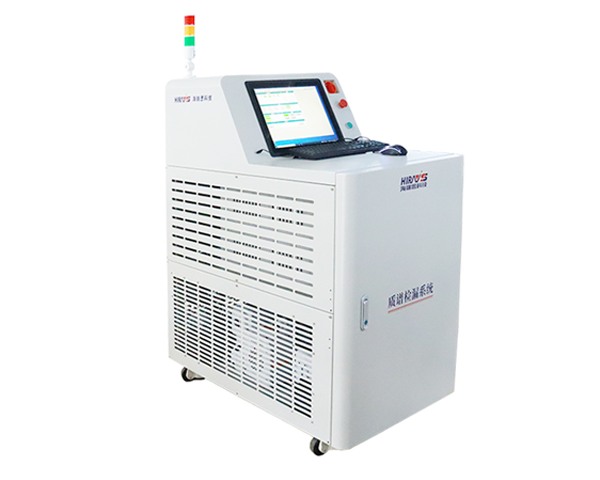
Air tightness testing with the help of automated technology greatly improves efficiency, but relying too much on automation may lead to overlooking some details.In the automation process, it is necessary to retain manual inspection links, especially for products with complex structures.This can effectively avoid testing errors caused by equipment failures or software vulnerabilities.
6. Improper test parameter settings
During the air tightness test process, reasonable setting of test parameters is crucial.If parameters such as pressure, time, and leakage are set improperly, it will directly affect the test results.Different test parameters should be used for different products and verified multiple times to find the best test parameters.It is recommended to record the parameters and results of each test for future reference and improvement.
7. No preliminary experiment was conducted
Any test requires preliminary experiments to calibrate and adjust the equipment, and air tightness testing is no exception.Skipping the pre-experiment and going directly to the formal test may lead to distorted results.Hirays recommends: Conduct a small-batch pre-experiment before formal testing, observe the stability of the equipment and test results, and then make adjustments and optimizations based on the observation results.
8. Neglecting maintenance and calibration
Air tightness testing equipment requires regular maintenance and calibration to ensure the accuracy of test data and the stability of the equipment.If this step is ignored, device performance may gradually degrade and test results lose credibility.Therefore, it is recommended to establish a regular plan for equipment maintenance and calibration, strictly follow the plan, and record the details of each maintenance and calibration.
in conclusion
Through the above analysis and discussion, I believe everyone has a deeper understanding of the common problems in Shenzhen air tightness testing and has mastered some countermeasures.Although air tightness testing is complicated, as long as we choose appropriate equipment, operate in strict accordance with standards, and pay attention to details, we will eventually be able to obtain accurate and reliable test results.I hope these suggestions provided by Hai Ruisi will be helpful to everyone and make the work smoother and more efficient.
-
2026.04.11Good News | Hirays Honored as "Most Investment-Worthy Enterprise" at 2026 AI Glasses China Tour
-
2026.04.11Why are more and more companies opting for RGA technology for power bank electrolyte leakage detection?
-
2026.03.30Commemorating the revolutionary martyrs and inheriting the red spirit | Record of hirays’s theme activity of walking to commemorate the martyrs’ cemetery
-
2026.03.20Starting from June, the sale of non-compliant power banks will be banned: many companies ignore this detection issue
-
2026.03.16After charging 70% in 5 minutes, how can the safety of the power battery be maintained?
-
2026.03.14Overcoming difficulties and showing responsibility, efficient delivery wins praise - a tribute to the four pioneer employees on the production front line
-
2026.03.03Comparison of mass spectrometry technology applications: How do Heris helium mass spectrometers and RGA series enable precision manufacturing?
-
2026.02.26Construction has started | hirays starts a new journey of struggle in 2026
-
2026.02.06Let’s work together to embark on a new journey | The 3rd hirays Fun Games was successfully held
