
How to detect pipeline leaks with an air tightness tester?
In modern industry and construction, ensuring leak-free pipes is crucial.Leakage will not only cause energy waste and economic losses, but may also cause serious safety accidents.At present, the air tightness tester has become a mainstream tool for detecting pipeline leaks, especially in the detection of crude oil, natural gas, water supply and drainage pipelines. The air tightness tester has won widespread praise for its high efficiency and accuracy.As a well-known brand in this field, Hiraysi's air tightness testers occupy an important position in the market.In this article, we will introduce in detail how to perform pipeline leak detection with an air tightness tester to help you better understand and apply this technology.
1. Understand the basic principles of air tightness tester
Air tightness testers usually determine whether there is a leak by detecting changes in pressure within the pipeline.The basic idea is to pressurize the inside of the pipeline and then monitor changes in pressure over a certain period of time.If the pressure drops quickly, the pipe has a leak.The Hirays air tightness tester has the characteristics of high sensitivity and high precision, and can quickly and accurately detect small leaks in pipelines.Its advanced software system can process and display test data in real time, providing users with intuitive detection results.
2. Preparation and equipment inspection
Before conducting the air tightness test, a series of preparations need to be carried out.Check that the test equipment is intact, especially connecting pipes, sensors and displays.Verify that no liquid or gas remains in the pipe, which would affect the test results.The Hirays air tightness tester is equipped with a series of self-check functions to ensure that the equipment is working in optimal condition.Users need to prepare all necessary tools and accessories, such as compressed air sources, shut-off valves, and pressure gauges.
3. Seal the test section and pre-pressurize it
Select the section of pipe that needs to be leak tested and seal it at both ends using sealing material or equipment.It is very important to ensure that the sealing process is flawless, otherwise it will affect the test results.Before pressurizing, check the seal.Next, pre-pressurization is performed through an air tightness tester. The purpose of this step is to eliminate the air in the pipeline so that the next formal pressure test can be more accurate.Hirays Air Tightness Tester provides a convenient one-click pressurization function, making this process faster and more effective.
4. Officially pressurize and monitor pressure changes
After the pre-pressurization is completed, the formal pressurization phase begins.Gradually increase the pressure to the set value in accordance with the test standards and the characteristics of the pipe material.During the pressurization process, pressure changes should be closely monitored and ensure pressure stability.The high-definition display screen and precision pressure sensor of the Hirays air tightness tester allow users to obtain and monitor detailed pressure data in real time.When the set pressure is reached and stabilized, start recording pressure changes.This stage usually lasts for a period of time to accurately determine whether there is a leak.
5. Data analysis and judgment
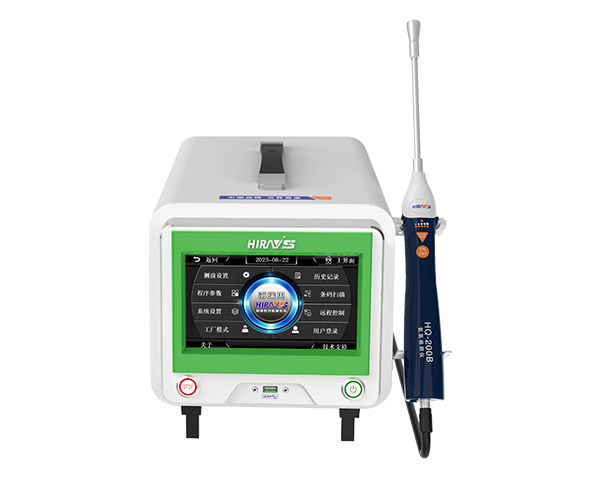
After the pressure test is completed, data analysis is key to determining whether a leak exists.By comparing the preset pressure change curve with actual data, it can be determined whether there is a leak point in the pipeline.If the pressure drops too quickly, it indicates a leak.The Hirays air tightness tester has powerful data analysis functions, can automatically generate test reports and provide detailed statistical information to help users make quick judgments.At the same time, the built-in alarm system of the instrument can promptly notify the user when abnormal conditions are detected, improving the safety and efficiency of detection.
6. Check and confirm the leak location
Once a leak is confirmed in the pipeline, the specific leak location needs to be further investigated.This usually involves segmented testing and the use of more sensitive leak detection methods, such as nitrogen detection or special leak detection fluids.Hirays Air Tightness Tester provides a variety of expansion sensors and accessories, supports a variety of detection methods, and can greatly improve the efficiency and accuracy of leak location confirmation.After the leak location is determined, corresponding repair or replacement work needs to be carried out according to the actual condition of the pipeline.
7. Multiple tests and result verification
In order to ensure the accuracy of the test results, repeated testing is necessary.It needs to be re-pressurized and sealed before each test to confirm that the conditions for each test are consistent and there is no external interference.Through multiple tests, accidental factors can be effectively eliminated and the reliability of leak detection results can be ensured.The automation function of the Hirays air tightness tester can greatly simplify the operation process of multiple tests, reduce the user's workload and improve testing efficiency.Test data can be stored and exported for subsequent reference and analysis.
8. Maintain and maintain the air tightness tester
To ensure that the air tightness tester is always in optimal working condition, regular maintenance and upkeep is essential.The sensor and connecting pipes should be cleaned promptly after use to prevent residues from affecting the next test.Regularly check your device's batteries, cables, and connections to make sure they are not worn or damaged.Hirays provides a variety of maintenance solutions and technical support. Users can choose a suitable solution according to their needs to extend the service life of the equipment and maintain its high precision and reliability.
in conclusion
Pipe leak detection with an air tightness tester is a complex but very important task.Correct operation and scientific analysis can effectively ensure the safety and normal operation of the pipeline system.Hirays air tightness tester provides users with a convenient and efficient testing solution due to its high accuracy, easy operation and versatility.Through the detailed introduction of this article, I believe that readers will have a clearer understanding of the operation of the air tightness tester and be able to apply it in actual work, thereby improving the effectiveness and efficiency of pipeline leakage detection.
-
2026.04.11Good News | Hirays Honored as "Most Investment-Worthy Enterprise" at 2026 AI Glasses China Tour
-
2026.04.11Why are more and more companies opting for RGA technology for power bank electrolyte leakage detection?
-
2026.03.30Commemorating the revolutionary martyrs and inheriting the red spirit | Record of hirays’s theme activity of walking to commemorate the martyrs’ cemetery
-
2026.03.20Starting from June, the sale of non-compliant power banks will be banned: many companies ignore this detection issue
-
2026.03.16After charging 70% in 5 minutes, how can the safety of the power battery be maintained?
-
2026.03.14Overcoming difficulties and showing responsibility, efficient delivery wins praise - a tribute to the four pioneer employees on the production front line
-
2026.03.03Comparison of mass spectrometry technology applications: How do Heris helium mass spectrometers and RGA series enable precision manufacturing?
-
2026.02.26Construction has started | hirays starts a new journey of struggle in 2026
-
2026.02.06Let’s work together to embark on a new journey | The 3rd hirays Fun Games was successfully held
