
A brief discussion on cylinder sealing testing:
The engine is one of the most important components of a car, just like the human heart.Due to the complex structure of the engine and its poor conditions, its main components (such as pistons, piston rings, cylinders, etc.) are not only subjected to high temperatures and pressures, but also operate under alternating speed and high load conditions. Therefore, they wear out greatly, resulting in extremely high failure rates. They have become one of the important components for automobile fault detection.
Since there are many parameters for diagnosing the technical condition of the engine (such as cylinder compression pressure parameters, crankcase blow-by volume parameters, etc.), this article only selects test items related to comprehensive performance parameters such as engine wear, power, and fuel consumption for introduction.In actual work, test items should be reasonably selected according to specific conditions to judge the technical condition of the engine.The technical status parameters of commonly used automobiles are shown in Table 1.
The engine cylinder sealing is mainly ensured by the cylinder piston group sealing, valve and valve seat sealing, cylinder head sealing, cylinder gasket sealing and related parts. The evaluation criteria mainly include cylinder compression pressure, crankcase blow-by volume, cylinder air leakage, intake pipe vacuum, etc. Air tightness and leakage must be detected.
Cylinder air leakage detector. The detector consists of a precision pressure regulating valve, a sensor, a quick-change pipe joint, and a detection system.When the measuring piston is at the top dead center of the compression stroke, the detector uses the compressed air filled into the cylinder and determines the wear degree of the cylinder piston group and valve group according to the changes in pressure in the cylinder, thereby detecting the engine's air leakage, sealing performance and other indicators.(1) Under the specified testing conditions, for an engine with a cylinder diameter of about 102mm, if the air pressure value of the measuring table≥0.25MPa, indicating good sealing performance; if the air pressure value of the measuring table is <0.25MPa, indicating poor sealing performance.(2) During the test, if the air leakage of most cylinders decreases slightly and only a few cylinders decrease significantly, it can be preliminarily determined that the air leakage is caused by poor valve sealing.At this time, the cylinder charging nozzle with large air leakage can be removed and a small amount of lubricating oil can be injected for further inspection.(3) If the sound of air leakage is heard at the carburetor port, it means that the intake valve is not tightly sealed; if the sound of air leakage is heard at the muffler, it means there is air leakage at the exhaust valve; if the sound of air leakage is heard at the oil filler port, it means there is air leakage at the piston ring; if the sound of air leakage is heard at the heat sink, it means the cylinder gasket is cracked and damaged.
Things to note
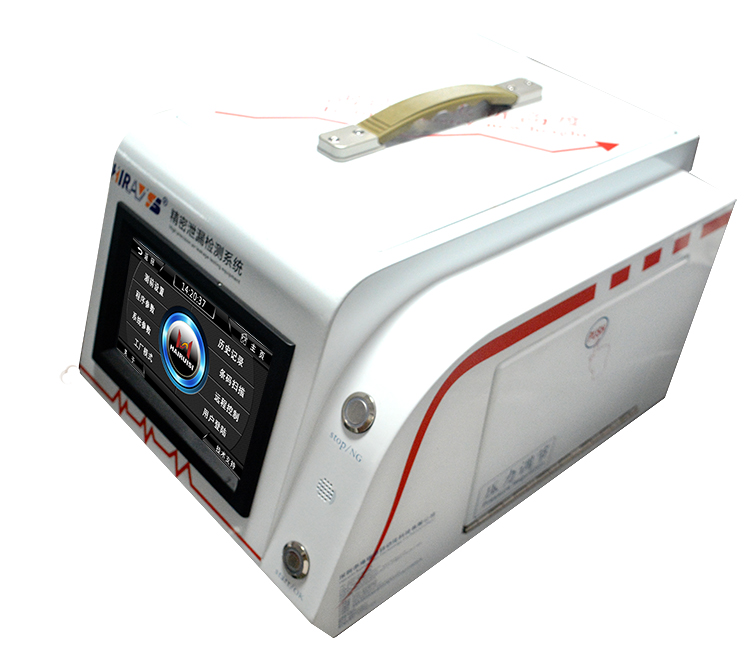
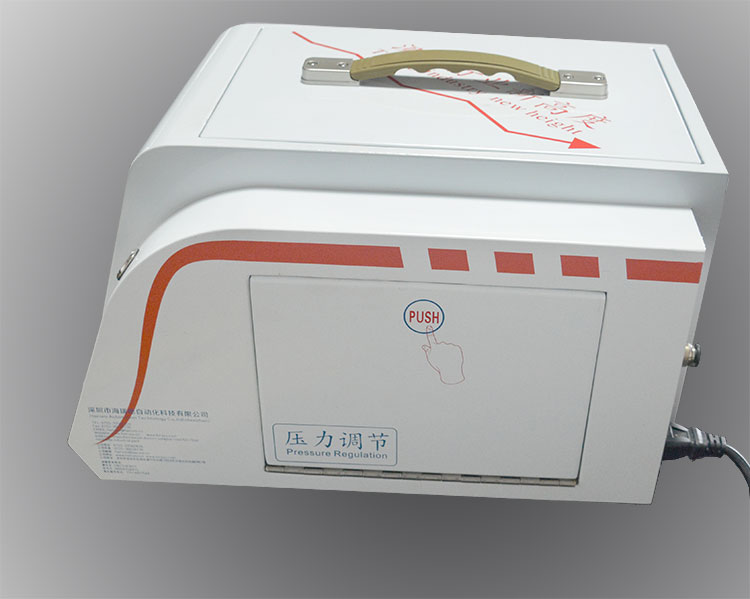
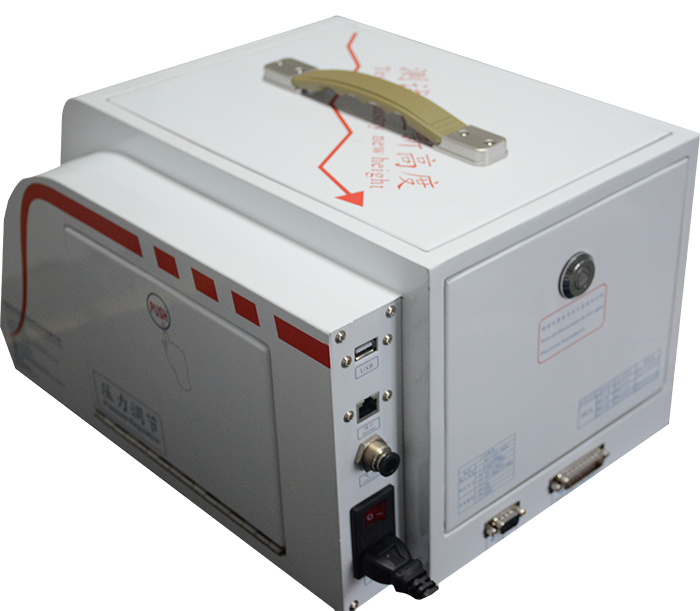
Hai RuisiTightness testerThe connected air compressor should have an oil-water separation device to ensure the reliability of the pressure reducing valve.After the instrument is used, the pressure reducing valve should be returned to its original state.The air leakage condition of the engine cylinder can be assessed by either the cylinder air leakage amount or the cylinder air leakage rate. The structure, working principle and use method of the air leakage amount detector and the air leakage rate detector are actually the same.
Crankcase blow-by leakage detection
The structure and principle of the crankcase blow-by gas leakage measuring instrument There are many types of crankcase blow-by gas measuring instruments. When measuring, the crankcase needs to be sealed, and the gas that leaks into the crankcase from the lubricating oil injection port is introduced into the gas flow meter. Since there are deposits on both sides of the flow orifice plateAt the pressure difference, the water column of the pressure gauge is moved until the gas pressure is balanced with the drop of the water column. The height of the water column of the pressure gauge is the volume of gas leaking into the crankcase per unit time. This is used to judge the leakage amount and sealing technical condition of the cylinder piston assembly.
No matter what kind of product it is in, the engine is the heart of the engine. Sealing and leakage are important technical indicators of the quality of the engine. Therefore, its sealing and leakage are very important compared to the product. Shenzhen Hiraysi's precision leakage detector is very suitable for engine sealing and leakage detection.The self-developed leak detection system has high reliability.Imported accessories ensure the stability of detection and the accuracy of leakage to the greatest extent.
-
2026.04.11Good News | Hirays Honored as "Most Investment-Worthy Enterprise" at 2026 AI Glasses China Tour
-
2026.04.11Why are more and more companies opting for RGA technology for power bank electrolyte leakage detection?
-
2026.03.30Commemorating the revolutionary martyrs and inheriting the red spirit | Record of hirays’s theme activity of walking to commemorate the martyrs’ cemetery
-
2026.03.20Starting from June, the sale of non-compliant power banks will be banned: many companies ignore this detection issue
-
2026.03.16After charging 70% in 5 minutes, how can the safety of the power battery be maintained?
-
2026.03.14Overcoming difficulties and showing responsibility, efficient delivery wins praise - a tribute to the four pioneer employees on the production front line
-
2026.03.03Comparison of mass spectrometry technology applications: How do Heris helium mass spectrometers and RGA series enable precision manufacturing?
-
2026.02.26Construction has started | hirays starts a new journey of struggle in 2026
-
2026.02.06Let’s work together to embark on a new journey | The 3rd hirays Fun Games was successfully held
