
Driven by the wave of computing-power infrastructure build-out, the photonics industry keeps moving upmarket: optical communication components are iterating faster, and the bar for manufacturing processes keeps rising. The signals coming out of the 2026 China International Optoelectronic Exposition (CIOE 2026) point to one conclusion — optical fabrication is shifting to semiconductor-grade standards, in-line inspection throughput is becoming a core competitive edge, and in-house breakthroughs in core equipment are resetting quality-control benchmarks across the photonics value chain. With its in-house-developed RGA mass spectrometry and high-precision leak detection equipment, HIRAYS is building a solid quality defense line for high-end photonics processes.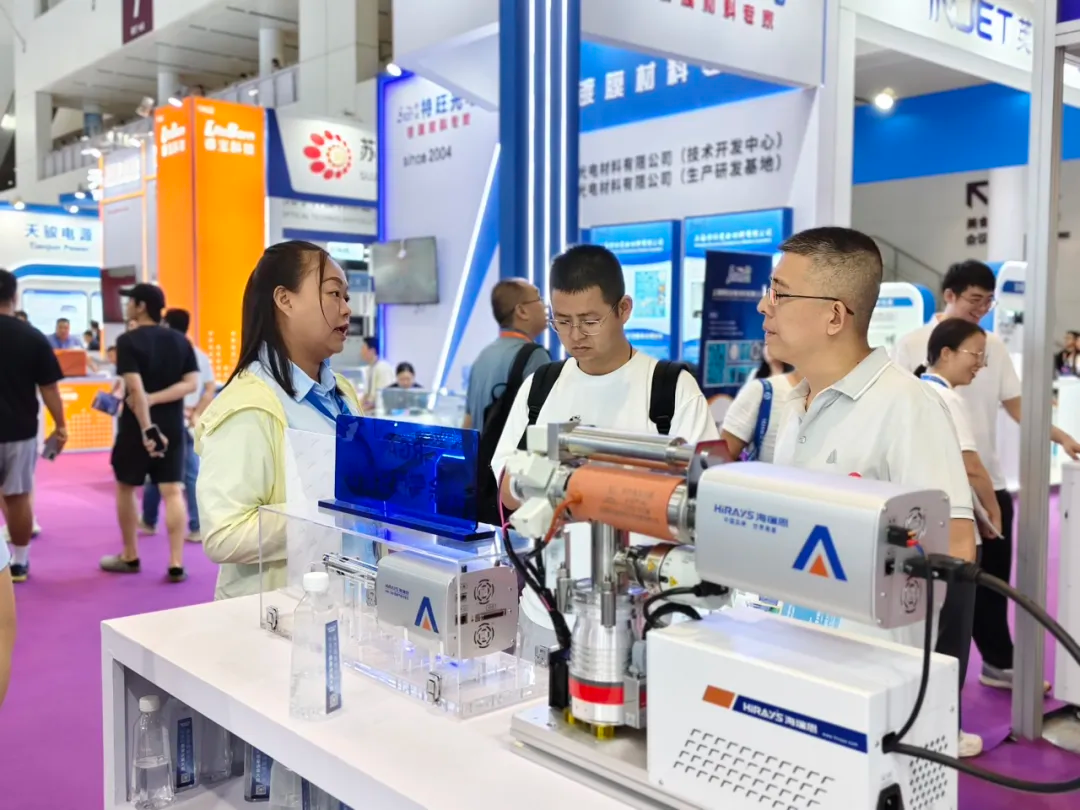
At this year's CIOE, continued build-out of computing infrastructure has ushered in a period of rapid growth for photonics. Optical communication components are iterating faster, precision requirements for optical-path fabrication are moving to the micron and even sub-micron level, and the entire optical supply chain is undergoing deep change. Reading across the exhibits on the floor, customer conversations, and industry sessions, three clear trends in photonics manufacturing emerge.
01 | Trend 1: Optical Fabrication Moves to Semiconductor-Grade Standards; Vacuum Atmosphere Control Becomes a Must-Have
As optical communication components keep moving up the performance curve, passive components now account for 11% of optical module cost. Across the full production chain — coating, bonding, and packaging — process standards have shifted from conventional precision machining to semiconductor-grade micro/nano fabrication, placing far stricter demands on the vacuum environment and chamber cleanliness.
Trace impurity gases inside a vacuum chamber readily cause coating defects and bonding failures, seeding long-term reliability risks in optoelectronic devices. Conventional pressure-only monitoring with a vacuum gauge can no longer contain process risk. In-line RGA residual gas monitoring has moved from an optional add-on to a must-have on high-end photonics lines — resolving trace gas species in the vacuum environment in real time, enabling process diagnostics, and holding the critical gate on yield control.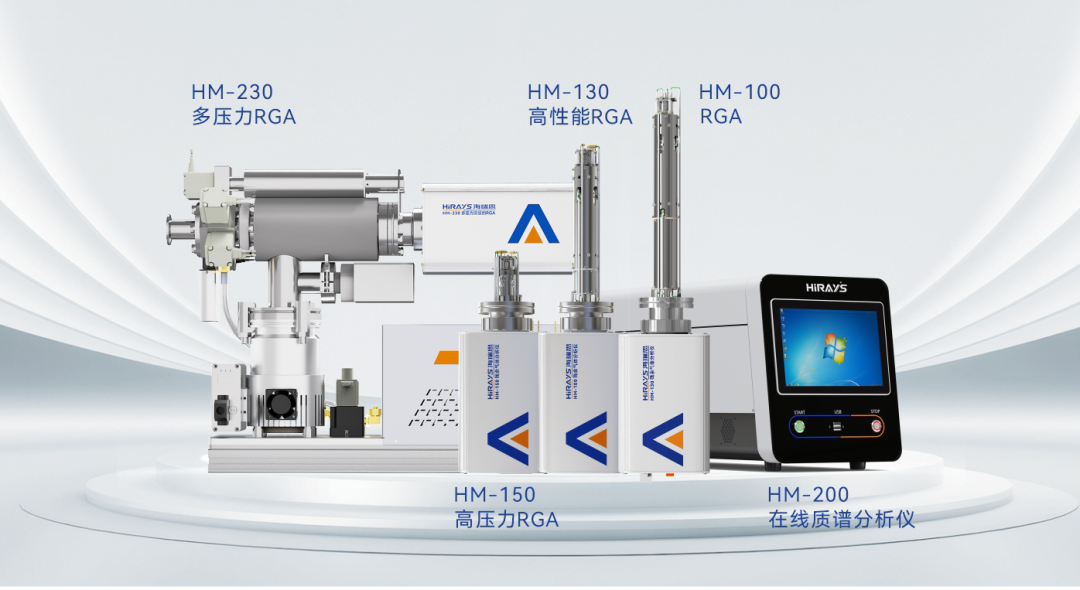
To meet this need, HIRAYS has developed its in-house HM Series Residual Gas Analyzers (RGAs):
HM-130 — built for high-vacuum environments, with a minimum detectable partial pressure of 2×10⁻¹⁵ Torr and millisecond-level scanning; suited to demanding processes such as vacuum coating and semiconductor PVD/CVD.
HM-150 — optimized for higher-pressure conditions, covering high-sensitivity leak and contamination detection from high vacuum through PVD processes.
HM-230 — integrating the RGA, vacuum system, and sampling module in one platform across a wide pressure range, enabling chamber contamination tracing, micro-leak identification, and real-time process-gas monitoring.
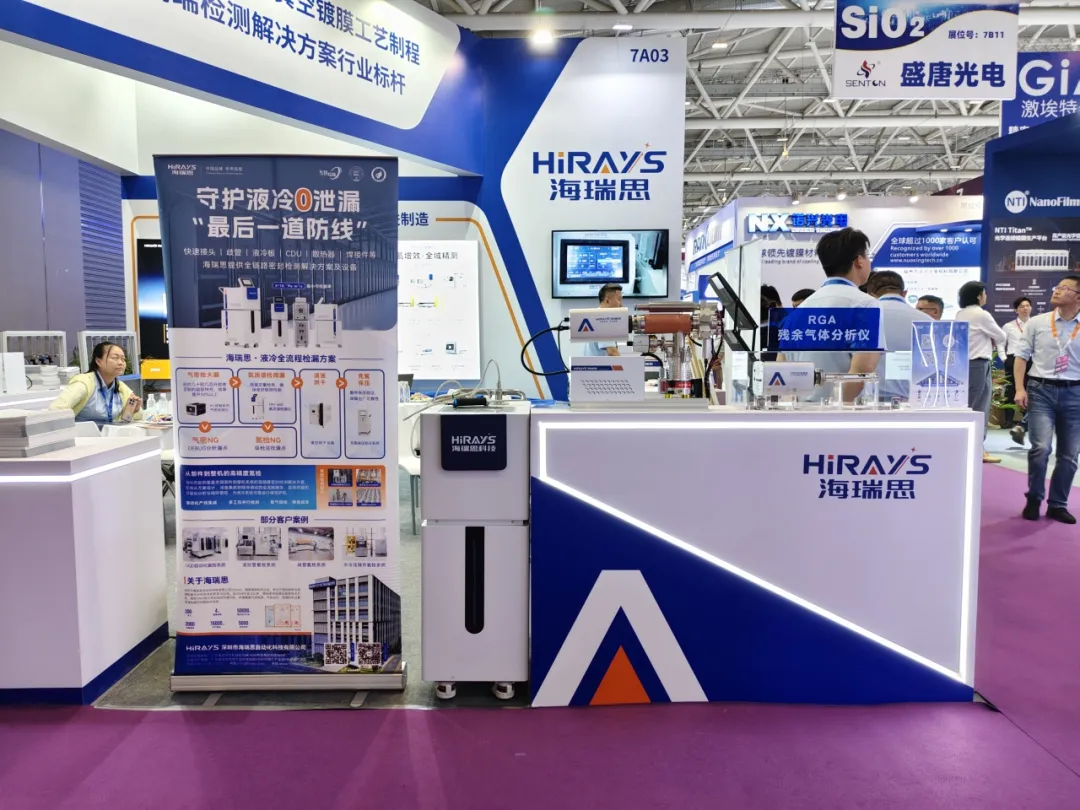 02 | Trend 2: Capacity Pressure Makes Inspection Throughput a Core Competitive Edge
Several exhibitors at CIOE reported full order books for optical modules and optical components, with some capacity plans already booked into 2027. In this large-scale expansion cycle, the logic behind leak detector selection is shifting: customers no longer look at detection sensitivity alone. Takt time, helium recovery rate, parallel multi-station capability, and integration with automated line systems have become the core criteria.
Today, most helium mass spectrometry leak detection lines require a helium recovery system, with recovery rates generally reaching 95%. Cost reduction, high-speed testing, and seamless line integration have become the defining requirements for inspection equipment in volume production; whether a system fits an automated line directly affects a plant's overall output efficiency.
In response, HIRAYS has built a high-precision equipment matrix spanning helium mass spectrometry leak detection, RGA-based mass spectrometry leak detection, airtightness testing, and gas detection — offering multiple technology routes to evaluate in parallel. Customers can match the most suitable test solution to their product structure, process characteristics, and line takt, instead of being locked into a single technology.
At its core are in-house-developed high-precision sensors and multi-channel airtightness testing systems that flex to different takt requirements. The matrix is supported by helium recovery, custom non-standard tooling, and automated line integration services — turning inspection from a line "bottleneck" into an "accelerator." Layered with localized, fast-response technical service, it aligns closely with the fast iteration and volume-production cadence of photonics companies.
03 | Trend 3: In-House Innovation Empowers Photonics Manufacturing as Performance Competition Intensifies
As semiconductor and photonics processes grow more complex, advanced nodes keep raising the bar on vacuum cleanliness. Trace impurity gases directly affect thin-film deposition quality and etch precision — and, in turn, device yield. Demand for high-accuracy, high-stability inspection equipment keeps growing, and the technology and performance contest among high-end systems is getting fiercer.
The decisive move is to keep the core building blocks in-house. HIRAYS develops and manufactures everything internally — from high-precision sensors and mass spectrometry analysis modules to complete instruments — in its own production workshops and R&D teams, keeping the full chain under its control. The HM Series RGAs measure the partial pressures and concentrations of multiple trace gas species under vacuum in real time and with precision, providing reliable data support for the vacuum systems of semiconductor and photonics process tools — with stable, dependable detection performance that meets the stringent process-control demands of advanced manufacturing.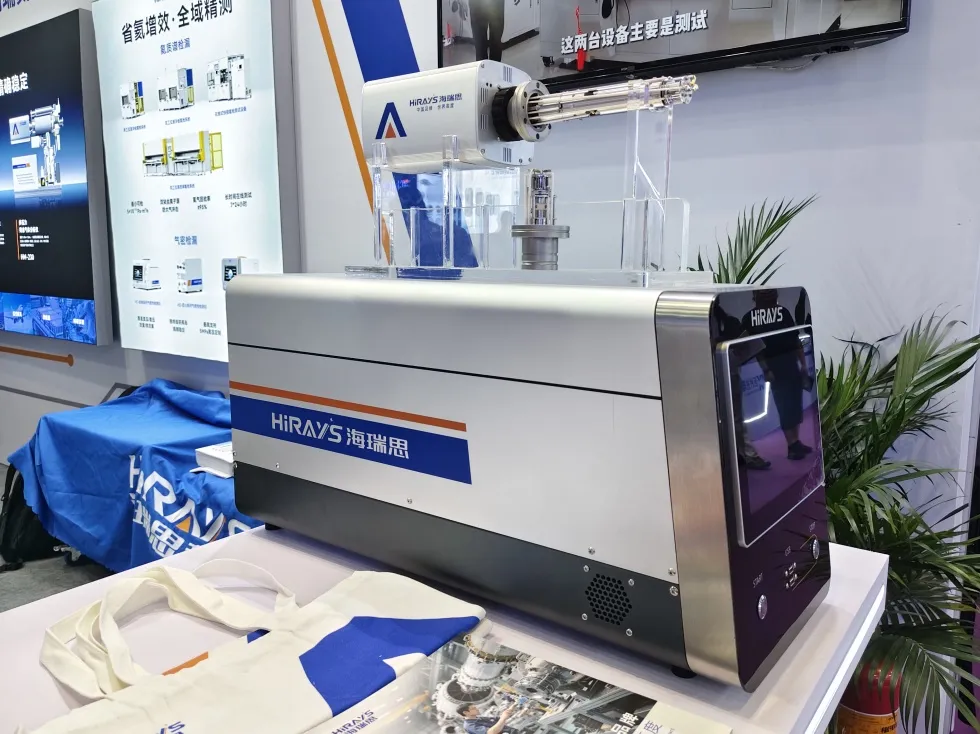
Among them, the in-house-developed HM-200 Online Mass Spectrometer has won the 2026 A+ Awards New Quality Productive Forces Leadership Award. In demanding scenarios such as new energy and semiconductors, it balances three goals at once — detection accuracy, inspection efficiency, and process control — securing product reliability and quality consistency.
One thing is clear: competition in high-end inspection equipment is returning to what ultimately matters — core technology and in-house innovation capability.
Conclusion
From semiconductor-grade optical fabrication to high-speed automated volume lines, precision inspection equipment has become the invisible backbone of advanced photonics manufacturing. HIRAYS will keep investing in the iteration of core mass spectrometry and leak detection technologies, expand into high-value application scenarios across photonics, semiconductors, and new energy, and — with precision inspection equipment built on in-house innovation — help safeguard the quality upgrade of high-end manufacturing.
-
2026.11.21APEC Spotlight on Shenzhen | Behind Huaqiangbei's "AI Eight" Craze Lies the Quality DNA of Chinese Manufacturing
-
2026.11.21Changping Town Leaders Visit HIRAYS for On-Site Research and Guidance
-
2026.11.21New CCC Certification Rules Issued in 2026: How Should Power Bank Makers Prepare for the 2027 Mandatory Requirements?
-
2026.11.21CIOE 2026: A Window onto Industry Change — How Should Photonics Production Lines Upgrade Quality Control?
-
2026.11.21HIRAYS Takes the Spotlight at CIOE 2026 | In-House RGA Mass Spectrometry Solutions Draw Industry Attention
-
2026.11.21AMTS 2026 Wrap-Up | Hundreds of On-Site Conversations Reveal Four Emerging Trends in Precision Inspection
-
2026.11.21HIRAYS Wins the A+ Awards New Quality Productive Forces Leadership Award, Redefining Smartphone Waterproof Testing with Hardcore Technology
-
2026.11.21HIRAYS Takes the Spotlight at AMTS 2026 | One-Stop Precision Inspection Powers Full-Chain Automotive Sealing Safety
-
2026.11.21Focusing on a "Zero-Leak" Future for Quality: HIRAYS Presents Its New Answer to Full-Chain Inspection at CMM 2026
