
What are the methods for waterproof testing?Comprehensive interpretation of best practices for waterproof testing
Waterproof testing is particularly important in modern architecture and engineering. It can be said to be the "invisible bodyguard" of home and commercial buildings. Once a problem occurs, the consequences will be disastrous.Considering the complexity and diversity of waterproofing projects, this article will comprehensively explain the best practices for various waterproofing tests to help you make the most informed decision when choosing the appropriate testing method.Whether you are a practitioner of waterproofing engineering or an amateur interested in waterproofing testing, Haeris has prepared a comprehensive guide for you.Please follow our footsteps and explore the secrets of waterproofing testing together, so that your construction project will be rock-solid and not afraid of wind and rain!
1. Visual inspection method
Visual inspection is probably the most basic and common method of waterproofing testing.As the name suggests, this method involves visually observing the building's exterior walls, roofs, foundations, basements, etc. to look for possible cracks, signs of leaks, and material damage.Although this method does not require special equipment or technology, its effectiveness cannot be underestimated.Through visual inspection, we can initially judge the integrity of the waterproof layer and whether there are obvious leakage problems.
Haris recommends using simple tools such as a flashlight and a magnifying glass when performing a visual inspection to more accurately observe small cracks and imperfections.The advantage of this method is that it is easy to operate and does not require high-cost equipment, but the only disadvantage is that it cannot deeply detect hidden structural problems.Therefore, visual inspection is often used as a preliminary step in waterproofing testing, paving the way for subsequent more detailed inspections.
2. Infrared thermal imaging detection method
Infrared thermal imaging detection method is a high-tech detection technology that uses an infrared thermal imaging camera to scan and image the surface temperature of a building to capture thermal images of areas with large temperature differences.Since leaking water is often cooler than surrounding building materials, infrared thermal imaging cameras can easily identify these temperature differences and help uncover potential leaks.
The advantage of using infrared thermal imaging technology is that it allows for non-destructive inspection without the need to remove any building materials.This method can also quickly find problem spots in large areas, such as roofs, walls, and foundations.However, it should be noted that infrared thermal imaging equipment is relatively expensive and requires professionally trained operators to make the most accurate judgments.This can be a financial burden for smaller projects with limited budgets.However, Haris recommends that for large buildings and important facilities, infrared thermal imaging inspection can be considered to ensure comprehensive waterproof protection.
3. Water-absorbent brick detection method
The absorbent brick test is a simple and effective method for testing water penetration.That is, water-absorbent bricks are placed in different parts of the building, and after a period of time, the amount of water absorbed by these bricks is observed to determine the waterproofing effect of the corresponding parts.This method is particularly useful for inspecting areas such as foundations, basements, and outdoor paving.
Haris recommends using the absorbent brick testing method in rainy seasons or humid weather to ensure that the test results have more reference value.The advantage of this method is that it is simple to operate, does not require complex instruments, and has high reliability.Even so, the water-absorbent brick detection method also has certain limitations: it cannot provide timely feedback on the source of leaking water, and it needs to be combined with other methods for more in-depth detection.
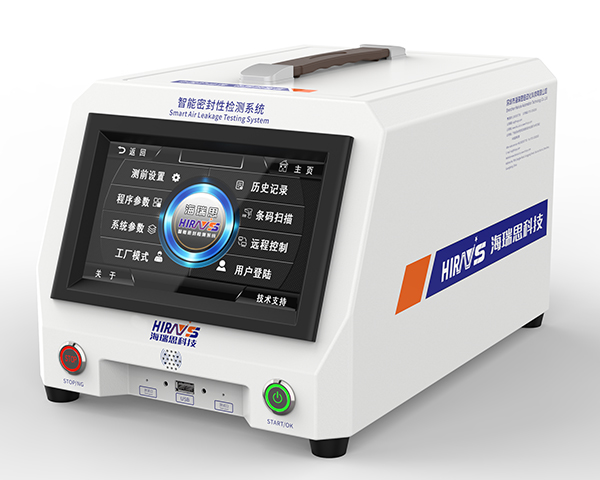
4. Water pressure testing method
Hydrostatic testing is commonly used to test the waterproofing performance of piping systems and underground facilities.Specific operation steps include: first sealing all outlets of the pipeline to be tested, then injecting water through the inlet end and gradually increasing the water pressure, and judging the waterproofing effect by observing changes in water pressure and whether there are signs of water leakage.
The advantage of the hydrostatic testing method is that it can accurately detect the waterproof performance of pipelines and underground facilities, and at the same time, it can find tiny leaks and quickly take repair measures.A significant shortcoming of this method is that the operation process is complicated, requires professionals to operate, and may cause some inconvenience and minor damage during the test.For example, pressure testing of water mains within a building may require a temporary shutdown of the water system, causing inconvenience to users.
5. Smoke detection method
The smoke detection method is a method used to detect the waterproofing performance of basements, underground trenches, and well-sealed piping systems.Its operating principle is to detect waterproofing by releasing non-toxic gas or smoke in the area to be detected and observing whether there is gas leakage or smoke emission.
Haris believes that the smoke detection method is particularly outstanding in detecting basement waterproofing projects.This method is fast, efficient and non-destructive.However, it should be noted that since the released gas requires a relatively closed space for effective observation, this method is not suitable for areas with high openness.
in conclusion
Through the above detailed introduction, I believe you have a comprehensive understanding of various waterproof detection methods.Whether it is the most basic visual inspection method or the high-tech infrared thermal imaging inspection, each method has its own advantages and disadvantages and applicable scenarios.The key is to choose the most suitable detection method according to the actual situation and needs to ensure that the waterproof performance of the building is safe and reliable for a long time.
Whether you are a professional in waterproofing projects or a reader interested in construction projects, I hope this article can bring you practical information and some fresh insights.Waterproofing testing may seem like a small matter, but it plays an important role in construction projects.Our goal is to make every project of yours safe, reliable, and weather-resistant.If you have more questions about waterproof testing, please feel free to contact Hirays. We will wholeheartedly provide you with the most professional services and suggestions.
-
2026.03.30Commemorating the revolutionary martyrs and inheriting the red spirit | Record of hirays’s theme activity of walking to commemorate the martyrs’ cemetery
-
2026.03.20Starting from June, the sale of non-compliant power banks will be banned: many companies ignore this detection issue
-
2026.03.16After charging 70% in 5 minutes, how can the safety of the power battery be maintained?
-
2026.03.14Overcoming difficulties and showing responsibility, efficient delivery wins praise - a tribute to the four pioneer employees on the production front line
-
2026.03.03Comparison of mass spectrometry technology applications: How do Heris helium mass spectrometers and RGA series enable precision manufacturing?
-
2026.02.26Construction has started | hirays starts a new journey of struggle in 2026
-
2026.02.06Let’s work together to embark on a new journey | The 3rd hirays Fun Games was successfully held
-
2026.02.05Riding horses side by side, working together to move forward | hirays year-end ceremony and awards ceremony concluded successfully
-
2026.02.05How does a smart watch pass the waterproof level?In-depth analysis of hiraysi’s full-link air-tightness detection solution
