
2026In June 2020, the mobile power supply industry will officially implement the new mandatory standard: GB 42086-2026 "Safety Technical Specifications for Mobile Power Sources".
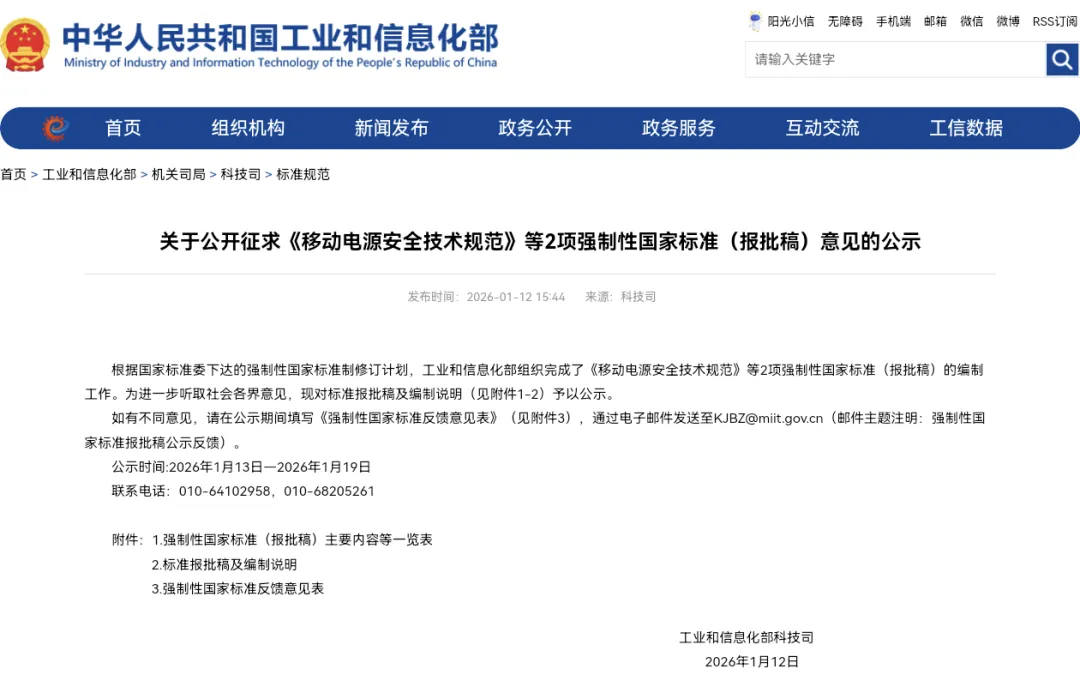
In the new national standard "Safety Technical Specifications for Mobile Power Sources" currently open for public comment, the core requirements for electrolytes are as follows:
Full life cycle leak testing
Battery core stage: It needs to pass acupuncture, extrusion, thermal abuse and other tests, and it is required to be within the diameter4mmUnder extreme conditions such as tungsten steel needle piercing and constant temperature at 135°C for 1 hour, the battery core did not catch fire or explode, and there was no electrolyte leakage.
The whole machine stage: a new bottom impact test is added, requiring the power bank to be within the diameter30mmAfter the steel ball was hit with an energy of 150J three times, there was no electrolyte leakage or shell rupture, and the insulation resistance requirements were met.
Aging stage: It is necessary to evaluate the safety of the power bank after aging through cycles of charging and discharging, and it is clear that it must still maintain leak-free performance after aging.
This also means that battery safety detection capabilities are becoming the core threshold for mobile power companies.
Safety hazards: starting from “micro leakage”
Many battery safety accidents do not occur suddenly, and their precursors are often ignored micro-leakage of electrolyte.
Once the electrolyte evaporates or leaks slightly, it may cause:
The internal structure corrodes, causing the risk of local short circuit.
Battery capacity fades, internal resistance increases, and performance decreases.
Long-term accumulation will eventually lead to thermal runaway, fire and other vicious accidents.
Therefore, under the background of new national standards, how to effectively detect electrolyte leakage has become the first difficulty that enterprises must overcome in the new national standard era.
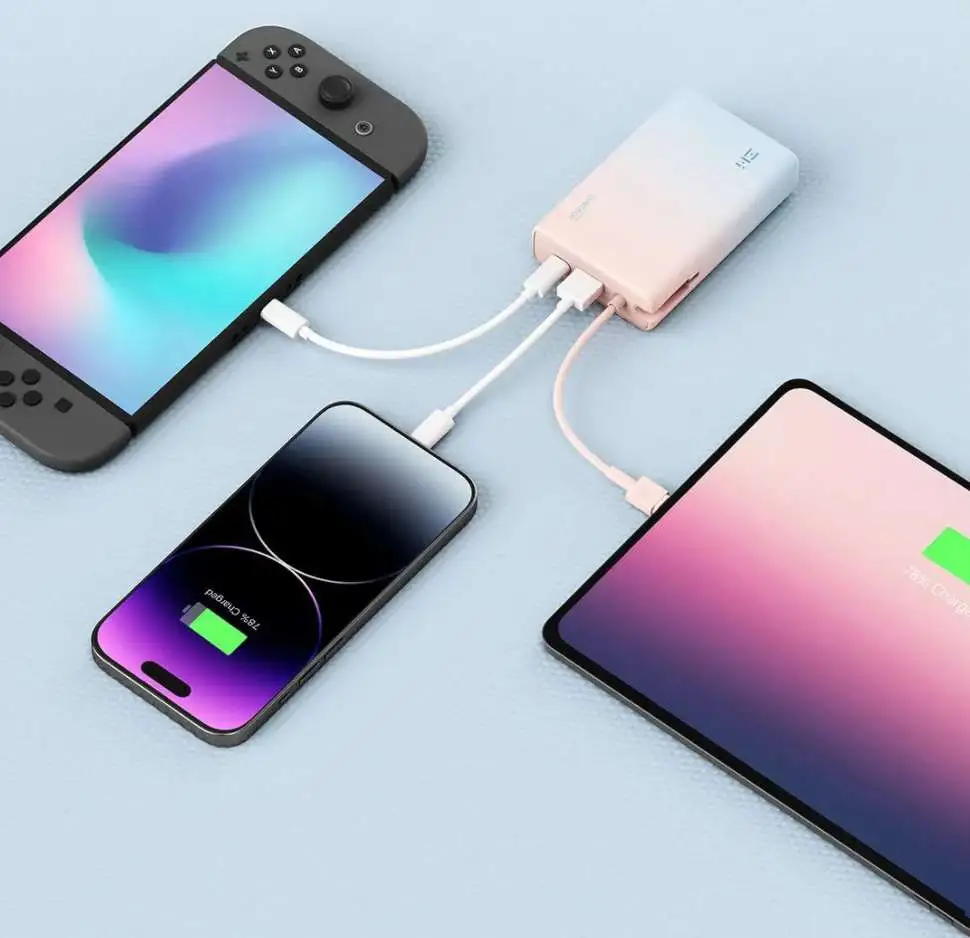
Two detection options: each has its own pros and cons, how to choose?
VOCs detection: the “entry model” for low-cost rapid screening
At present, many small and medium-sized production companies are using VOCs detection technology. The principle is to determine whether there is abnormal gas release by monitoring the concentration changes of volatile organic compounds in the environment.
Its advantages are obvious: low cost, fast response, suitable for rapid batch screening on production lines, and can help companies quickly filter out obvious safety hazards.
But the pain points are also very prominent: in practical applications, the shortcomings of this technology are also very prominent, especially in complex battery production environments, where glue, plastics, sealing materials, etc. will continue to release various VOCs. These "background noises" will be captured by the sensor, causing interference, causing frequent fluctuations in readings.For electrolyte microleakage with low concentration and slow release, conventional VOCs detection is often difficult to stably identify.Therefore, the data changes, but it is difficult to judge whether it is normal volatilization or dangerous leakage, and tracing the source is very difficult.
RGA detection: accurate identification, directly hitting the pain points
In order to more accurately distinguish gas sources, some leading battery companies have begun to introduce more advanced RGA (residual gas analysis) detection technology.
How it works: Quadrupole mass spectrometry
Its detection method is to place the battery core or module in a closed cavity, use a mass spectrometer to analyze the mass-charge ratio (m/z) of the gas in the cavity, and accurately identify the characteristic ion fragments of the electrolyte to determine whether there is a leak.
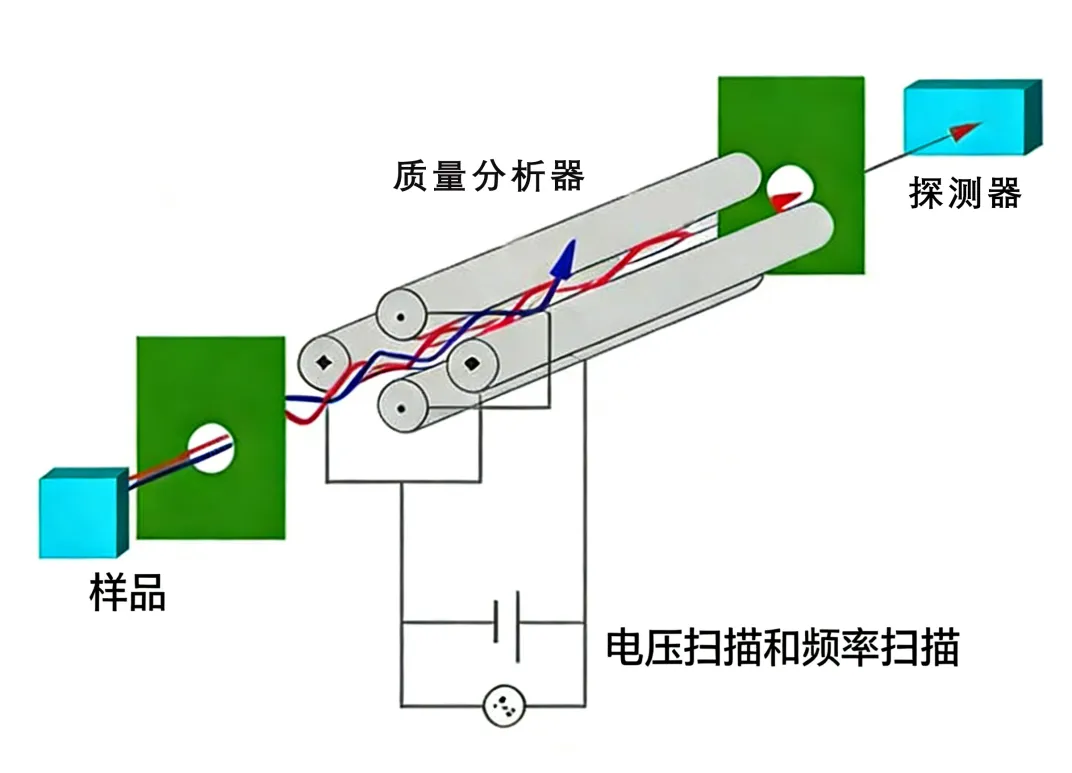
⬆ Schematic diagram of quadrupole mass spectrometry
Technical advantages: accurate and sensitive, intelligent and efficient
Ultra-high sensitivity: the lowest detectable leak rate is 5×10⁻⁸ Pa·m³/s, which can accurately capture micron-level leaks;
High accuracy: Common solvents (such as DMC, EMC, DEC) in lithium battery electrolytes have clear characteristic signals in the mass spectrum. By identifying these "fingerprint" signals, you can determine whether there is electrolyte volatilization.This detection method has extremely strong anti-interference ability and basically no missed or misjudged results;
Quantifiable: It can provide specific leakage rates, provide data support for research and development and process optimization, and truly achieve accurate judgment from "is there any leakage" to "how much is leaking".
At present, RGA mass spectrometry detection has been widely used in new energy power batteries, semiconductors and other fields, and is especially suitable for scenarios with extremely high safety requirements.
The new national standard era:Detection capability is the survivability of an enterprise
With the official implementation of GB 42086-2026, the competitive logic of the mobile power industry is changing.
In the future, companies will compete not only on capacity and charging speed, but also on product safety capabilities.Accurate and reliable detection technology is becoming an indispensable key link in the battery safety system.
Laying out RGA detection capabilities in advance means:
Before the new national standard is officially implemented, a more reliable quality control defense line should be established.
Reduce recalls, returns and loss of brand reputation due to "missed inspections".
Prove to customers and regulators that the company has stable security control capabilities.
Safety is no small matter, and leaks are not ignored.
In the era of new national standards, whoever improves the shortcomings of "testing capabilities" first will be able to move more steadily and further in the fierce market competition.
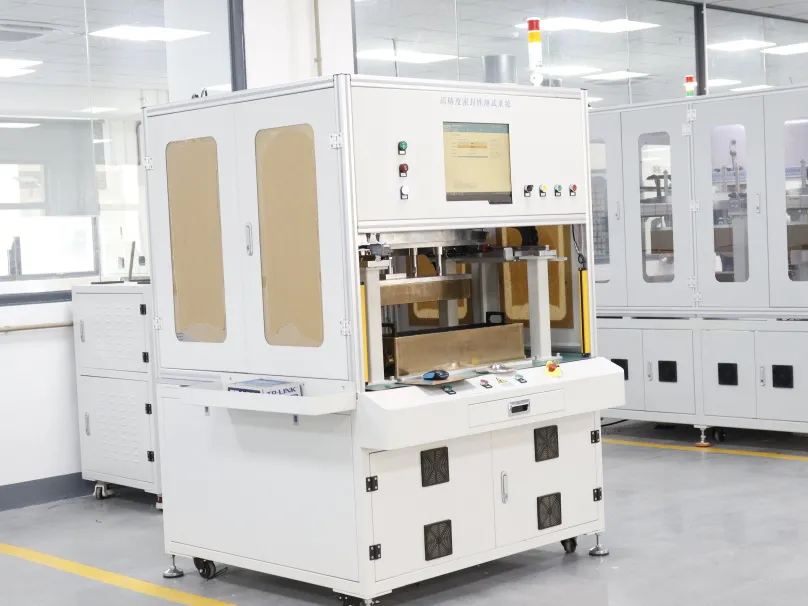
⬆ Battery cell leakageRGAtest case
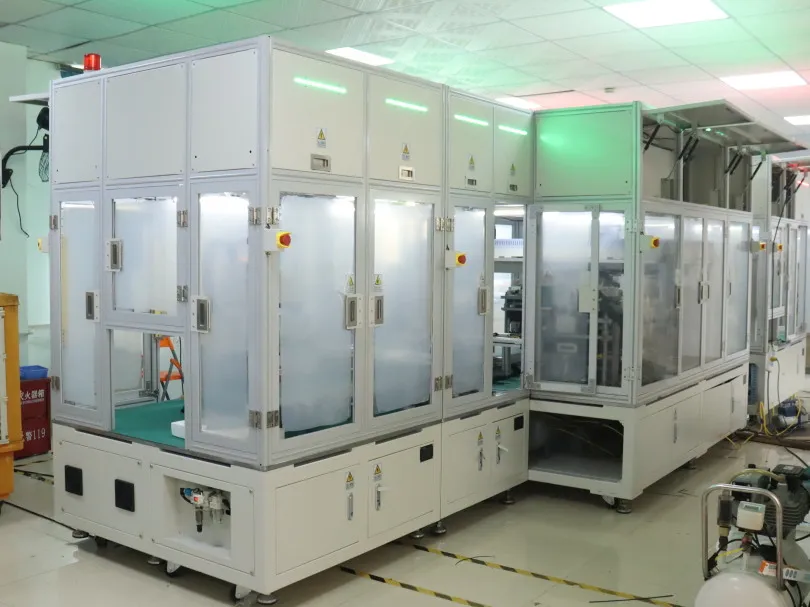
⬆ Battery leakingVOCsAutomated test cases
Hiraysi has been deeply involved in the field of sealing testing for nearly 20 years, and has formed a mature VOCs and RGA technology route to fully meet the needs of diversified production lines. It has been widely used and verified by leading companies in 3C electronics, new energy batteries and other industries.
Among them, the VOCs detection resolution is as high as 1ppb, with a second-level response speed and a detection range of 1-50,000ppb; the RGA detection sensitivity is high and can accurately identify the characteristic gases of the electrolyte, effectively eliminating missed and misjudgment.
Both solutions support automated integration and data traceability to meet the needs of intelligent production lines.
Not only "meeting standards", but also helping you "compete for excellence"
If you have relevant testing needs, Hirays can provide you with free customized solutions. Welcome to call or leave a message for consultation.In this wave of industry quality upgrading, we will help you build a safe line of defense efficiently and confidently welcome the new national standard era!
-
2026.04.11Good News | Hirays Honored as "Most Investment-Worthy Enterprise" at 2026 AI Glasses China Tour
-
2026.04.11Why are more and more companies opting for RGA technology for power bank electrolyte leakage detection?
-
2026.03.30Commemorating the revolutionary martyrs and inheriting the red spirit | Record of hirays’s theme activity of walking to commemorate the martyrs’ cemetery
-
2026.03.20Starting from June, the sale of non-compliant power banks will be banned: many companies ignore this detection issue
-
2026.03.16After charging 70% in 5 minutes, how can the safety of the power battery be maintained?
-
2026.03.14Overcoming difficulties and showing responsibility, efficient delivery wins praise - a tribute to the four pioneer employees on the production front line
-
2026.03.03Comparison of mass spectrometry technology applications: How do Heris helium mass spectrometers and RGA series enable precision manufacturing?
-
2026.02.26Construction has started | hirays starts a new journey of struggle in 2026
-
2026.02.06Let’s work together to embark on a new journey | The 3rd hirays Fun Games was successfully held