
Learn more about the impact of water resistance testing on product quality
Imagine you are enjoying an outdoor sport on a sunny weekend and a sudden rainstorm catches you off guard.You hurriedly took out your phone, only to find that it could no longer be turned on.You think angrily: "How is that possible! It is clearly advertised as being so waterproof!" This is a typical case that shows the criticality of waterproof testing to product quality.Whether it is mobile phones, headphones, or outdoor equipment, waterproof performance plays an important role in consumers' purchasing decisions.So, how to ensure product quality through scientific and effective waterproof testing?This article will give you an in-depth analysis of the impact of waterproofness testing on product quality.
Why is water resistance testing so important?
Water resistance testing is not just a technical indicator, it is directly related to the consumer experience and brand reputation.Imagine that if your mobile phone is not waterproof and users are unable to use it because the phone is "soaked" in rainy days, their trust in the brand may be greatly reduced.In fact, according to market research data, more than 60% of consumers give priority to waterproof performance when purchasing electronic products, especially for products that are often exposed to humid environments, such as smart watches and wireless headphones.
The purpose of the waterproof test is to ensure that the product can maintain normal functions even if it encounters water during use, without affecting the performance and life of the device.It not only effectively prevents equipment damage due to water intrusion, but also increases consumer confidence in the product.Through real water resistance testing, brands can fully demonstrate the reliability of their products and even enhance consumers' desire to buy.
Common standards and methods for water resistance testing
Common waterproof testing standards on the market mainly include IP protection level, air tightness test and water pressure test.Each testing method has its own unique testing methods and application scenarios.Below are three common water resistance testing standards.
1. IP protection level
IP protection level (Ingress Protection) is the most common waterproofing evaluation standard. It consists of two digits, indicating the protection ability against solid objects and liquids respectively.The first number represents dust resistance, and the second number represents water resistance.For example, an IP68 rating means the product is completely dustproof and can be submerged in 1.5 meters of water for up to 30 minutes without damage.
For example, many brands of smartphones and watches advertise their IP68 waterproof rating.Through this kind of testing, manufacturers can ensure that users can use products with peace of mind in daily life, whether washing hands, getting exposed to rain or soaking briefly, without worrying about equipment damage.
2. Air tightness test
The air tightness test is mainly used to check whether the product is completely sealed to prevent moisture or air from entering the inside of the device and causing damage during long-term use.This type of testing is often used on high-performance products, such as outdoor sports equipment and diving equipment, to ensure that the equipment continues to work properly even in high humidity and extreme temperature environments.
3. Hydrostatic test
The water pressure test is to verify the waterproof ability of the equipment by simulating the water depth environment.During the test, the product will be placed in a pool of a certain depth and its water resistance will be tested by increasing the water pressure.This test is commonly used to evaluate the waterproof performance of professional equipment such as diving watches and depth detectors.
The long-term impact of water resistance testing on product quality
Water resistance testing not only directly affects the use effect of the product, but also has a profound impact on the brand's reputation, consumer trust and market competitiveness.Through effective water resistance testing, brands can provide value to consumers on multiple levels:
1. Improve user experience
Good waterproof performance allows consumers to use the product with peace of mind in any environment.Take smart watches as an example. Many brands of watches are not only waterproof, but can also continuously monitor heart rate and exercise data while swimming.Consumers can enjoy precise motion feedback when engaging in underwater activities without having to worry about water damage.
2. Enhance brand credibility
Passing the waterproofness test is a reflection of product quality.When consumers find that a certain brand of products has excellent waterproof performance, they will be more inclined to choose that brand.The accumulation of brand reputation helps to increase its market share and product premium capabilities.
3. Reduce repair and return rates
Through strict waterproof testing, product failures caused by water immersion can be effectively reduced.This not only reduces after-sales service costs, but also increases customer satisfaction and loyalty for the brand.Imagine if a large number of returns and exchanges occur every year due to waterproofness problems, how should the brand handle it?The reliability of water resistance testing avoids exactly this problem.
How to ensure the reliability of waterproofness test results?
Although waterproofness testing is an important part of product quality assurance, how to ensure the reliability of its results?The following suggestions may help you optimize your testing process:
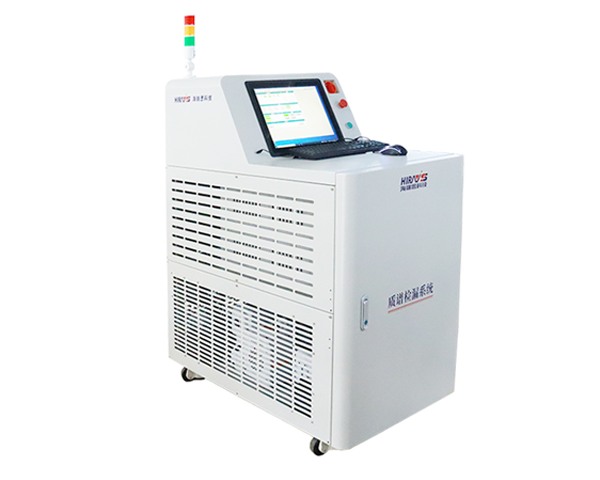
- Make sure you choose the right test equipment:Choose professional and accurate waterproof testing equipment to avoid distortion of test results due to equipment failure or inaccuracy.For example, use standard IP test equipment instead of relying solely on manual measurements.
- Use a multiple testing strategy:A single test cannot fully reflect the waterproof performance. It is recommended to conduct multiple tests simulating different scenarios to ensure the performance of the product under various circumstances.Just like us humans, we must constantly adapt and adjust when encountering different environments.
- Pay attention to water resistance and compatibility with other features:Testing should not only focus on waterproofing, but also ensure that other functions of the device are not affected.For example, when testing the waterproofness of a smartphone, you should also pay attention to whether the sensitivity of the touch screen, sound transmission, etc. are normal.
Conclusion: Seize the future and make better products
Water resistance testing is not only the "threshold" for product quality assurance, but also a showcase for brand image.In this market with increasingly high quality requirements, making waterproof products that can withstand the test can win the trust and reputation of consumers for your brand.
In the future, we believe that with the continuous advancement of technology, waterproof testing will become more accurate and comprehensive, and can even simulate extreme underwater environments.This will be a huge opportunity for brands that are committed to launching innovative products.
Let us look forward to more reliable and smarter waterproof tests in the future to help every consumer enjoy a safe and worry-free technological life!
What embarrassing situations have you encountered where waterproofness tests failed?Leave us a message and let us know!
-
2026.03.30Commemorating the revolutionary martyrs and inheriting the red spirit | Record of hirays’s theme activity of walking to commemorate the martyrs’ cemetery
-
2026.03.20Starting from June, the sale of non-compliant power banks will be banned: many companies ignore this detection issue
-
2026.03.16After charging 70% in 5 minutes, how can the safety of the power battery be maintained?
-
2026.03.14Overcoming difficulties and showing responsibility, efficient delivery wins praise - a tribute to the four pioneer employees on the production front line
-
2026.03.03Comparison of mass spectrometry technology applications: How do Heris helium mass spectrometers and RGA series enable precision manufacturing?
-
2026.02.26Construction has started | hirays starts a new journey of struggle in 2026
-
2026.02.06Let’s work together to embark on a new journey | The 3rd hirays Fun Games was successfully held
-
2026.02.05Riding horses side by side, working together to move forward | hirays year-end ceremony and awards ceremony concluded successfully
-
2026.02.05How does a smart watch pass the waterproof level?In-depth analysis of hiraysi’s full-link air-tightness detection solution