
How to use pressure method to complete the air tightness test of equipment?
Have you ever encountered such a situation: after the newly purchased equipment is installed, you always feel that it is "leaking"?Or when the equipment is in use, something suddenly goes wrong, and you suspect there is a problem with the air tightness?Air tightness testing is an important step to ensure the quality and safety of equipment.As a commonly used testing method, the pressure method has become the first choice of many companies and engineers because of its high efficiency and simplicity.
Today, let’s talk about how to use the pressure method for air tightness testing, which not only helps you solve the problem quickly, but also saves you a lot of time and cost!
What is air tightness testing?Why is Stress Method Necessary?
Air tightness testing, as the name suggests, is to check whether the equipment can be effectively sealed to ensure that gas does not leak from it.The pressure method uses external pressure to apply to the equipment, and determines whether there is a leak point by observing changes in the internal pressure of the equipment.
Imagine that there is a leaking water pipe in your home, and you have no way to directly see where the leak is. Then you need to find the problem by detecting changes in the pressure of the water pipe.Similarly, equipment air tightness testing also relies on pressure changes to help us detect hidden air leakage points.
Basic principles of pressure method air tightness testing
The pressure method test is actually very simple, but the effect is very significant.The basic steps are: we first seal the device, then apply a certain pressure (usually gas pressure), and then monitor the pressure changes inside and outside the device.If the device has no leaks, the pressure inside the device should remain stable.If there is a leak, the internal pressure will drop.
This method is like a "stress test" for the equipment, and the health status of the equipment is judged by observing changes in pressure.Simple right?
1. Apply pressure
Before testing, we need to inject gas or liquid into the device.Common gases include air, nitrogen, etc. Choosing the appropriate gas and pressure value is very critical.The pressure value is usually determined by the operating standards and testing requirements of the equipment.Too high a pressure may cause equipment damage, and too low a pressure may not accurately detect small leaks.
2. Observe pressure changes
Once pressure is applied, we need to closely observe the pressure changes inside the device.If the pressure remains stable, the device is not leaking.If the pressure starts to drop, it means there is a leak in the equipment and the leak point needs to be further located.
3. Locate the leak
When we notice a drop in equipment pressure, the next step is to locate the leak.At this time, you can use soapy water, ultrasonic detectors and other tools to help quickly find air leaks.For example, pipe joints, sealing rings and other parts are often high-risk points for leakage.
Common pressure method testing methods
1. Hydrostatic test
Hydrostatic testing is a common pressure method for air tightness testing, which is suitable for equipment that requires sealing inspection, such as pipes, containers, etc.Check for leaks by filling the device with water and increasing the pressure.This method is intuitive and the test results are clear at a glance.
2. Air pressure test
Air pressure testing is mostly used for equipment that requires high-pressure gas storage, such as gas bottles, air compressors, etc.Unlike hydrostatic testing, air pressure testing works by pressurizing the device with gas to see if its pressure remains stable.If there is a leak, the pressure will drop.
3. Vacuum test
Vacuum testing is a relatively special testing method, usually suitable for equipment that needs to maintain a high vacuum environment.By vacuuming the equipment and then monitoring the pressure, check whether the equipment can effectively maintain the vacuum state.
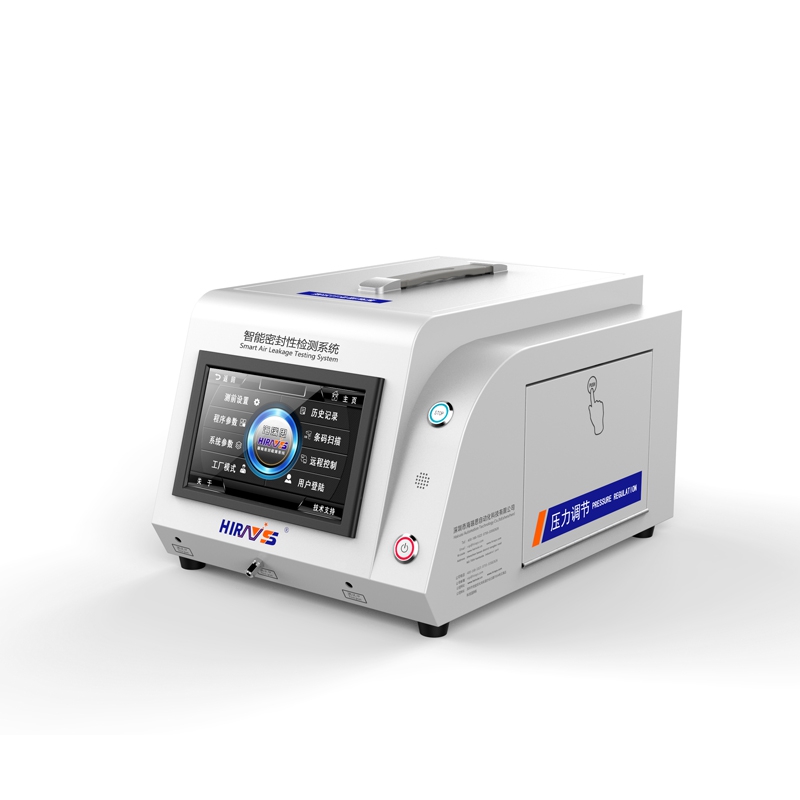
Common problems and solutions for air tightness testing
Although the pressure method air tightness test is very simple, some problems will inevitably be encountered in actual operation.Here are some common problems and solutions:
1. The leak point is difficult to locate
Sometimes, during the air tightness test, the leak point may be so small that conventional testing tools cannot accurately locate it.At this time, it is recommended to use more sophisticated equipment, such as ultrasonic leak detectors, etc., which can help us find the leak point faster.
2. Too low pressure leads to inaccurate testing
If the pressure applied is too low, small leaks may not be found.In order to solve this problem, the appropriate test pressure can be selected according to the characteristics of the equipment to ensure the accuracy of the test.
3. Test equipment is damaged
The material selection of the equipment is also crucial when conducting air tightness testing.If the pressure is too high, it may cause damage to the device itself.Therefore, be sure to apply pressure according to the equipment's endurance range to avoid damage caused by improper testing operations.
Summary: How to do an air tightness test?
Through the above content, we understand how to use the pressure method to conduct air tightness testing, and master common problems and solutions.In summary, the air tightness test needs to pay attention to the following key points:
- Choose the appropriate pressure value——The test pressure is too high or too low, which will affect the results. Make sure to choose the appropriate pressure for testing.
- Accurately observe pressure changes——Monitor pressure changes and detect leaks in time.
- Use professional tools——Such as ultrasonic detectors, etc., to help locate leaks more accurately.
- Pay attention to equipment material and pressure resistance——Ensure the equipment can withstand the test pressure to avoid damage.
- Carry out regular air tightness tests——New leak points may appear during long-term use of the equipment, and regular testing can effectively prevent failures.
Conclusion: Start doing air tightness testing today!
Air tightness testing is an important step to ensure equipment quality and extend equipment life.Through correct testing methods and technical means, we can detect problems in time and avoid accidents.Want your device to be more stable and safer to use?Then start mastering the pressure method air tightness test today!
If you have any questions or more ideas about air tightness testing, please leave a comment below!We will continue to provide you with more practical technical knowledge.Haris, together with you, protects the safety of every piece of equipment.
Have you ever encountered difficulties with air tightness testing?Leave a comment and tell us what you think!
-
2026.03.30Commemorating the revolutionary martyrs and inheriting the red spirit | Record of hirays’s theme activity of walking to commemorate the martyrs’ cemetery
-
2026.03.20Starting from June, the sale of non-compliant power banks will be banned: many companies ignore this detection issue
-
2026.03.16After charging 70% in 5 minutes, how can the safety of the power battery be maintained?
-
2026.03.14Overcoming difficulties and showing responsibility, efficient delivery wins praise - a tribute to the four pioneer employees on the production front line
-
2026.03.03Comparison of mass spectrometry technology applications: How do Heris helium mass spectrometers and RGA series enable precision manufacturing?
-
2026.02.26Construction has started | hirays starts a new journey of struggle in 2026
-
2026.02.06Let’s work together to embark on a new journey | The 3rd hirays Fun Games was successfully held
-
2026.02.05Riding horses side by side, working together to move forward | hirays year-end ceremony and awards ceremony concluded successfully
-
2026.02.05How does a smart watch pass the waterproof level?In-depth analysis of hiraysi’s full-link air-tightness detection solution