
How to conduct a tightness test: an easy-to-follow guide
In daily life and industrial applications, it is crucial to ensure the tightness of products.Whether it is food packaging, household appliances, or aerospace components, seal testing is a critical step to ensure product quality and performance.Have you ever wondered how these seemingly complicated tightness tests are performed?Don’t worry, this article will take you step by step to understand how to conduct a sealing test, ensuring that you can not only learn practical knowledge in the process, but also enjoy the fun of knowledge learning.
As an expert in the field of sealing testing, Hirays focuses on providing high-quality testing solutions.We'll share with you how to perform a leak test in a few easy-to-follow steps.Hopefully, through our guide, you will gain a deeper understanding of this technology and learn how to apply it in practice.Now, let us enter the world of sealing testing together!
1. What is sealing test?
Tightness testing is a method of testing how well a product or component maintains internal isolation from the external environment under specific conditions.Common tests involve pressure, vacuum, gas leakage testing and other methods.Regardless of the testing method, its goal is to ensure that there will be no leakage of liquid or gas in a certain part, thereby ensuring its function, safety and long-term use.
The broad application prospects of sealing testing are impressive.For example, our common beverage bottle packaging needs to ensure that the seal of each bottle is intact so that we can fully feel its freshness when enjoying it.At the same time, in some industrial fields, such as automobiles, air filtration systems, electronic components, etc., sealing is equally important.Different application fields have different requirements for sealing, so it is particularly important to develop appropriate testing plans.By understanding the principles behind it and the practical solutions, you will find that sealing testing is not as difficult as you think.
2. Common sealing test methods
Now that we understand the basic concepts of tightness testing, what are some common methods that can be applied?The following are several commonly used tightness testing methods:
stress test: Determine whether there is leakage by filling the inside of the sample with gas and measuring its internal pressure changes.This method is mostly used for equipment that needs to maintain a high-strength seal.
Vacuum test: Contrary to pressure testing, this method creates a low-pressure environment by exhausting the gas in the sample to detect whether outside gas has penetrated.This method is suitable for those occasions where high precision and strict sealing are required.
bubble test: Immerse the sample in water, then apply pressure, and observe whether bubbles emerge from the sample to determine the leakage point.This is an intuitive, simple and effective method suitable for preliminary inspection of most materials and equipment.
Hydrogen detection: By filling the inside of the seal with hydrogen and then using a hydrogen detector to identify external leaks.This method is suitable for applications requiring tight sealing due to its high accuracy.
Each of the above methods has its own advantages and disadvantages. The most appropriate method should be selected for testing according to the specific situation to ensure that potential sealing problems can be accurately discovered and solved.
3. Preparation work and equipment selection
Before conducting a tightness test, adequate preparation and correct selection of equipment are important prerequisites to ensure accurate test results.Here are some key steps:
Determine test standards: First, the test standards and requirements need to be determined, such as test pressure range, leakage rate, etc.These parameters often vary depending on the specific industry and application.
Choose the right test equipment: Select the most suitable test equipment according to the test requirements.For example, pressure tester, vacuum pump, hydrogen detector, etc.The selection of these devices is directly related to the accuracy and reliability of the test results.
Check device status: Make sure the test equipment is in good working order.Check the calibration of the equipment to ensure its measurement accuracy.If there are problems with the equipment, maintenance and repairs should be carried out in time.
Prepare sample: Ensure that the sample itself meets the test requirements, check the appearance and structure of the sample, and avoid affecting the test results due to defects in the sample itself.
Through the above preparations, you can effectively improve the accuracy and reliability of the sealing test.This provides a strong guarantee for product quality and safety.
4. Steps of sealing test
With the preparations complete, next comes the actual testing step.Different testing methods will have different operating steps, but the basic process is generally similar:
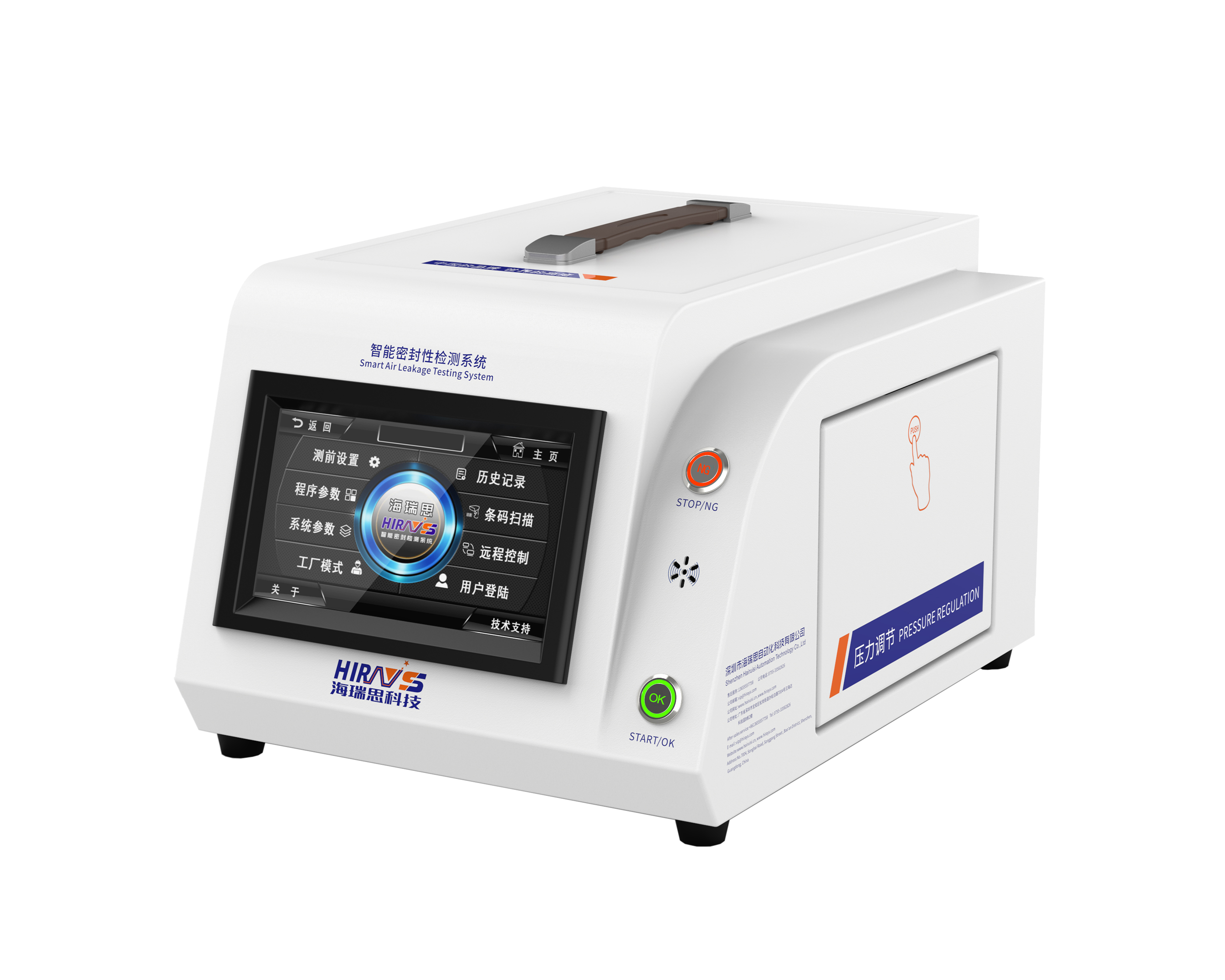
Install test equipment: Correctly connect the test equipment to the specimen, ensuring that all connections are properly sealed.Set test parameters as needed, such as pressure, time, etc.
Execute tests: Start the test equipment and operate according to the test method.For example, in a pressure test, gradually increase the internal pressure of the sample and observe the change in the pressure gauge reading.
Record data: During the test process, record all relevant data, including pressure changes, measurement time, bubble conditions, etc.These data will serve as the basis for subsequent judgments.
Assessment results: Based on the test data, evaluate the sealing performance of the sample.If the data meets the predetermined standards, the sample passes the test; otherwise, the cause of the problem needs to be further analyzed and corresponding measures taken.
Carry out retest: If necessary, conduct multiple tests to ensure the reliability of the results.Especially in the sealing test of important products, multiple reviews are necessary.
The above steps help you complete the sealing test systematically to ensure accurate and reliable results.
5. Common problems and solutions in sealing testing
In actual operation, various problems will always be encountered.Understanding these problems and mastering the corresponding solutions can greatly improve testing efficiency and accuracy:
Test equipment failure: The device may malfunction during use.Check the power supply, connection, and calibration of the equipment, and repair or replace if necessary.
Environmental factors influence: Environmental factors such as temperature and humidity have a certain impact on the test results.The test needs to be carried out in a standard environment, or the test results need to be corrected.
Sample problem: The sample itself is defective or does not meet the test standards.The specimen needs to be carefully inspected before testing and replaced or repaired in time if there are any problems.
Improper operation: Improper operation by testers can easily lead to inaccurate test results.Testing must be carried out in strict accordance with operating procedures and operators must be trained.
By solving the above problems, the reliability and accuracy of sealing testing can be greatly improved.Hirays is committed to providing customers with comprehensive testing solutions and technical support to help you achieve the best results in sealing testing.
in conclusion
Tightness testing plays an important role in modern industry and daily life. Mastering this technology can not only ensure the quality and performance of products, but also effectively avoid accidents.Through this article, we understand the basic concepts, common methods, preparations, test steps, and common problems and solutions for tightness testing.
I hope that during the reading process, you will not only learn the relevant knowledge of sealing testing, but also be able to flexibly apply these methods in actual operations.Haerisi has always focused on providing customers with professional and efficient testing solutions.If you encounter any problems during operation or need technical support, please feel free to contact us and we will serve you wholeheartedly.
Thank you for reading and may you go further and achieve greater success on the road of sealing testing!
-
2026.03.30Commemorating the revolutionary martyrs and inheriting the red spirit | Record of hirays’s theme activity of walking to commemorate the martyrs’ cemetery
-
2026.03.20Starting from June, the sale of non-compliant power banks will be banned: many companies ignore this detection issue
-
2026.03.16After charging 70% in 5 minutes, how can the safety of the power battery be maintained?
-
2026.03.14Overcoming difficulties and showing responsibility, efficient delivery wins praise - a tribute to the four pioneer employees on the production front line
-
2026.03.03Comparison of mass spectrometry technology applications: How do Heris helium mass spectrometers and RGA series enable precision manufacturing?
-
2026.02.26Construction has started | hirays starts a new journey of struggle in 2026
-
2026.02.06Let’s work together to embark on a new journey | The 3rd hirays Fun Games was successfully held
-
2026.02.05Riding horses side by side, working together to move forward | hirays year-end ceremony and awards ceremony concluded successfully
-
2026.02.05How does a smart watch pass the waterproof level?In-depth analysis of hiraysi’s full-link air-tightness detection solution