
How to manage the data of air tightness detector to improve detection accuracy
In modern industry, air tightness detectors are widely used in various industries as the core tool to ensure the air tightness of equipment, containers, pipelines, etc.With the development of science and technology, air tightness detectors are no longer limited to testing tools, but have also become an important carrier for data collection, analysis, and feedback.So, how to effectively manage these detection data and improve the accuracy of detection has become an urgent problem for everyone engaged in air tightness testing.Today, we will discuss in depth how to improve the detection accuracy of air tightness detectors through data management to ensure that every test is more accurate.
Introduction: The “power of precision” behind digitalization
Imagine that you are faced with a high-precision air tightness detector that can accurately measure the air tightness of the equipment and provide accurate numerical reports.However, is the accuracy of the instrument itself sufficient to ensure the accuracy of every test?Without effective data management, instrument accuracy can also be affected by various factors.Data is like the navigation system in air tightness testing. Without correct guidance, the "navigation" of the instrument cannot accurately locate the target.
This article will take you to explore how to optimize the testing process by effectively managing the data of the air tightness detector, thereby achieving higher accuracy.Through comparison and case analysis, we will reveal how to ensure that every step of the air tightness inspection is error-free.
1. The importance of air tightness detector data management
Let’s first understand why strong data support is so critical behind the air tightness detector.Air tightness testing is not just a simple testing process, but involves a large amount of testing data, which will determine whether the final testing results are accurate.
example:Suppose you are testing the air tightness of a large industrial pipeline. The data provided by the air tightness detector looks simple on the surface: whether there is leakage, leakage rate, etc.However, whether the data management within the instrument is reasonable will directly affect the accuracy of the detection.If the data collection is incomplete or improperly processed, it may lead to missed detections, false detections, or even misjudgments about the safety of the equipment.
Therefore, a good data management system can ensure efficient collection, accurate processing and scientific analysis of data.What relies behind this is not only the technology of the air tightness detector itself, but also the precise control of various aspects such as data transmission, storage, and analysis.
2. Optimize the data collection process and reduce the occurrence of errors
The air tightness detector is susceptible to interference from the external environment, operating errors and other factors during the data collection stage, resulting in data deviation.In order to ensure the accuracy and completeness of the data, we need to carefully optimize the collection process.
Example analysis:When many air tightness detectors are used on site, changes in the surrounding environment such as temperature, humidity, air pressure and other factors may affect the test results.By introducing temperature and humidity compensation technology, the air tightness detector can adjust and compensate for these external factors in real time, thereby ensuring the stability of the detection data.
The frequency of data collection also needs to be optimized.For example, during a long-term detection process, collecting data at too high or too low a frequency will lead to fluctuations in results.Reasonable collection frequency and periodic monitoring can effectively reduce this fluctuation and improve data reliability.
3. Strengthen data transmission and storage to ensure that data is not lost
Data transmission and storage is another key link to ensure the data security of the air tightness detector.After data collection, it must be transmitted stably and stored accurately to avoid data loss or damage, which will affect subsequent analysis.
For example:Suppose a certain air tightness test involves data collection at multiple points, and these data need to be uploaded to the cloud or local storage system in real time.However, during transmission, if the system is unstable, data packet loss may occur.In order to avoid this problem, a system using encrypted data transmission and automatic backup can ensure that the data is completely transmitted and stored at multiple backup points.
At the same time, the use of automated data storage management systems can quickly retrieve and analyze detection data and reduce human operation errors.For example, data redundancy technology can be used to back up detection data to multiple different locations to ensure data security under any circumstances.
4. Use big data and artificial intelligence analysis to improve detection accuracy
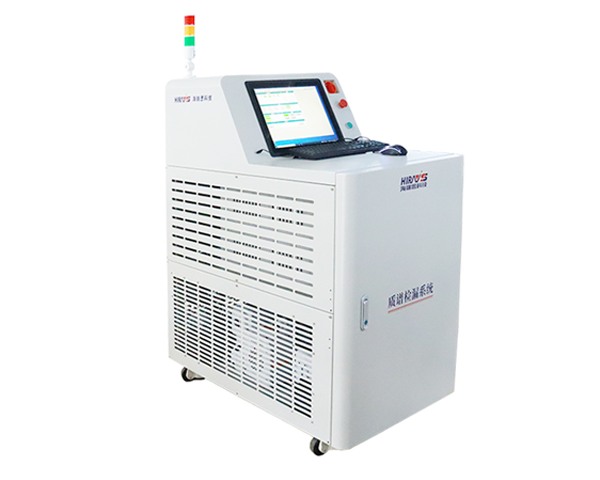
Today, the combination of big data and artificial intelligence technology is changing all walks of life.In air tightness testing, the use of AI algorithms and big data analysis can help quickly screen out data that does not meet standards, automatically adjust testing parameters, and improve overall testing efficiency and accuracy.
Example:Suppose that during a certain air tightness testing process, the testing instrument discovered through data analysis that the sealing performance of some pipelines fluctuated abnormally under different testing conditions.Through artificial intelligence algorithms, the system can automatically identify potential leaks and give precise improvement suggestions.In this way, inspectors can adjust equipment or operating methods according to the AI analysis results at the first time, avoiding the subjectivity of manual judgment.
5. Regular calibration and maintenance to ensure long-term accuracy of the instrument
Any precision instrument requires regular calibration and maintenance, and air tightness detectors are no exception.Over time, the instrument's sensor may gradually develop errors, leading to deviations in detection results.
For example:You may have encountered that after long-term use, the instrument’s test data no longer matches the actual situation.At this time, regular calibration and maintenance can ensure that the instrument can still perform air tightness testing in the best condition and avoid affecting the test results due to the equipment itself.
By cooperating with professional technicians and performing regular equipment calibration, sensor inspections and software upgrades, the high accuracy and stability of the instrument can be ensured and the occurrence of errors can be reduced.
6. How to improve the data management efficiency of air tightness detector?
How to improve data management efficiency in actual work and thereby improve detection accuracy?Here are a few tips to help you achieve this goal:
- Digital transformation:Equip the air tightness detector with an intelligent data collection and processing system to reduce manual intervention and improve data collection and processing efficiency.For example, use cloud platforms for real-time data synchronization.
- Automated data processing:Intelligent algorithms are used for data analysis, identifying abnormal data in real time, and automatically optimizing detection parameters to ensure accurate detection results.
- Standardized operating procedures:Ensure that every operator strictly follows the standard procedures for data collection, transmission, and storage to reduce human errors from the source.
- Regular training and inspection:Regularly provide technical training to operators to ensure that they are proficient in the use of instruments, and conduct regular instrument inspections and maintenance to ensure that the instruments are in optimal working condition.
Conclusion: Accurate detection starts with data
In the process of air tightness testing, data is an important link that cannot be ignored.By properly managing the data of the air tightness detector and optimizing all aspects of data collection, transmission, storage, and analysis, you will greatly improve the accuracy and reliability of the test results.Every data optimization is a step towards higher accuracy. Let us embrace a more efficient and accurate detection era together.
Have you already encountered data management challenges in practice?Welcome to leave a message to share your experience or questions. Hairis will always accompany you and provide professional solutions.
-
2026.03.30Commemorating the revolutionary martyrs and inheriting the red spirit | Record of hirays’s theme activity of walking to commemorate the martyrs’ cemetery
-
2026.03.20Starting from June, the sale of non-compliant power banks will be banned: many companies ignore this detection issue
-
2026.03.16After charging 70% in 5 minutes, how can the safety of the power battery be maintained?
-
2026.03.14Overcoming difficulties and showing responsibility, efficient delivery wins praise - a tribute to the four pioneer employees on the production front line
-
2026.03.03Comparison of mass spectrometry technology applications: How do Heris helium mass spectrometers and RGA series enable precision manufacturing?
-
2026.02.26Construction has started | hirays starts a new journey of struggle in 2026
-
2026.02.06Let’s work together to embark on a new journey | The 3rd hirays Fun Games was successfully held
-
2026.02.05Riding horses side by side, working together to move forward | hirays year-end ceremony and awards ceremony concluded successfully
-
2026.02.05How does a smart watch pass the waterproof level?In-depth analysis of hiraysi’s full-link air-tightness detection solution