
Analysis of common problems in sealing testing: from testing methods to equipment selection
In modern industrial production and testing, sealing testing occupies a pivotal position.Whether it is the automotive industry, the electronics industry or the pharmaceutical industry, almost every field requires testing the tightness of products to ensure their quality and safety.For many people, the concept of leak testing may seem a bit arcane.This article will give you an in-depth analysis of common problems in sealing testing, from the selection of testing methods to the purchase of related equipment, comprehensive coverage, so that both beginners and experienced professionals can gain something.Whether you want to understand the basic principles or master the features of the latest devices, this article provides you with detailed information and an interesting reading experience.
1. What is sealing test?
Before talking about tightness testing, we first need to understand what tightness is.Simply put, tightness refers to the ability of a product or component to prevent gases, liquids or other substances from passing through its boundaries.Sealing testing is a series of processes that use different testing methods to determine whether a product has the above-mentioned blocking capabilities.Different products have different requirements for sealing, so the methods and standards for sealing testing will also change as the application scenarios change.Generally speaking, sealing detection methods include gas detection, water detection, optical detection and electrical detection.Each method has its unique advantages and scope of application, and the appropriate method needs to be selected based on specific detection requirements.
2. Common sealing testing methods
There are various methods for sealing testing, the most common of which include the following: air pressure drop method, vacuum box method, water intrusion method and helium spray method.The air pressure drop method is suitable for relatively rigid components. It mainly judges the sealing performance by measuring the pressure drop of the gas within a certain period of time.The vacuum box method is suitable for small electronic components that require strict testing, with high precision and sensitivity.The water intrusion method immerses the test object in water to see if there are bubbles overflowing. It is generally suitable for testing waterproof electronic products.The helium spray method, relying on the high permeability of helium and the accuracy of leak detection equipment, is often used for component sealing testing in the aerospace field.
3. Advantages and disadvantages of different detection methods
Each tightness testing method has its advantages and limitations.The air pressure drop method is easy to operate and cost-effective, but its accuracy may be limited for large-volume, high-pressure products.The advantage of the vacuum box method is that it has high detection accuracy and is especially suitable for products with high precision requirements. However, its equipment cost is high and the operation is complex.The water intrusion method is simple to operate and has low equipment cost, but it can only detect qualitatively and cannot give an accurate leakage amount.The helium spray method is indeed the method with the highest detection accuracy, but due to its expensive equipment and complex operation, it is generally only suitable for special scenarios with high precision requirements.
4. How to choose suitable testing equipment?
Different detection methods require different equipment support, so multiple factors need to be considered when selecting detection equipment.The first is detection accuracy and sensitivity to ensure that the equipment can meet the needs of specific scenarios.The second is the ease of operation and degree of automation of the equipment. Highly automated equipment can improve efficiency while reducing human errors.The third is the cost-effectiveness of the equipment, including initial purchase cost and subsequent maintenance cost.It is also necessary to consider the scope of application and scalability of the equipment so that the equipment can flexibly respond to different testing needs in future R&D and production processes.
5. Brand and equipment recommendations
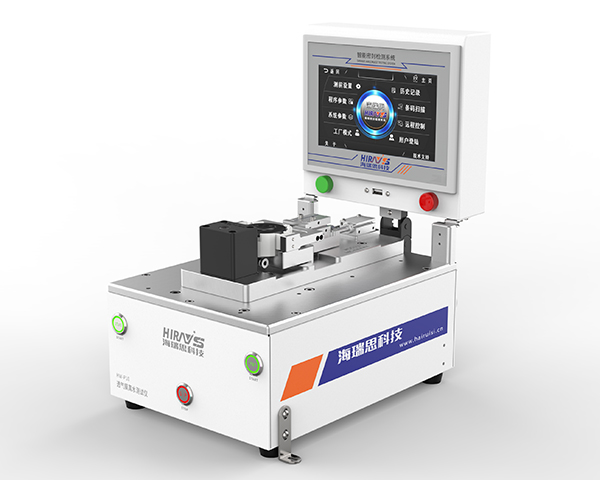
When it comes to sealing testing equipment, the brand that cannot be ignored is Hirays.As a leading brand in the industry, Hiraysi's sealing testing equipment performs well in terms of high precision and stability.Whether it is testing instruments for the air pressure drop method or high-end equipment for the vacuum box method, Hirays can provide market-leading solutions.When selecting specific equipment, detailed consultation can be conducted based on specific needs to ensure that the selected equipment can best solve the actual problem.
6. Precautions for installation and operation
When installing and operating tightness testing equipment, special attention needs to be paid to some details.The first is the installation environment of the equipment to ensure that it operates at the appropriate temperature and humidity.The second step is the training of operators to familiarize themselves with the various functions and operating procedures of the equipment to ensure that they can operate correctly.The third is regular equipment calibration and maintenance to ensure the accuracy of test results and long-term stable operation of the equipment.
7. Frequently asked questions and solutions
During the sealing testing process, some common problems are often encountered.For example, the detection results are unstable, which may be caused by the aging of the equipment or changes in environmental factors. At this time, the equipment needs to be calibrated or the detection environment needs to be optimized.Another common problem is gas leakage during testing, which may be caused by insufficient sealing of the detection fixture or connecting pipeline, requiring the detection fixture to be repaired or replaced.
8. Future development trends
With the development of science and technology, sealing detection technology is also constantly innovating.In the future, with the popularization of artificial intelligence and big data technology, sealing detection methods will become increasingly intelligent and automated.High-precision, high-sensitivity and high-efficiency detection equipment will become the mainstream of the market.At the same time, with the emergence of new materials and new processes, the application scope of sealing testing will continue to expand, covering more fields and products.
in conclusion
In general, sealing testing is an important part of ensuring product quality and safety.By selecting appropriate testing methods and equipment, the accuracy and efficiency of sealing testing can be effectively improved.I hope this article can help readers better understand the basic principles and operating methods of sealing testing, and provide valuable reference for selecting and using sealing testing equipment.During the reading process, I hope that everyone will not only gain knowledge, but also experience the fun and relaxation of reading.If you have more questions about this or need more detailed consultation, you can contact Hai Ruisi at any time and we will serve you wholeheartedly.
-
2026.03.30Commemorating the revolutionary martyrs and inheriting the red spirit | Record of hirays’s theme activity of walking to commemorate the martyrs’ cemetery
-
2026.03.20Starting from June, the sale of non-compliant power banks will be banned: many companies ignore this detection issue
-
2026.03.16After charging 70% in 5 minutes, how can the safety of the power battery be maintained?
-
2026.03.14Overcoming difficulties and showing responsibility, efficient delivery wins praise - a tribute to the four pioneer employees on the production front line
-
2026.03.03Comparison of mass spectrometry technology applications: How do Heris helium mass spectrometers and RGA series enable precision manufacturing?
-
2026.02.26Construction has started | hirays starts a new journey of struggle in 2026
-
2026.02.06Let’s work together to embark on a new journey | The 3rd hirays Fun Games was successfully held
-
2026.02.05Riding horses side by side, working together to move forward | hirays year-end ceremony and awards ceremony concluded successfully
-
2026.02.05How does a smart watch pass the waterproof level?In-depth analysis of hiraysi’s full-link air-tightness detection solution