Conventional testing methods struggle to balance detection accuracy with mass-production throughput. How to efficiently screen out micro-leaking parts has become an urgent pain point for many cold plate manufacturers. Drawing on a real-world test case using Hirays' dual-station vacuum helium leak detection system, this article presents a proven, production-ready leak-tightness testing solution for liquid cold plates.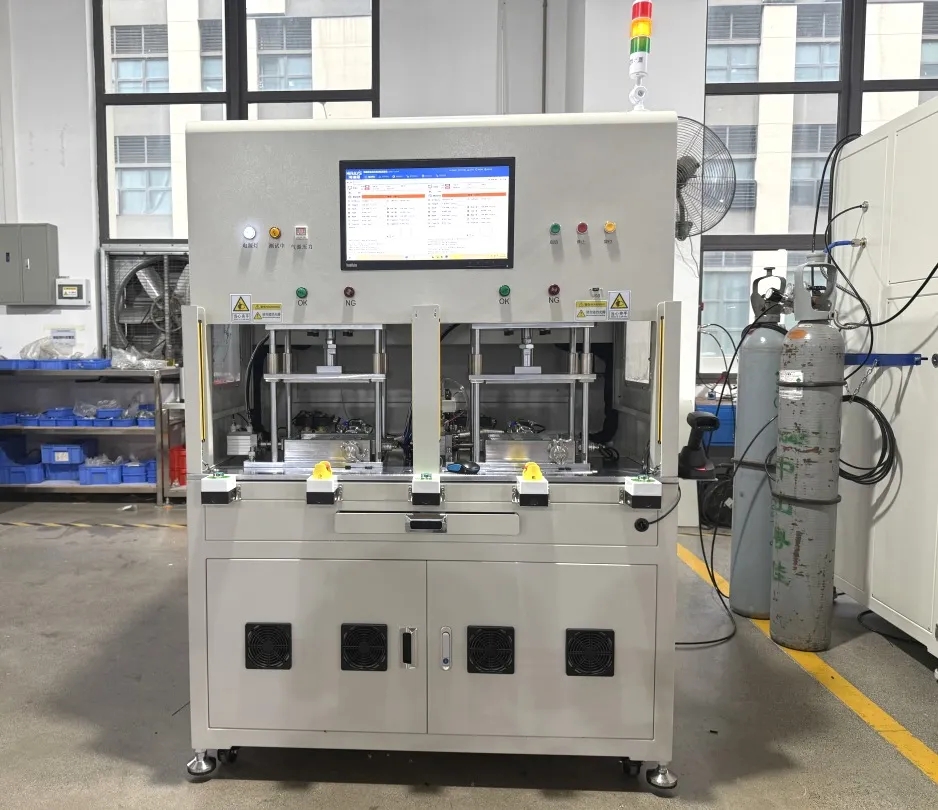
01. Test Sample and Key Challenges
The test object was an industrial liquid cold plate. The inspection focused on the overall leak-tightness of the welded joints and the fluid channels. Two core challenges stood out:
1. Difficult port sealing: The internal diameter of the workpiece's gas inlet is only 1 mm. Such a narrow aperture imposes stringent requirements on the fixture sealing structure—any sealing failure will directly distort the leak test results.
2. Risk of missed detection due to port blockage: The gas port is prone to blockage during testing. If the channel is obstructed, the product's true leakage condition is masked, resulting in invalid or inaccurate test data.
02. Core Configuration of the Dual-Station Helium Leak Detection System
The system used in this test is a dedicated dual-station precision helium leak detector designed for cold plate inspection and suited for high-volume production lines. Key hardware configurations are as follows:
1. Dual-station, multi-piece synchronous testing: The two stations operate alternately, with each chamber accommodating up to 4 workpieces per cycle, significantly improving production-line test throughput.
2. Wide adjustable pressure range: Workpiece helium test pressure is adjustable from 0 to 1 MPa; the actual test pressure set for this cold plate was 600 kPa.
3. High-sensitivity leak detector: Equipped with the HM-410 helium mass spectrometer leak detector, the system achieves a minimum detectable leak rate of 10⁻⁷ Pa·m³/s, enabling precise capture of micro leaks.
4. Independent pressure monitoring module: Each workpiece is equipped with a dedicated pressure sensor that monitors the gas path in real time. If the gas port becomes blocked, the system immediately identifies it—eliminating the risk of false acceptance caused by blockage.
5. Production-line safety package: Fitted with two-hand start buttons, safety light curtains, and a barcode scanner to ensure operator safety. MES connectivity and data storage come standard, enabling full traceability of product test data.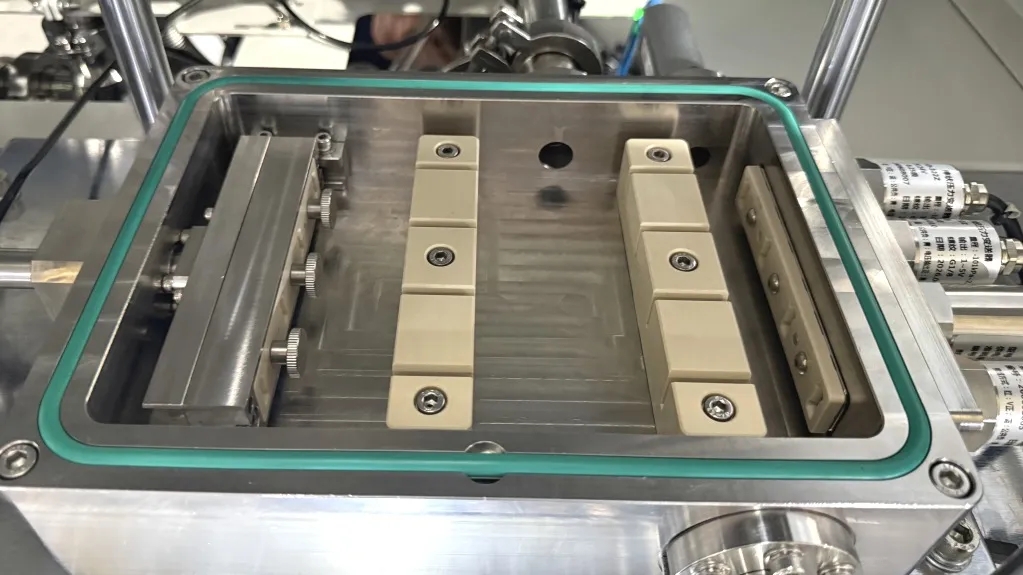
03. Complete On-Site Testing Procedure
1. Workpiece loading: Place 4 cold plate workpieces into the test chamber.
2. System start: Start the unit with two-hand activation. The chamber and workpieces are sealed, and the main pump evacuates the chamber. The workpieces then undergo a pressure-hold gross leak test and an internal blockage check.
3. Background test: Once the gross leak test passes, a background measurement is performed on the chamber.
4. Helium micro-leak test: After the background level is qualified, the workpieces are charged with helium for micro-leak detection, with leakage data collected automatically.
5. Result output: The entire process runs automatically and outputs an individual pass/fail result for each workpiece.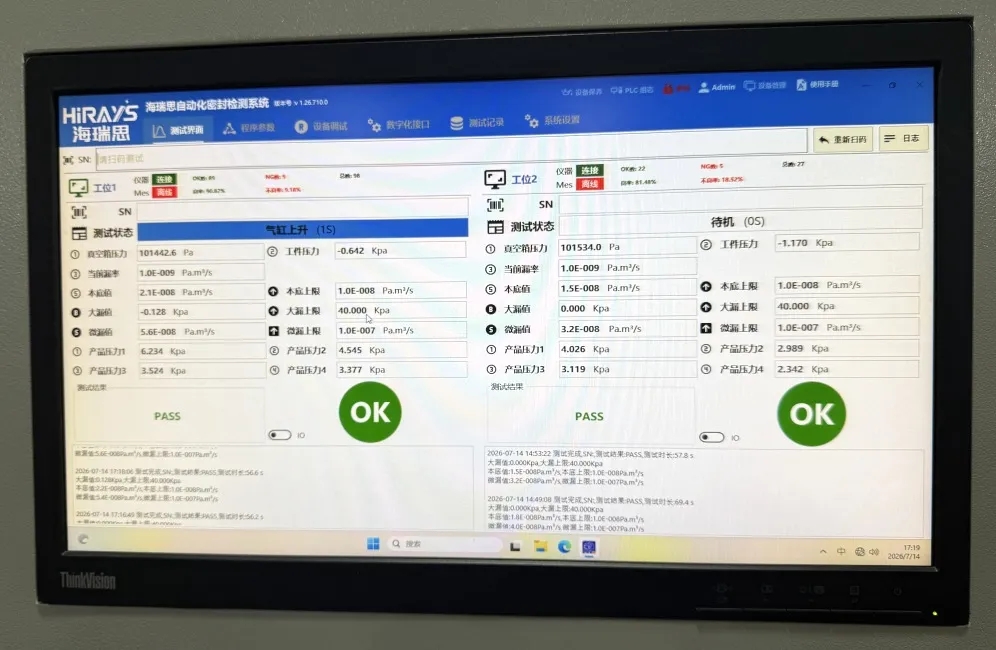
04. Customer Value
· Accurate results: The high sensitivity of helium mass spectrometry detects micro leaks, with gross and micro leaks screened in separate stages—so no defective part slips through.
· Reliable judgment: Each workpiece is independently pressure-monitored, and port blockage is detected immediately, preventing leaking parts from being falsely accepted as good.
· Production-ready throughput: Multi-piece synchronous testing balances precision with cycle time, allowing direct integration into mass-production lines.
This solution directly addresses the industry's core pain points in cold plate inspection—difficult port sealing, hard-to-detect micro leaks, and false or missed judgments. By controlling coolant leakage risk at the factory gate, it reduces downstream field failure rates and provides reliable quality assurance for liquid cooling equipment.
Conclusion
As cold plates continue to evolve toward thinner profiles and denser flow channels, leak-tightness standards will keep rising. Get three things right—the sealing method, pressure monitoring, and detection sensitivity—and micro leaks cease to be an uncertainty on your production line.
Want to know what performance this system can achieve on your product? Feel free to send us a message. We will match you with the right leak detection solution and arrange a live validation test.