How is the air tightness of mobile phone antenna tested?Demonstration of waterproof and air tightness testing methods for mobile phone antennas.Today Shenzhen Hiraysi Automation Technology Co., Ltd. will tell you how to test the waterproof and air tightness of mobile phone case antennas. What is the principle of waterproof and air tightness testing of mobile phone case antennas?
Mobile phones are now equivalent to our"The apple of your eye", always hold it in the palm of your hand for fear that it will fall.If I accidentally drop it on the ground, I will pick it up immediately to see if it is damaged.Let me tell you, it’s fine if it falls on the ground. What if you drop it in the water? A mobile phone without waterproof function will be fine."Half disabled"Right? The waterproof test and air tightness test of each component of the mobile phone must be adequate.This can prevent the phone from getting wet and still ensure that the phone is safe.Today we focus on the air tightness testing of mobile phone case antennas, and reveal the IP67 waterproof test and air tightness testing methods of Hirays mobile phone cases.
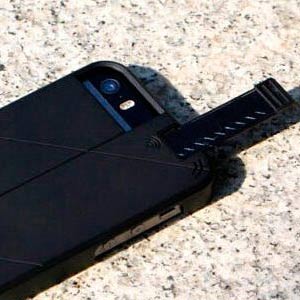
First, we need to choose a high-precision air tightness tester, also called a waterproof tester, and then customize a tooling fixture to connect to the phone case antenna of the product to be tested.The mobile phone case case in the picture below is connected like this to test the air tightness of the mobile phone case antenna.
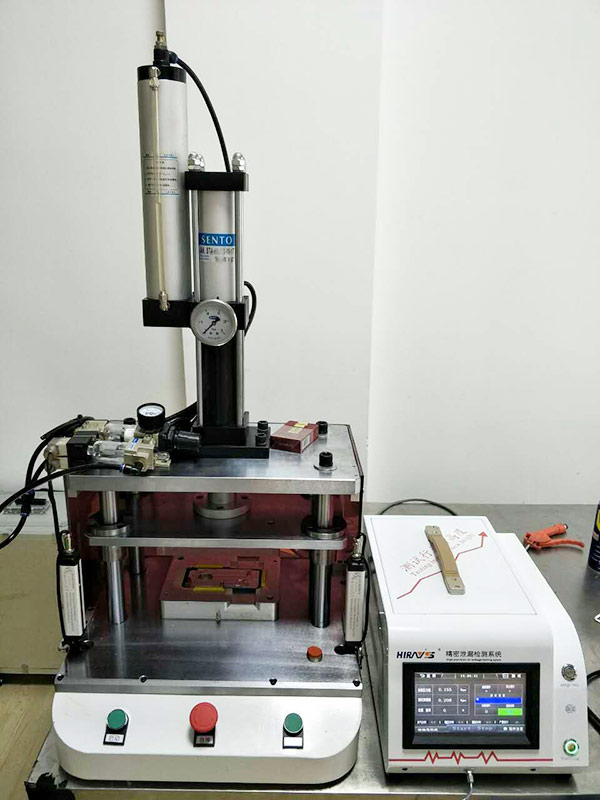
Its parameters are as follows:
Air supply pressure: 0.4~1.2MPa
Power supply voltage: 220v/50hz or 110v/60hz
Pressure adjustment range: -40~-0.5KPa, 5~150KPa
Pressure adjustment accuracy: 0.1KPa
Pressure test range: -60~150KPa
Pressure decay test minimum resolution 1Pa
Minimum resolution of leakage flow test: 0.01ml/min
Principle of air tightness test for mobile phone case antenna
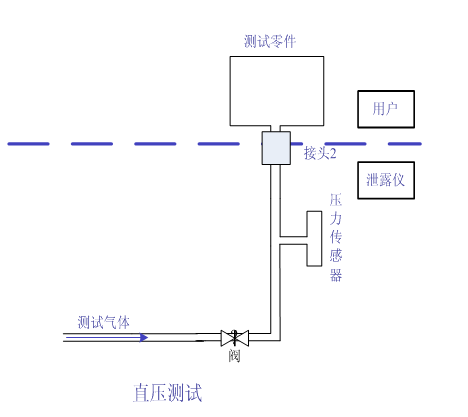
Use a certain pressure and a certain volume of compressed air to inflate the product. If the product has an inflation hole, supply air directly to the product's inflation hole. After charging for a certain period of time, cut off the air supply, and use the pressure sensor inside the instrument to monitor the pressure changes after the product is inflated. If the product does not have an inflation hole, design a mold to wrap the product, and then quantitatively inflate the product surface through the mold, cut off the air source, and use the pressure sensor in the internal instrument to monitor the pressure changes after the product is inflated. The test diagrams of the two products are as follows: