
Industrial endoscopes, also collectively known as endoscopes, have the function of exploring the depths of curved pipes and observing parts that cannot be seen directly. They are used in complex environments, such as liquid environments, underground environments, etc., so they are small in size and have certain requirements for lens sealing.Once the lens seal is not in place, lens fogging will affect the use effect, and in severe cases, the industrial endoscope will be damaged. Therefore, manufacturers will conduct sealing tests on the lens of the product.
As a well-known expert in sealing testing solutions in the industry, Hirays Technology has complete testing solutions for industrial endoscope lenses. We will share them with you below. We hope that our cases can inspire customers to improve the sealing process of testing equipment.Below is the content related to the solution.
one.Analysis of industrial endoscope lens appearance and detection difficulties
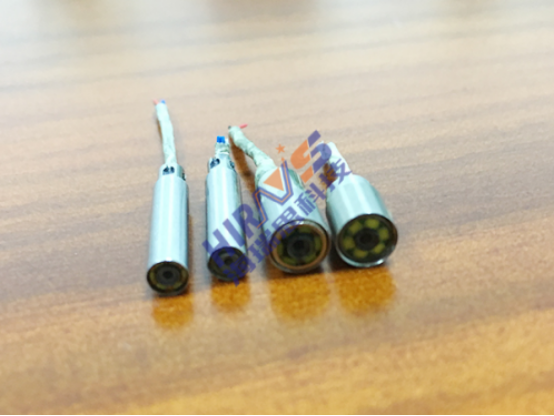
1. The picture above is the industrial endoscope lens that Hirays Technology needs to test this time. We can see that the endoscope lens is irregularly cylindrical as a whole, and there is a bendable part at the tail. In addition, smaller objects bring inconvenience to the sealing test. Currently, it is also a problem in the sealing test of the endoscope lens.
2. The product also comes with a section of wire. Since the wire part of the industrial endoscope lens is not sealed, we need to seal the wire part during inspection. This is also a major difficulty in the inspection plan, which involves eliminating the impact of the wire on the waterproof inspection of the industrial endoscope lens.
3. The mirror surface of the industrial endoscope lens is almost on the same plane as the external environment. It is easy to damage the mirror surface during inspection. Hirays Technology also needs to consider non-destructive testing during inspection.
2. Breakthrough in the sealing difficulty of industrial endoscope lenses
In order not to cause damage to the industrial endoscope lens during inspection, Hirays Technology customized specific molds for the industrial endoscope lens to assist in non-destructive testing.Below is a real photo of the mold.
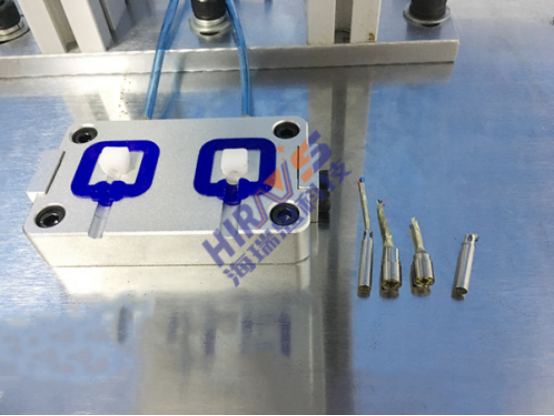
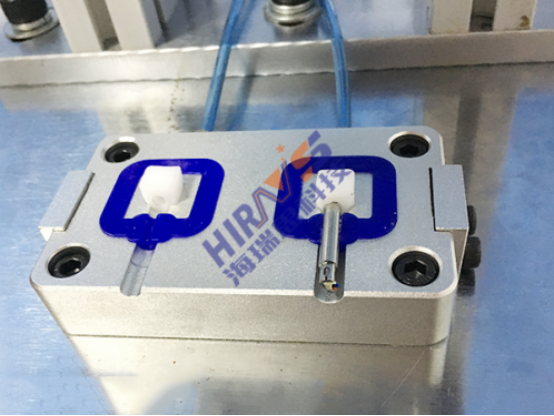
Put the endoscope lens that needs to be tested for sealing into the mold. The shape of the mold matches the shape of the product, leaving a small space for testing.Moreover, the mold design seals the endoscope wire head, reducing the impact of wire leakage on lens sealing testing.
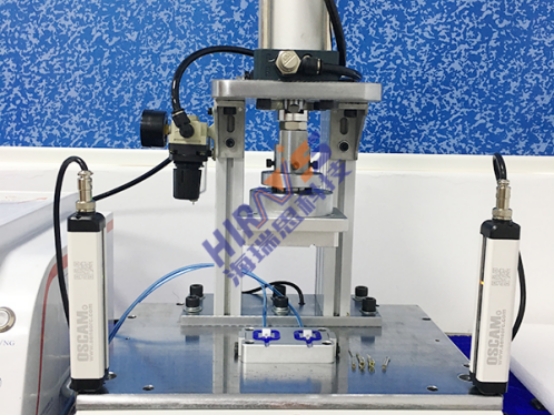
After the detection is started, the tooling will rush gas into the mold. The changes sensed by the precision pressure sensor of the endoscope lens waterproof detection equipment are transmitted to the waterproof detection system. Finally, after a series of calculations, the gas leakage value can be obtained, and the sealing performance and IP waterproof level of the endoscope lens can be detected based on the leakage value.This detection method is not limited by the type and waterproof level requirements of the endoscope lens. It can detect different endoscope lenses by combining different molds and system parameter settings, which is very suitable for full-line sealing testing.It can not only improve the use value of the sealing tester, but also facilitate the manufacturer's equipment deployment and reduce the investment in testing equipment.

(Hiraysco industrial endoscope lens sealing tester)
three.Related parameters of industrial endoscope lens sealing tester
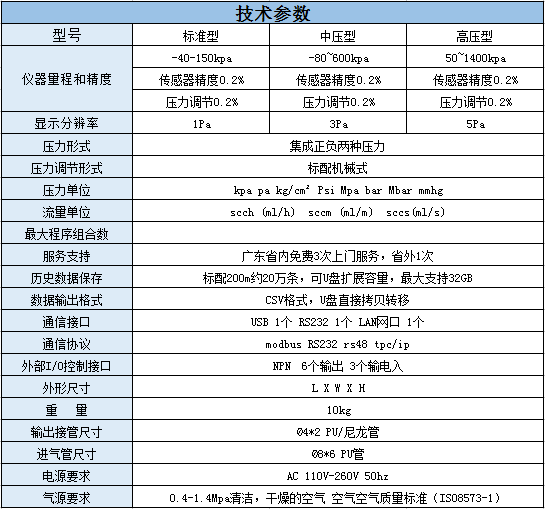
Hirays Technology's industrial endoscope lens sealing instrument can not only conduct overall air tightness testing, but can also test the camera lens, housing, wires and other parts with different tooling. Its strong applicability has been used by many manufacturers as the core sealing testing instrument for production lines.
The copyright of this article belongs to Hirays Technology. Reprinting and pseudo-original work are prohibited. Any violation will be at your own risk.