liquid cooling
Liquid Cooling SolutionsBuilding on nearly 20 years of leak detection expertise, Hirays Technology delivers a one-stop, full-process leak testing solution for the liquid cooling industry, covering core components through complete systems. A four-step closed loop — gross leak screening, micro leak detection, clean treatment, and pressure-holding verification — ensures zero-leakage operation across liquid cooling systems.
Step 1 | Airtight Gross Leak Testing: The Gatekeeper of Line Efficiency
As the first gate in the inspection process, this stage rapidly rejects products with obvious leaks, preventing defective units from flowing into the costly precision-testing steps downstream.
Direct Pressure Method: Compressed air or nitrogen at a set pressure is charged into the test piece, and pressure changes are monitored in real time to automatically determine whether a gross leak exists — well suited to fast, high-volume screening.
NG Re-inspection: For units judged NG, a debug fixture can be used to pinpoint the exact leak location, providing a basis for subsequent rework.
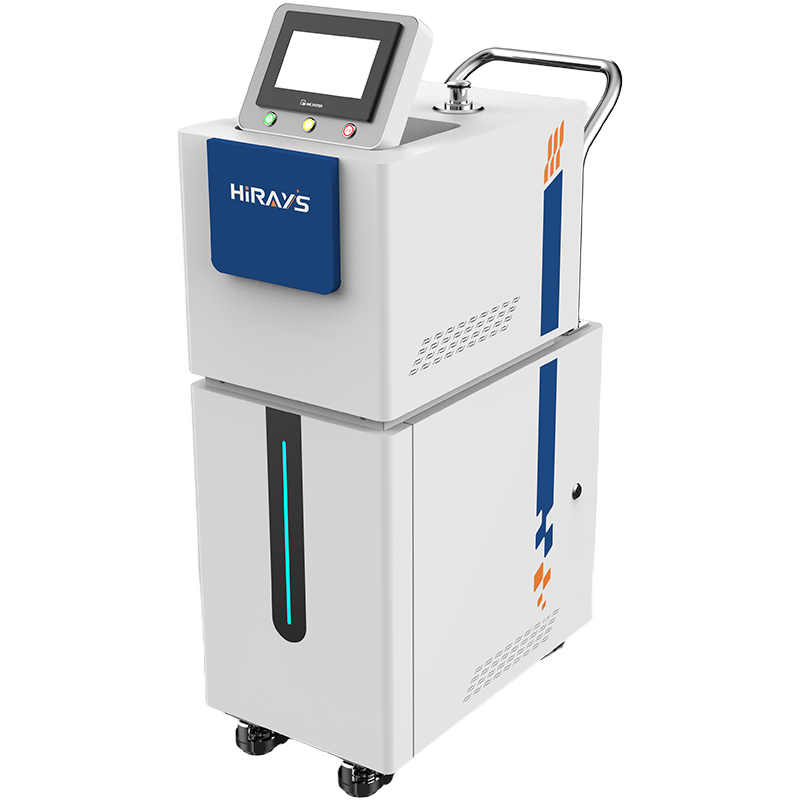
Solution Advantages: Hairuisi HL Series dual-channel airtightness testers, combined with custom fixtures, support parallel multi-station testing. Ultra-fast fill designed for cavities from tens to hundreds of liters boosts efficiency by over 50%. A built-in MES interface enables automatic data upload and full-process traceability.
Key Parameters: Test pressure 0.2–2 MPa (extendable to 2.5 MPa), suited to large workpieces such as liquid cooling manifolds and CDUs.
Step 2 | Helium Mass Spectrometry Micro-Leak Testing: Sensitivity Down to 5×10⁻¹³ Pa·m³/s
To meet the stringent requirements of liquid cooling systems against extremely small leaks, helium leak detection is one of the most sensitive quantitative methods available in industry.
Detection Methods: Vacuum chamber method / sniffer method
Batch Testing: For micro-leak screening of mass-produced products, the vacuum chamber method is preferred, balancing detection accuracy and throughput.
Precise Troubleshooting: NG units are re-inspected using the sniffer method to precisely locate the leak point.
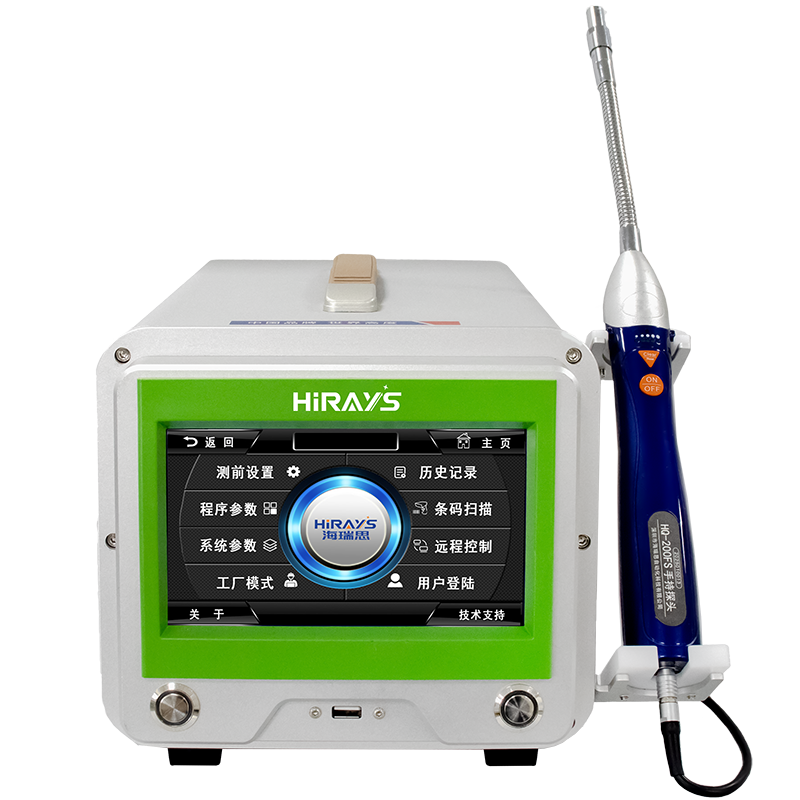
Solution Advantages: HM-400/HM-410 helium mass spectrometer leak detectors deliver a limit sensitivity of 5×10⁻¹³ Pa·m³/s with the vacuum chamber method; the sniffer method's leak rate threshold is 1×10⁻⁶ Pa·m³/s, configurable per product. Test pressure range: 0–2 MPa. The system integrates vacuum and helium recovery modules with a recovery rate of ≥95%, significantly reducing operating costs. It supports integration with automation systems and multi-station expansion to meet varying UPH requirements.
Step 3 | Fluid Removal and Drying: A Critical Step in Liquid Cooling Leak Testing
In the closed loop of liquid cooling leak testing, vacuum drying for fluid removal serves as the bridge between helium testing and pressure holding, ensuring long-term stable operation of liquid cooling components after delivery.
Process Purpose: High-temperature drying to ensure component cleanliness.
Solution Advantages: High-vacuum processing enables efficient dehydration and degassing; automated operation reduces human variability and guarantees consistency.
Step 4 | Nitrogen Charging and Pressure Holding: Final Verification Before Shipment
As the last line of defense in quality control, this stage simulates actual operating conditions to perform a pressure durability test, verifying product stability under sustained pressure.
Test Flow: Automatic charging → pressure stabilization and holding → pressure monitoring → data recording → automatic judgment
Detection Method: Charging with high-pressure nitrogen and monitoring pressure decay.
Solution Advantages: A fully automatic charge–stabilize–monitor–judge sequence minimizes human intervention. The system supports single/dual-channel design, expandable up to 8 channels, with test pressure up to 3 MPa and high-vacuum compatibility.
Data Management: Pressure curves are recorded in real time; results are automatically judged and uploaded to MES, achieving full traceability of outgoing product quality.
Full-Process Closed Loop — From coarse screening and precision testing to cleaning and pressure holding, one stop for all liquid cooling component and system testing needs.
Precision Meets Throughput — Micro-leak-level accuracy without compromising line takt time (UPH).
Proven in Production — Deployed at leading liquid cooling manufacturers across China, covering cold plates, manifolds, CDUs and full racks, with fast customization to capacity needs.
Data-Driven Quality — Full MES connectivity with automated data capture and reporting for end-to-end quality traceability.