
As an important component in the automobile cooling system, the engine water pump is used to force cooling water to circulate in the cooling system to improve engine cooling efficiency.If the water pump leaks, it will directly affect the working efficiency of the engine. In serious cases, it may cause the engine to burn the cylinder gasket or even cause engine damage.Therefore, the sealing test of the engine water pump plays a very important role in improving product quality and ensuring the normal use of the engine by professional manufacturers. Therefore, it is very important to use an air tightness tester to test the sealing of the engine water pump.
With the improvement of engine water pump casting quality, processing quality and assembly quality, and the increasing maturity of online air tightness leak detection technology, the use of Hirays air tightness leak detectors to detect engine water pump leakage problems has been better controlled. Therefore, the engine quality has also been relatively reliable.The engine water pump is assembled to the engine to reduce unnecessary losses.The purpose of the leakage test, that is, the sealing test, is to solve a specific problem in the most economical way. For this purpose, on the one hand, it is necessary to determine the appropriate sealing index, and on the other hand, the most suitable detection method must be selected.That is, the Hirays air tightness leakage detection method.
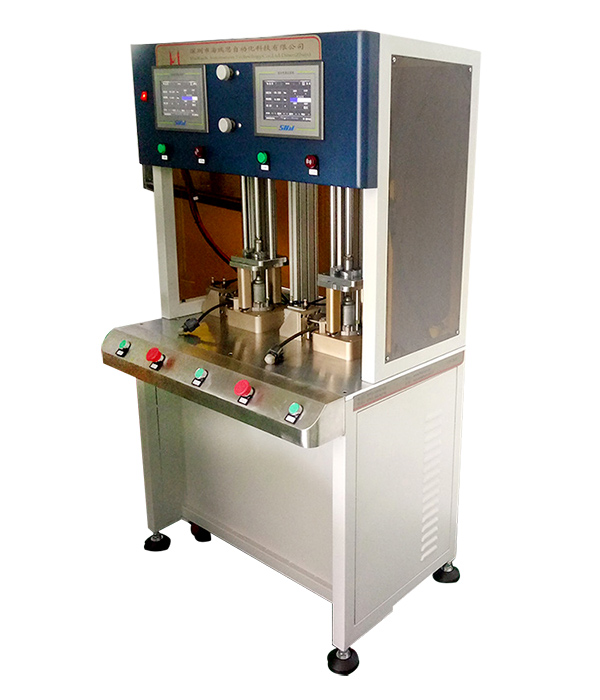
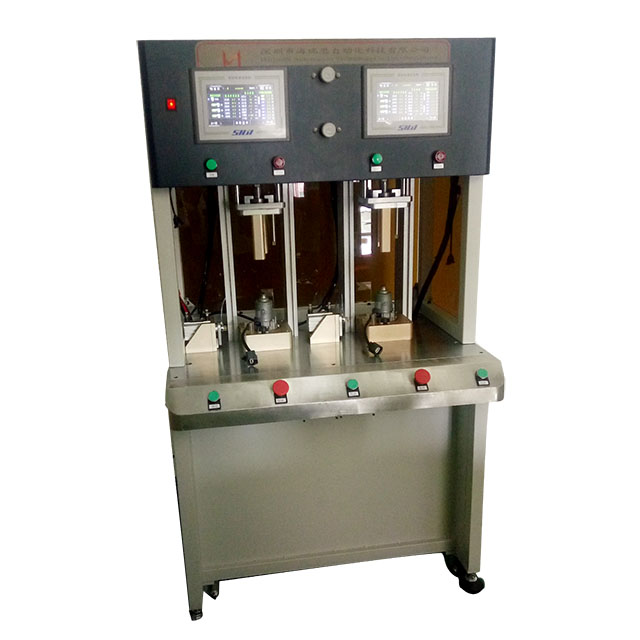
Air tightness testing is an important process to ensure product quality and production safety. It has been widely recognized in the production and manufacturing process, and its application fields are becoming wider and wider. Air tightness testing has gradually developed from major assemblies in the previous automobile manufacturing industry to most automotive parts products. It is also used in air tightness testing, waterproof testing, sealing testing, etc. in the fields of mobile phones, speakers, cameras, etc.Common air tightness testing methods are as follows.
1. Water immersion method or surface spray coating method (visual inspection method)
After inflating the object to be tested, the object to be tested is put into a certain liquid (water is the most common) or soapy water is applied to the object to be tested. The operator determines whether the object to be tested is leaking based on visual inspection of bubbles or soap bubbles in the liquid.This method mainly depends on the operator's judgment. Its advantages are intuitive and relatively reliable, but it is difficult to quantitatively measure the specific leakage of the object being measured.At the same time, the test environment and the operator's own status also have a great impact on the test results.After using this inspection method, the object to be tested must be cleaned, dried and rust-proofed, which will directly affect the test results.
2. Pressure-setting detection (pressure-maintaining method)
After inflating the object to be measured, use a pressure gauge, U-shaped tube or pressure sensor to directly measure the pressure change inside the object to be measured, and then calculate the leakage of the object to be measured.The advantage lies in the simple structure of the test system. However, when the test environment is complex (such as temperature effects, etc.), the accuracy is high and the leakage is small, or when it is to save time and improve efficiency, this detection method requires very high accuracy for the pressure gauge or pressure sensor, making this detection method quite costly and even difficult to implement.This air tightness testing method is rarely used by anyone.
3. Differential pressure comparison method
Compressed air of a certain pressure is filled into the object to be measured and maintained for a certain period of time. The pressure change is detected through the pressure sensor. This change is compared with the pressure value of the standard sample (with intact sealing and qualified) under the same working conditions to determine whether there is leakage in the object to be measured.The leak detection instrument is used to quantitatively detect whether the air tightness of the object under test is qualified according to the change in pressure.This method has gradually been widely used due to its advantages such as good executability, easier identification of sealing properties, no damage to contaminated workpieces, and easy automation of the test process.
Hirays Air Tightness Leak Detector is a gas/gas type leak detection instrument used for air tightness inspection on production lines. First, two workpieces are filled with gas of a certain pressure, and then the pressure difference between the two workpieces is measured after the pressure is stable. The two workpieces are the standard parts without leakage and the workpiece to be tested. This slight pressure difference change is measured by the pressure difference sensor installed between the workpieces.With a Hirays air tightness leak detector as the core, it is equipped with some mechanical units, pneumatic units and electronic control systems to form a special testing device for water pump air tightness, which is responsible for completing the air tightness testing of the water pump assembly in the production line.The device mainly consists of five parts: air tightness testing instrument, sealing fixture, rotating unit, cylinder and solenoid valve system, and PLC control system.The entire process of air tightness testing of the water pump can be completed through two operating modes: manual and automatic.
(1) Manual detection: put in the workpiece→press→ block→The sump is blocked→The motor rises→Air tightness leak detection instrument starts→Test completed→electrical mechanism→Motor drops→The sump is returned→ block back→ relax→Take out the workpiece.
(2) Automatic detection: Set the operating knob to"automatic"→Press the start button with both hands→The clamp starts to work (the cylinder is pressed down→The side cylinder and lower cylinder are blocked in place→ After the sealing is in place)→Instrument startup→Automatic testing→After passing the mark, the marking head will automatically reach the standard, the pass indicator light will light up, and the cylinder will reset (when it fails, the unqualified indicator light will turn on, and the cylinder can be reset by pressing the reset button).The automatic test of Hirays air tightness tester specifically includes six main processes in a cycle: instrument startup, workpiece inflation, pressure balance, test workpiece, workpiece exhaust, and end of cycle.This air tightness detector is easy to operate and does not require special training. After setting its relevant parameters, the user only needs to press the run button to automatically obtain the test data and pass/fail instructions.
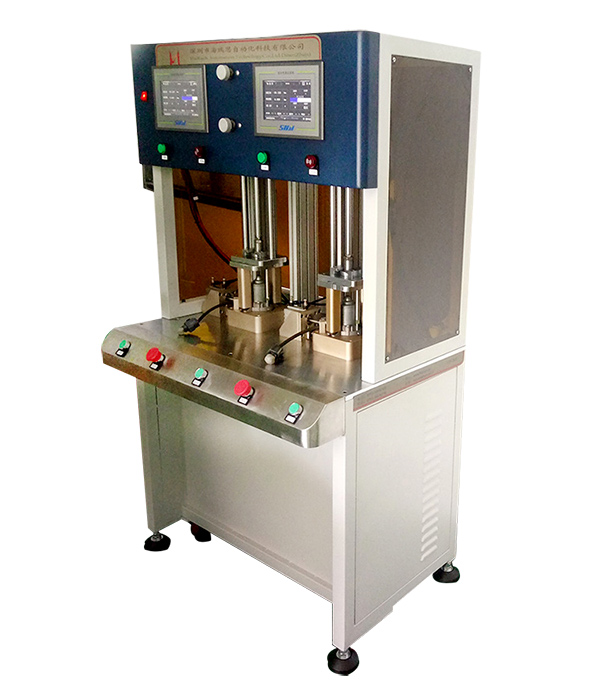
(3) Air tightness leak detector test mode and main parameter settings.The tester has four test modes to choose from: leakage test, blockage test, flow test and operator mode test. The blockage test mode uses back pressure to roughly test the flow rate, and the standard pressure upper and lower limits are used to distinguish the quality of the results.The parameters that need to be set are as follows: ① Clamping time; ② Inflation time, which is to set the pressurization time of the test piece. It should not be too long (a waste of time) or too short (due to the pressure drop caused by temperature changes, there is a risk of insufficient pressure in the component); ③ Stabilization time, used to balance the pressure between the test piece and the standard component. Different pipes and different volumes can easily cause unevenness.Two phenomena of balance; ④ Test time, depending on the set allowable standard and test mode; ⑤ Exhaust time, preset to 0, and determined after several tests; ⑥ Pressure upper/lower limit value; ⑦ Test piece acceptance value, set the limit level, test pieces below this level are unqualified parts; ⑧ Standard parts acceptance value, set the limit level, standard parts below this level are unqualified parts.
In the manufacturing process of engine water pumps, air tightness testing plays an important role in ensuring product quality and is also an important indicator for controlling product quality. Therefore, manufacturers must achieve 100% testing and 100% passing.In actual production, it was found through air-tight leak testing and related analysis that the main reason for leakage of unqualified products is defects in the quality of the rough casting, such as looseness in the local structure, blisters, pinholes, cracks, cracks, stress concentration and bending, etc. Sometimes it is also caused by unreasonable processing technology, unreasonable structure, unreasonable installation and other reasons.To this end, higher requirements have been put forward for casting suppliers. At the same time, corresponding measures have been taken in the processing technology and installation processes to continuously reduce the product failure rate and thereby improve corporate efficiency.